From Viet adoptee to the top of Wall Street.
Mark EricksonInsurance business, BlackRock
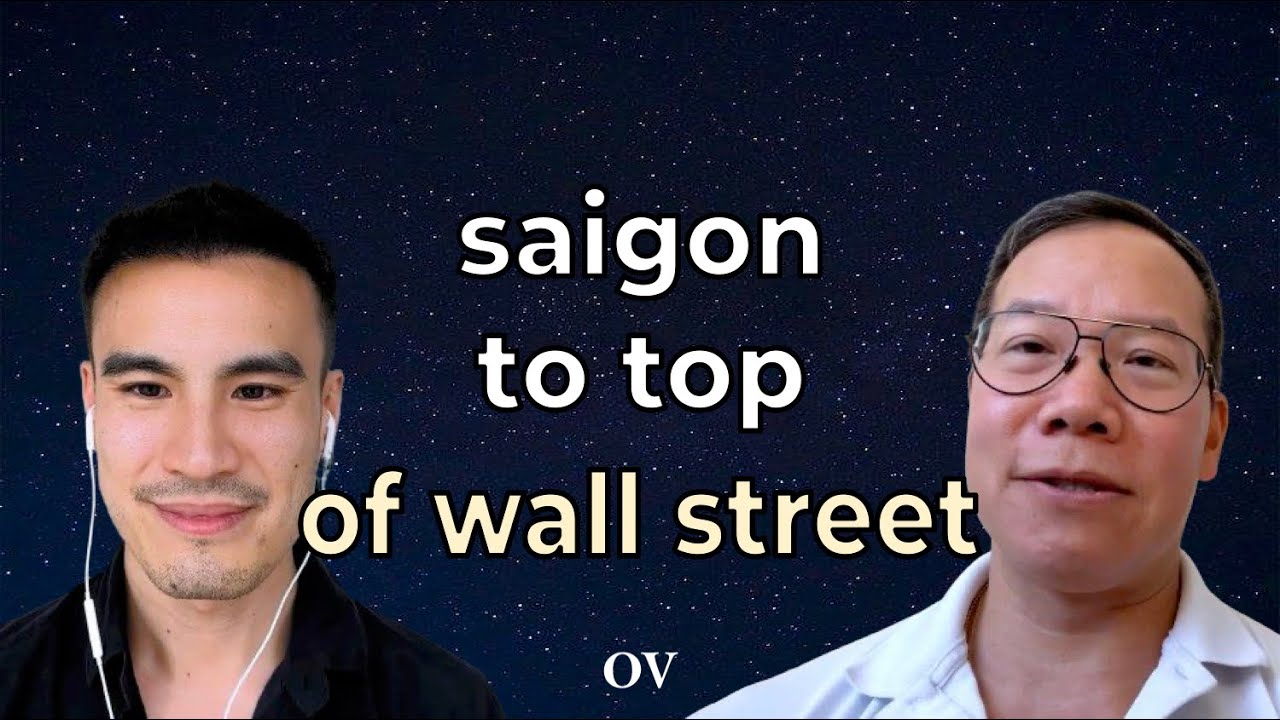
The conversation
Mark Erickson was born in Saigon in 1972, separated from his family during the war and adopted by an American family in 1975. He grew up in a mostly white suburb of Western New York and did not know other Vietnamese people until college. At Harvard, the Vietnamese student association welcomed him, and in 1993 a visa program for educational exchange let him study in Hanoi for five or six months. The photographs he took on that trip later became a book.
He went to Harvard without a career plan, started as pre-med, and ended up interviewing with every firm that would see him. He liked the finance people best, and Goldman Sachs made him an offer. He stayed 11 years, then spent almost nine at the hedge fund Eaton Park, moved to the insurer Global Atlantic, which grew to more than $100 billion in assets before its sale to KKR, and then joined BlackRock's insurance business.
In this conversation, Mark shares the frameworks behind that career: three forms of compensation, of which at least two must work for you to be happy, and the SWANs he hires: smart, hardworking, ambitious and nice. He explains how confidence came from curiosity and practice, not on day one.
He also talks about identity. For years he felt like an impostor among Vietnamese people, until he heard the author Viet Thanh Nguyen ask who gets to decide who is Vietnamese. Decades later, his sister found him through an American family, and he met the relatives who remember him though he does not remember them.
Five takeaways
- 01
Count three kinds of pay. A job pays in learning, in the people you work with, and in money. If only one of the three is working, you will be unhappy. Aim for at least two.
- 02
Hire SWANs. Smart, hardworking, ambitious and nice. He uses the same test when he builds a team and when he picks a manager.
- 03
Go deep on your subject. Most people only scratch the surface. Asking how and why, and how one thing connects to the next, is what earns the trust of senior people.
- 04
Confidence is learned. It was not there on day one. It grew with expertise and with forcing himself to explain ideas clearly in writing and in Q&A.
- 05
Your network compounds. Thirty years on, he still works with people he met in his first decade at Goldman Sachs. Two of his later jobs came through former colleagues.
Timestamps
Each one plays the video from that moment.
- 0:00Who Mark Erickson is
- 0:37Growing up in Western New York
- 2:31A Vietnamese community at Harvard
- 3:48Studying in Hanoi in 1993
- 4:30Building a Vietnamese identity
- 5:57Who decides who is Vietnamese
- 7:36From pre-med to finance
- 10:57Learning the job at Goldman Sachs
- 12:34The biggest early challenges
- 13:48Would he recommend finance today?
- 16:31Hedge fund, insurance and BlackRock
- 19:21Three forms of compensation
- 22:15Hiring SWANs
- 22:55100 lessons for new analysts
- 25:34What it takes to work with CEOs
- 28:14How confidence is built
- 29:38Reconnecting with family in Vietnam
- 32:28Going back to Vietnam
- 32:53What's next
- 33:32How to connect
“And even if I have a very different experience than other people in terms of how I grew up or my family story or my lack of traditional credentials, I still qualify.”
“And for people to be really happy in their jobs, at least two of those three things need to be working.”
“You can't make up for decades of lost time.”
Full transcript
ShowHide
Made automatically from the audio and lightly edited.
Quang Do
0:00Hi Mark, tell us a bit about yourself. What's your life in a nutshell?
Mark Erickson
0:04Quang, thank you so much for having me on the podcast. My name is Mark. I was born in Saigon in 1972. And I was separated from my family during the war, and then I was adopted by an American family in 1975. I grew up in Western New York, and then went to Harvard. And then got my first job at Goldman Sachs and I've been in financial services for the past 30 years. We're recording here from Singapore. I'm excited to be here in the same city that you.
Quang Do
0:37Thank you so much Mark and I think it's a very interesting sort of life background. Overseas Vietnamese, the members that we have sort of fall broadly into two buckets. One is people born and raised in Vietnam and then they went abroad. And then there's people more like me who sort of were overseas born and raised. And so your case is a bit more special, I would say, as a Vietnamese adult. And so could you tell us a bit more about your early life and upbringing and how it sort of who you are today and how it shaped your life journey?
Mark Erickson
1:09Of course, you know, I grew up in a place where I didn't know other Vietnamese people until really until I was college age. So I grew up in a, know, mostly white suburban American community. And I didn't think a lot about being Vietnamese until, you know, really until I was a teenager. And it was an interesting time in America. In the 1980s because America was still getting its own psychological, know, American psyche around what Vietnam and the Vietnam War meant for Americans. And so a lot of the Hollywood movies produced at the time that I was a teenager, you know, were all about Americans in Vietnam. And actually, none of those movies are about Vietnam or Vietnamese people. They're really just about Americans. And I didn't really understand what that meant until later in life. So I feel like my first real introduction to Vietnamese people and all of that was during my college years. We had, there were probably at the time, you know, a pretty active Harvard Vietnamese Association. There were probably 40 or 50 students involved.
2:31And I would say there were a mix of students in terms of their Vietnamese-ness, where there were people who were more like me on the spectrum used American English names and only spoke English and didn't know any Vietnamese. And there were students who mainly grew up in Vietnam and came to the United States later, maybe like junior high or high school age, used Vietnamese names. English was clearly their second language and definitely identified more as Vietnamese than American. So it was... A really good mix of students and one where because I hadn't been surrounded by Vietnamese family and friends, I was very lucky to have that community who was very welcoming to me. My introduction to the Vietnamese community and introduction to Vietnamese food. I tried to learn some Vietnamese, which I've never been that successful in doing. So my Vietnamese is very bad. The United States hadn't reestablished political or economic ties with the United States at that time. So I didn't have the opportunity to visit. But when I was in college, there was a special visa program for educational exchange. So I was able to go to Vietnam in 1993.
Quang Do
3:48How old were you then?
Mark Erickson
3:50I was 21 years old, 20, 21 years old. And the one university in Vietnam that accepted foreign students was the University of Hanoi. And so I was able to study there and live in Hanoi and travel all around the country for five, six months in 1993, which was an amazing time. That's also the time when I did all of my photography Vietnam at that time, which then eventually, many years later, turned into a book.
Quang Do
4:30And sort of what kind of style where you brought up and how did that sort of shape your reality about being Vietnamese and sort of, your education as well, because you sort of went on to have a very successful career. Where do you think this sort of comes from?
Mark Erickson
4:38So I would say that I did not have a strong Vietnamese identity growing up. You know, I clearly knew in my body that I looked different than my parents and I was received as an Asian person in my community. But I think again until I met other Asian people, other Vietnamese people and really through relationships, through education, through reading books, did I kind of psychologically, emotionally identify myself as Vietnamese? And I think that's been a lifelong, multi-decade journey. I also think getting married and having kids was an important part of that too, because my kids who are biracial, they understandably want to know about themselves and the Vietnamese part of themselves and where does that come from and what does that mean. And so I wound up as a parent needing to articulate and explain things that I might not forced myself to otherwise and that's you know, that was an important, you know part of my growing experience as well.
5:57But I would say, know growing up I didn't think a lot about it because you know, I wasn't raised in the Vietnamese family with a Vietnamese culture and then when I met other Vietnamese people, you know, I had a little bit of, you know, imposter syndrome. Am I really Vietnamese? I don't feel very Vietnamese or sometimes even some Vietnamese people would say like, you're not very Vietnamese. And I think it was in I've had the chance to meet the author Viet Thanh Nguyen. And one of the things that he says, because he actually he's a year older than I am. So he also came to the United States when he was about three and grew up here. And even though he was in a Vietnamese family in a Vietnamese community in San Jose, he also was told by lot of elders, you're not very Vietnamese. And it was refreshing to hear him say that because I think where he got to in a way that made sense to him, he was able to push back into people who would say to him, you're not very Vietnamese about, you know, who are these gatekeepers of Vietnamese-ness? Who gets to decide who's Vietnamese and who's not Vietnamese? And that was refreshing to hear that I didn't have to justify to anyone or have some qualifications or meet some qualifications to be Vietnamese and that I just am and that's okay.
7:23And even if I have a very different experience than other people in terms of how I grew up or my family story or my lack of traditional credentials, I still qualify.
Quang Do
7:36Awesome, yeah Let's talk a bit about your sort of career journey What sort of made you Or what motivated you to go to Harvard and then pursue finance specifically do you sort of? Remember there was a specific reason or specific motivation.
Mark Erickson
7:49So I went to Harvard without a very clear idea about what I want to do professionally. I started off as a pre-med. I thought about being a doctor. Midway through college, I realized I didn't really have the conviction to see that all the way through. And I also... Thought about did I want to start working or did I want to go to graduate school because obviously that's a fork in the road. And I decided at that point that I wanted either to end school or take a break from school. I wanted to do something else. I also, like you, I was involved with a girl who I liked a lot. And proposed to her my senior year. And so I also was motivated to get a job and start earning some money. And so without specificity, I started applying to all sorts of different jobs. And at Harvard at the time, that included investment banks in finance, consulting firms, tech firms at that time, like Microsoft. Brand management firms like Procter & Gamble, those were all the types of firms that interviewed on campus. And I interviewed with anyone who would give me an interview, including firms that didn't want to give me an interview, I just persisted until I was able to get interviewed because I didn't really have a pre-professional background in terms lots of internships and those types of things.
9:18I did a lot of very pedestrian things like lawn mowing and babysitting and nothing that screamed pre-professional. But through the process of interviewing, I learned a lot about the companies, the various companies. I met a lot of people at those companies and asked them a lot of questions about what they did and what they liked and what they didn't like and I really liked the finance people and those were also the firms where I was extended offers and I was fortunate enough to get an offer from Goldman Sachs and that's where I wound up starting my career in a two-year analyst program and I wound up staying for 11 years through various different roles and that was really a fantastic place to start my career. I started in their international business in 1994 when Goldman Sachs was still expanding internationally. Goldman had expanded into Europe in the 1980s and then started expanding to Asia in the 1990s. So when I joined, The firm was still going through that expansion. It was still a private partnership. So it was a much smaller firm than it is today. And so it was a really, again, a really fantastic place for me to start my career.
10:37I was interested in, you know, seeing the world. I had visited New York, but I had never been there. And Goldman Sachs gave me the opportunity to and spent a lot of time in New York and London and Hong Kong and Tokyo and Singapore and see the world in a different way than I had previously and in different way than you do when you're a tourist.
Quang Do
10:57So what was that experience like for you at Goldman in the beginning, especially how did it shape you as a professional?
Mark Erickson
11:13You know Goldman Sachs again Goldman Sachs is a great place for me personally to start my career It was my it was really my it was my first real job I had one suit which was my interview suit so it was a great learning experience for me from everything from you know, how do you dress and how do you act and how do you talk to clients and how do you how do you present yourself in meetings? And in many ways, it was a whole different educational experience and all the things that you don't learn in a classroom. And more like a professional apprenticeship where you work for me, and that was the environment then, where get to work really, really closely, elbow to elbow on a trading floor with lots of other people who are at various stages in their careers. Some people are peers, some are a few years older, some are 10, 20 years more experienced than you are. And for me, it was a very nurturing environment, and I developed a lot mentorship relationships with people who are further along in their careers, who took me under their wings, and spent a lot of time teaching me everything that I needed to know about all the hard stuff in terms of finance and numbers and quantitative skills and analytical skills, but all the soft stuff too in terms of how to conduct yourself.
12:31In a high-end finance professional.
Quang Do
12:34What were some of the challenges you had, the biggest challenges you had back then?
Mark Erickson
12:39I think there were a number. One is I did not study anything related to finance before joining Goldman. And they have a track record to their credit of recruiting who they view as just smart, ambitious people that you can learn everything on the job. Certainly, peers of mine definitely knew a ton more. Before they joined than I did. So my learning curve was very steep. And fortunately, again, there were a lot of people who had a lot of time for me to answer all my dumb questions to help me get up that learning curve. And then I think, you know, on the softer stuff, it was definitely intimidating. I had never been in environment like that. I remember asking my bosses really basic things about how to dress and what should I say in meetings or what should I not say in meetings. Some of those questions were explicitly asked out loud, but lot of it was just absorbing through observation. You know, are other people doing and copying what they're doing.
Quang Do
13:48You said you had a great time there and it was a very good choice for you. Would you say now looking back a few decades for someone sort of younger who graduated, is this still a career path that you would recommend now in 2024?
Mark Erickson
14:07I so I would say it depends. Know, I think. I find finance fascinating, not everyone does. Certainly the tech sector, outside of Microsoft, were no, Google didn't exist. And certainly the tech sector overall is a much bigger draw for talent than it was back then. I also there are more opportunities for people who are more entrepreneurial today than there were then. So I think that if anything, the funnel is, the options are greater today than then. But I do think that in terms of working at a big institution, learning the basics of, know, kind of the foundational, you know, basics of a career, you know, working in a big company like, you know, Goldman Sachs definitely has its benefits. It's certainly credentializing, you know, for your resume and those types of things. But now that I've had experience working at big companies and small companies, there are pros and cons to, you know, to big companies as well.
15:27For me, it was in many ways the ideal place for me to start because again, it was a big company but I wound up working in a small business within that company. So I was given a lot of responsibility very early on. I had a lot of great mentors who taught me all about the business. I did achieve one of my goals of wanting to see the world and traveling all around, which was fantastic and eye-opening to me. Further down the road for the next 20 years after I left Goldman, because of the Goldman Sachs alumni network, I wound up working with many of those people that met at Goldman Sachs in my first 10 years of my career in my subsequent jobs. And even now, 30 years later, I'm still working with a lot of those same people just because the longer you stay in any industry, including finance in New York, the longer you are around in it, the smaller it becomes. Know, 30 years and I know a lot of people and a lot of people know me and that's definitely beneficial to getting things.
Quang Do
16:31You walk us through what happened then after Goldman for you? How did that journey look like?
Mark Erickson
16:37Sure, so I have been at Goldman for 11 years and I got to a place Having worked several different jobs with several different people. I got to a place where I decided that I wanted to try something else and I set My sights on Eventually wanting to move to the buy side Because I had covered a lot of buy side clients, money managers, hedge funds, etc. They were my clients. I had a good understanding what they did and I thought what they did was very, very interesting. But I didn't have any specific investment experience. And so I wasn't a natural hire on that side either. So it took me a couple of years to get to where I wanted to go. And I got there because one of the people that I worked with at Goldman Sachs wound up starting his own hedge fund. And because he knew me and a number of the people at that hedge fund, Eaton Park, were all from Goldman Sachs, and they knew me, then they wanted to hire me. So I wound up going there. And I stayed there you know, almost nine years until the founder turned the hedge fund into a family office and gave all of the LP money back.
17:57And so then I needed to figure out what I was going to do next. And I was planning to go to another hedge fund when I got in touch with another ex Goldman Sachs colleague who was at that time CEO of an insurance company that had also spun out of Goldman Sachs. And he recruited me to join the insurance company, which was called the Goldman Sachs Reinsurance Group, which was then rebranded as Global Atlantic. Was early in this reformation of what's going on in the overall insurance industry. And that wound up being a fantastic place to be as well. And we wound up growing the assets from a relatively low base to over $100 billion when I left. And we sold the company to KKR. And so that was, you know, also a fantastic experience. And then, you know, most recently, I was a client of BlackRock. And after the sale to KKR, then BlackRock recruited me to join their insurance business. And that's where I've been the past two years.
Quang Do
19:08That's a very long and deep career. Think, you know, lot of deep expertise across banking, finance and insurance now.
Mark Erickson
19:1630 years and less hair and more gray I would say.
Quang Do
19:21What would you say? How, how have your career goals and priorities evolved over time? And you know, so what, has driven those changes?
Mark Erickson
19:29When I was at Goldman, one of my mentors told me something which stuck in my head and I still find relevant, is that when you think about your career, there are really three forms of compensation. There's the professional compensation in terms of what you're actually doing and what you're learning, how you're growing professionally. Two, there's an emotional compensation, which is, know, do you really like the people that you're working with? And do you have strong relationships with those people? And then three, there's, of course, financial compensation. And for people to be really happy in their jobs, at least two of those three things need to be working. Ideally, all three, but sometimes you can't get all three right. But typically if you're if you're just in the job for just only one of those things is working You're generally unhappy with your role and you're thinking about doing something different. So when I think about You know Managing my own career over time. I really think about maximizing all three of those things I think and how you know people evaluate those three things as different by individual. But for myself, As you pointed out, I've gone through banking, hedge fund, insurance, and now asset management.
20:46I've never done the same job twice, which I think if I think about myself as an 18, 19 year old, I could have done 10 different majors at college and been happy in all of them because I think I'm a genuinely intellectually curious person. So I also think like, if I joined Google, I'm sure I could find lots of interesting things that I would love to do there and learn there as well. So I think for me, finance has been great because it's a really, really broad umbrella. And there are a lot of different parts to finance and I've been fortunate to work in four different parts of it. And you know throughout That 30 year career. I've learned a lot of different things along the way But you know, that's number one and then number two I probably index higher to number two emotional compensation than some other people but who I work with and really liking who I work with is very important to me I wind up spending lots and lots of time with the people that I work with and if I'm not enjoying working with them, it's not worth it to me. I really need to like and have some emotional connectivity to the people I work with, my clients, all of that.
22:04And then third, financial compensation of course is important and managing that is important, to be proactive in managing that over time as well.
Quang Do
22:15When you say it's really important for you the emotional part and who you work with, what sort of traits and characteristics do you look for? Also when you, for instance, interview people.
Mark Erickson
22:25So the acronym that we used at Eaton Park, which I like, are swans. So the people I like to work with are swans. When I'm recruiting people, I like to find swans. And it stands for S is smart, W is hardworking, A is ambitious, and N is nice. When I'm building teams, when I'm thinking about working for a new manager, those are really the traits that I identify with.
Quang Do
22:55Love that, swans. If you think back, what is one or what are some of the most important lessons you learned throughout your career, I think.
Mark Erickson
23:05Lots of lessons.
Quang Do
23:07And I added, yeah, I added, it's a very long career, it's a hard question to answer. But if you could think of some.
Mark Erickson
23:13So I did write at the after I worked at Goldman Sachs for two years one of my managers asked me to write Lessons and advice for new analysts and I wrote down a one-pager of 100 lessons. I learned as a financial analyst Which 28 years later I hear is still Given to new analysts at Goldman Sachs, and I think it's traveled to other companies by And so some of the things are dated because technology has changed. But overall, the spirit of that advice is still true. But in terms of like specific lessons, think, you know, one, and I've touched on, you know, a few of these things already. One is to Be really, really genuinely intellectually curious about what you do and becoming an expert in that. I think a lot of people only kind of scratch the surface of their topic area and don't necessarily ask all of the how and why and what does that mean and how does A connect to B and how does that connect to C?
24:33And I think that even now at this level, you where I am now, where I talk, you know, mainly to, you know, chief executive officers and chief financial officers and chief investment officers and very, very senior people, you know, the reason why I think I've been successful, you know, with in my different roles, talking to very senior people is that I bring that level of interest, enthusiasm to my work. And I think hopefully that rubs off on others and people see that and see that demonstrated you know, my day-to-day level of enthusiasm in what I'm doing and that drives insights into, you know, what's happening in the markets, the industry, and more broadly. And I don't pretend to know things that I don't know, which, you know, just drives more, you know, questions when people... Talk about something that is a new topic to me, then I'll ask them lots of questions about that so that I can learn from them and hopefully learn new things.
Quang Do
25:34The next question is maybe a bit vague. Let's try. I'm very curious about when you say now that you operate at this level, I'm asking sort of myself, what is like really required to perform and operate at this level? What has been, you know, the insight for you when you sort of entered that arena, sort of entered that, league. That you have observed In terms of what it takes to be at this level and compete at this level.
Mark Erickson
26:04So one of the things you asked me about Goldman Sachs early on, I said one of, for me it was a great training ground. And part of the reason why it was a great training ground for me is in terms of organizational structure, it was a very flat structure, meaning that there was a managing director who ran my group, and everyone essentially reported to the managing director. At very early stages in my career because we were doing financings for companies. I got a lot of everyday exposure to CEOs and CFOs. And I could hear in terms of capital markets and raising capital and doing investor relations call, I could hear them over a very broad range of industries here. Them and how did they talk about their companies? How did they talk about business, the world? How did they handle both everyday Q&A as well as challenging Q&A? Because there's always, you know, hard things going on. And how do you handle those questions? So I think by being a one being in the room definitely helps. And then two, being a keen observer and listener helps.
27:23And then over time through various experiences, through all of the various jobs I've had, becoming a trusted lieutenant, trusted partner to very senior people became more of an apprenticeship over a multi-year, multi-decade period of time in terms of being comfortable in those environments and having confidence that you know what you're talking about and that you something to bring to the table. And then I think over time it just becomes more natural that you get invited into more rooms and more conversations because people say, you should talk to Mark because he really knows a lot about that.
Quang Do
28:14Confidence is a very big topic amongst OVs. I feel, was this something you always sort of had at a level where you were mostly confident going into those rooms, or was it something you sort of had to overcome more for yourself?
Mark Erickson
28:31I think it definitely was not there day one. It definitely has developed over time. I think if you become... I talked about intellectual curiosity before. When you become a subject matter expert and when you start out in your career, that might be in a very narrow subset or specialty of exactly what you're doing. But over time, that broadens how that's where the confidence comes from. Then forcing yourself, whether it's just with colleagues or with clients externally, forcing yourself to have to communicate whether it's in writing, in written word, in Q&A, whether it's writing a memo or writing a presentation, being able to communicate clearly ideas that are floating around in your head is definitely a learned skill over time. At least it was learned for me, it did not come naturally to me.
Quang Do
29:38Very interesting. Thanks for sharing Mark. I think sort of last topic to wrap this up I think let's move a bit away from career and I think one very interesting aspect about you is also sort of your journey with Your Vietnamese identity and sort of that you said you went to Vietnam for a few months and you saw sort of started at college age At least connecting or exploring that from then on how did move on for you in, you know, sort of exploring that side of yourself.
Mark Erickson
30:10Yeah, I think over time, it's important, it's been important to me since college as an adult to cultivate friendships with Vietnamese people, you know, with in my community. And then, you know, more broadly, there, there have not been that many Vietnamese people in the financial community. There are some, but not that many. And there are more as time goes on. And then I reconnected with family in Vietnam after many decades and had the opportunity to meet them in person and that's been really important and meaningful to me as well because I didn't even know that I had family in Vietnam or I didn't have any conception that I would ever meet them.
Quang Do
30:54How did you... How did you do that? Like, how did you reconnect? What was that process like?
Mark Erickson
31:07So that's a very long story, the short version is my sister was working for an American family and she told them that, I had a brother who was adopted and the American family helped track me down. And they, you know, reached out to me. And I confess that when they first reached out to me, I was really shocked and really didn't know how to process that because I had no, I have the challenge of what I call asymmetry of memory, meaning that I left Vietnam when I was two and a half years old. And all of my family in Vietnam remember me, but I don't remember them. And then there's a multi-decade cultural language gap as well as life experience gap because their life in Vietnam after the war and the decades since was obviously a very, different experience than my life in America. But I think the wonderful thing is We have been able to meet each other. You can't make up for decades of lost time. But for me, it was, and I think for them too, it was meaningful to reconnect. I feel like every Vietnamese person of this generation has some terrible and dramatic family story.
32:23But I think that's part of the Vietnamese experience. Of the past century.
Quang Do
32:28And then from then on did you visit Vietnam more often and sort of had those family encounters more often?
Mark Erickson
32:34Yes, so when I saw you in Vietnam, I was in Vietnam last year and then I think my aspiration is to be in Vietnam at least once a year. We'll see if I can keep up with that aspiration. But being in Vietnam makes me happy. So I've been able to take some of my kids there. I would like to take the other kids there too.
Quang Do
32:53Love that. Yeah, they will love it as well. It's a very fun place for kids as well. Mark, thanks so much. What's sort of next for you? Any upcoming projects or goals you're excited about?
Mark Erickson
33:06Nothing specific. It's been fun to go back to Vietnam recently. My current work does not include anything with Vietnam. At some point in the future, I would love to integrate my work in some way with Vietnam, given all of super exciting economic activity happening in the country. So figuring out how to weave those things together at some point in the future would be great.
Quang Do
33:32Yes, yes, let's definitely stay in touch on that. Final one. How can, yeah, how can, how can our members connect with you or follow your work? You also mentioned sort of photography. Feel free to mention it as well.
Mark Erickson
33:44No, so yeah, I've met with the overseas Vietnamese folks in New York. And I think it's a nice mix of some of the communities that you mentioned at the beginning. I think there's a group of overseas Vietnamese who were born and grew up in the United States. And now we have like a different wave Vietnamese who grew up in Vietnam and maybe did university in Vietnam or maybe came to the United States for university or graduate school and now are starting careers in New York. So that's a good mix too. So it's been fun to meet those folks and see where they are in terms of starting off in New York.
Quang Do
34:25Yes, thanks. And how can our members connect with you and follow your work?
Mark Erickson
34:29I'm on LinkedIn. I'm pretty easy to find. So if there's anyone who wants to reach out, they're more than welcome.
Quang Do
34:37Thank you, Mark. Thank you so much. Very interesting conversation and yeah, let's keep in touch.
Mark Erickson
34:42Great, hopefully that was helpful.
Quang Do
34:45That's it for today. If you enjoyed this, you will love the OV community. Learn more at overseasvietnamese.com.
There’s more inside OV.
The long version
Write-ups of the conversations, kept in the library of the OV app.
Live sessions
We host members-only sessions with some of our podcast guests.
In person
In Saigon, we invite podcast guests to join OV meetups and dinners.