From Vietnam to the Ivy League, Goldman and Silicon Valley.
Nhat NguyenWorks in AI at Convai, San Francisco
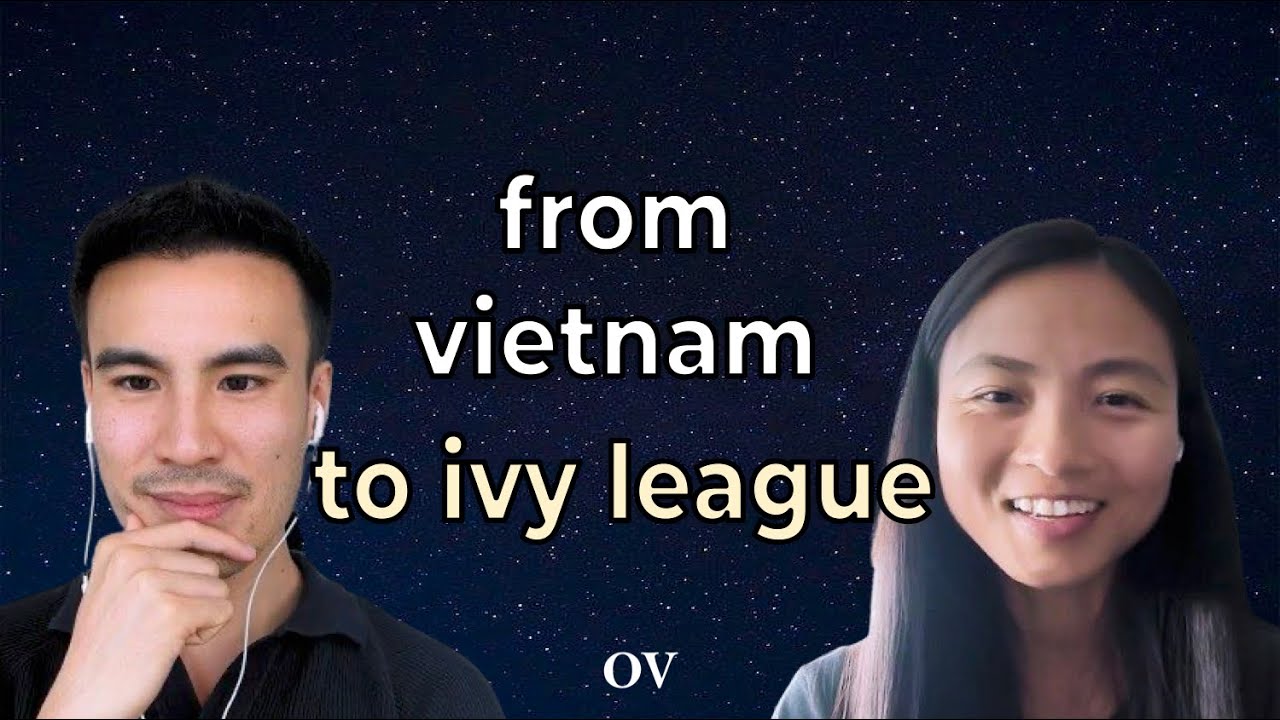
The conversation
Nhat Nguyen grew up in central Vietnam and had never left the country when, in her third year at the University of Economics in Ho Chi Minh City, she joined a four-month Work and Travel program in the US. While there, she applied to a community college in Boston. Back home, with her summer savings, she quit her degree, against the advice of almost everyone around her. She was 20.
The first years were hard. Her English was weak, and after each class she felt her brain would explode. She went on to Mount Holyoke, a year at Goldman Sachs in Salt Lake City, and a family office in Boston, where she passed the first level of the CFA. Then came a dual MBA at MIT and MPA at Harvard Kennedy School, chosen to combine business with her interest in economic development.
After graduating she moved into tech with little background in it: launching an app in New York for a team based in Vietnam, working on stablecoins for Latin America during the crypto crash, and now building 3D AI characters at Convai in San Francisco.
In this conversation, Nhat shares how she thinks about a career she could not have planned. When one path closes, another opens, as long as you keep your north star. Work on what interests you, adapt to what life throws at you, and make the best bet you can with the information you have. For her, that north star is economic development, rooted in a childhood in central Vietnam where she saw poverty up close.
Five takeaways
- 01
A short trip can change the plan. Four months in the US on Work and Travel showed her she could study abroad without money her family did not have, and gave her parents confidence she could cope.
- 02
Keep a north star. When one path closes, another opens, as long as you know what matters to you. For Nhat, every move tied back to economic development.
- 03
Follow what interests you. If you care about the problem, you do your best work. In the second half of her career she chose roles by curiosity, not a fixed plan.
- 04
Adapt, and make bets. You never have all the information. Make the best decision with what you know, adapt to how it turns out, and stay ready for the next move.
- 05
Language is the biggest barrier. Coming to the US at 20, English and missing cultural references held her back more than anything else. Preparation and coaching helped her close the gap.
Timestamps
Each one plays the video from that moment.
- 0:00Who Nhat Nguyen is
- 0:53Leaving university in Vietnam for the US
- 3:20Quitting with no way back
- 4:40What her family thought
- 5:55A dual degree at MIT and Harvard
- 8:23Life as an international student
- 10:54Goldman Sachs in Salt Lake City
- 13:39A family office and the CFA
- 14:21What Goldman taught her
- 15:43A nonprofit, and back to school
- 17:02From finance into tech
- 18:26Launching an app in New York
- 20:04Stablecoins for Latin America
- 21:20Convai and 3D AI characters
- 21:59What she wishes she had known
- 22:27When one plan falls through
- 24:07Why you cannot plan a career
- 25:13Adapt, and make bets
- 29:58How being Vietnamese shaped her career
- 32:02What's next: learning to code with AI
- 34:31How to connect
“I didn't put on pause, actually I just quit.”
“But one thing that I keep seeing is that if a door is closed, another door is open, as long as I keep my north star of what is important for me.”
“Because at the end of the day, if you are interested in the problem, then you will be doing your best and have a much stronger motivation.”
Full transcript
ShowHide
Made automatically from the audio and lightly edited.
Quang Do
0:00Hi Nhat, tell us a bit about yourself. What's your life in a nutshell?
Nhat Nguyen
0:05Hello. Hi, my name is Nhat and I'm from Quảng Nam. I was born and raised in Vietnam. And then I actually went to school in Vietnam for three, went to university in Vietnam for three years and then quit. Came to the US and went through my whole education, community college to college and then studied work in finance. So from there, went to do my dual MBA at MIT and the MPA at Harvard Kennedy School. Since then, I have been working in tech, currently living in San Francisco. So it has been a lot of changes in my life in the last 14 years being in the US. Now, people call me Vietnamese American now. I still consider myself Vietnamese to Vietnamese, but we'll see.
Quang Do
0:53Lovely. You said you went to school and college in Vietnam, and then what happened?
Nhat Nguyen
1:00I went to University of Economics in Ho Chi Minh City for three years. Then in the last, the second semester of the third year, I got to know this program is called Work and Travel Program. You could, so a friend of mine did that program and they came back and they shared about it. And the, program gave me the opportunity to go to the US and work for four months during the summer and then come back to Vietnam. So for me, that was a great opportunity because I will be able to work, earn money, experience life in the US for four months. And I've never left the country before that. So I decided to take on that opportunity. And then when I was in the US, I realized that there are ways that I could study abroad without spending a ton of money that my family did not have. And so I decided to apply for a community college in Boston. And when I got in and went back to Vietnam, OK, that's it. I wanted to go to the US and study. And I used the saving that I made during the summer. Also, because it's a community college, it's a lot more affordable than a normal college or university in the US.
2:17So that was the transition. And I think that's one big question of like, as I talked to my friends who was like, why did you decided to leave a university in Vietnam after three years already? Everyone told me that it was crazy to make such a decision. And I could have stayed in Vietnam, finished that, and then go to the US. But I felt like four months in the US, work and travel in the US, and it just, I grew so much and I learned so much about myself. And I wanted this, like, the development that I felt like when I was in Vietnam and I didn't feel the sense of freedom that I, because I was living with my family and it just, a bit. More constraints for me in terms of the way that I want to run my life. And so I felt like this would be a great chance for me to actually rebuild my life the way that I wanted. And so I think the growth aspect was where I found like the biggest motivation at the.
Quang Do
3:20Such a story of risk-taking as well and of determination. So was it like you put your studies on pause in Vietnam or was it you went to the US knowing that you couldn't return?
Nhat Nguyen
3:34I didn't put on pause, actually I just quit.
Quang Do
3:37And how did that decision making feel like in terms of, you how scary it felt?
Nhat Nguyen
3:45At the time, it was scary, but somehow I was 20 at the time, know, crazy, young, ambitious, driven, and you don't know what is the other side kind of idea. Mean, you know, but you've had such a much confidence that you will make it happen. And that's, I felt like that was me at the time. And I was, I was more excited about the opportunity to.
Quang Do
4:11And you did.
Nhat Nguyen
4:11Learn and grow and build my life than the fear that I had. So that was an interesting time. I, of course, there were times that I cried. It was like, my God, like I left my family and things like that. Looking back, like it's also the time that I felt like I had set big dreams and I, like the many times that I reminded myself that I was living the dreams that I had. I would say like, more on the excitement rather than the fear.
Quang Do
4:40And I think it worked out, but we can talk about your progression afterwards. I would love to know sort of how did your parents or your family think about this decision and how did they impact that decision for you?
Nhat Nguyen
4:53Yeah, my parents were quite afraid for me to, you know, leave the family and go to study in another country, especially like Boston is such a cold place. I still remember my sister told me as you put your head into the freezer and you know how cold that feels. But I think one important factor that helps my family to feel a lot less. Scared about my decision was that I came to the US, I was here for four months and I made some connections and I also applied to schools and I grew a lot during that time and so from my parents perspective like they really changed a lot in terms of thinking about can I handle it or not and the four months gave them the confidence that I would be able to handle the things that will come at me in the future when I study in the US.
Quang Do
5:55And then you went on to the double, dual degree, you said. How did that come about? How hard did you work? It seems that it has worked out for you, but can you walk us through that process?
Nhat Nguyen
6:11Yeah, so when I was in undergrad, I went to Mount Holyoke and I did a double major in math and economics. And I always have this passion in economic development. And I was thinking of doing a degree in international development or economics. That's more of like, it's something that I'm very interested in. And then When I was, but my work before the dual programs was always in finance and there's also interest in like exploring the business side on the operations and business building aspect. So I decided to combine like the passion, the personal passion on like economic development and then the professional interest on the business side. And that's how decided to do the MBA and the MPA. So MPA is a Master in Public Administration. It's a very policy-focused program. And it was a hard three years, it's not, I would say academically, don't think it's too crazy. As you know, MBAs, it's not as... Crazy work as like you're going to a PhD. I have my friends who do PhD like study like crazy, but the two programs that I'm doing like very much unlike the administration aspect.
7:26And so you work on projects, you like I was super busy, but it's not like writing papers and like doing homework problems and things like that. So like there's multiple aspects of the work that are not just study. And I think it was quite stressful at times, but overall it was a great experience for me to get both the understanding of the business side and the public sector side as well. Also there's more of a, I would say, soft skills and hard skill. I wouldn't say hard skill actually. Both are very soft skills, but I learned a lot. On negotiation, presentation, and other more on the soft skills aspect at the Kennedy School than from the MBA. MBA is like I studied other things like strategies and other business cases and things like that. So it's very different flavors.
Quang Do
8:23And so what was life like as an international student from Vietnam for you in the U.S.?
Nhat Nguyen
8:32It's very different depending on the time and the phases of my life when I was here. At first, it was extremely hard because I didn't speak English well. And I'm still trying to improve my English now. But like I had to prepare extremely well of material before I went to classes. I felt like after each class I felt like my brain was going to explode because I was like trying to understand what they were talking about. But then when I went to college, that was like a few years after, so then like I could understand things a lot better and still like the English barrier like the is still a problem in many ways and At the same time, there was one professor that I had in community college that gave me a lot of compliments because he said it was the way I think and analyze the context of the problem that he gave more than like the specific grammars or spellings and things like that he focused on. So it gave me a lot of confidence in terms of communication. But also of course, like there's always things that I can improve in terms of how to communicate effectively in English. There's there's another phase when I was working right after college. And I do feel like during that time I was working in wealth management.
9:50And so interacting with a lot of clients that who come from a wealthy background. And sometimes like from the beginning, they would say like, they had some problems to understand me. And like I took a coaching lessons and things like that. But I wish it was like if I was born in the US even a Vietnamese born in the US. So I was, I was in the US earlier. I think it would have been a lot easier. But overall, it didn't stop me from doing what I wanted to do. Then, even when I was doing the dual program, most like I didn't, none of my friends really told me that they had problem understanding me or like as a Vietnamese person. But I would say There's not many Vietnamese in my programs and also like as you go work in organizations, in certain professions you don't see other people like you. So it's really nice to see a lot of other Vietnamese professionals around and connect and learn from each other.
Quang Do
10:54Thanks for sharing. Think it's something we often forget or sort of underestimate how difficult it is for a non-native speaker to compete with people of native language levels. It's an additional layer of difficulty that we have. And then really still need to be performing at the same level and sort of people are not really aware of that additional barrier. And it comes with... Sort of insecurities as well, right? That is also an additional factor as well. So great that you overcame it. Very impressive. Can you sort of walk us a bit through your career journey, especially sort of post-graduation, what happened then you went into finance, right?
Nhat Nguyen
11:37Yeah, so in the last I it was after the first semester at Mount Holyoke College and then I got an offer from Goldman Sachs. So I went to work in the operations division in Salt Lake City. It was a lot of learning. And I thought that it was a really important, what was like? It was kind of funny for me to like working in the big corporations and wearing like all professional clothing, but I haven't actually done it for a while.
Quang Do
12:06Which city was that? Salt Lake, okay.
Nhat Nguyen
12:06Now working in tech.
Quang Do
12:08Just quickly, interrupting you there, how did you decide to go to Goldman Sachs in Salt Lake City? What was that decision making process like and what motivated you to go there and for this company.
Nhat Nguyen
12:21Yeah, so actually when I was at Mount Holyoke, I got interested into, like I studied economics. So like I did a lot of research on economic situations and the impact of financial crisis on the economy. It would be interesting to work in finance and understand how things work in that field. A friend of mine interned at Goldman and she shared with me about the experience there. She did intern in Salt Lake City and she mentioned how they are expanding the office in Salt Lake City so that would be a great opportunity to join an expanding office. And so that's the office I applied and then worked there for a year. But I didn't... That was other things that I didn't feel like it was... Say if I think about it if I was super successful in operations would I feel like I achieved what I wanted to achieve and I didn't think I didn't feel that sense of excitement. When I was thinking about it. And there was other reasons as well. But I ended up decided to leave Goldman and then came back to Boston and joined a family office in Boston.
13:39It was a I think one part of the family office was like I did learn a lot on the CFA exam because I didn't learn finance during college. So I wanted to learn it, but I also wanted to have something concrete to say that I have learned it. So I signed up for the CFA and I passed the Level 1. So after that, I was like, okay, I'm leaving. To do something that's more aligned with the material that I learned in the CFA. And so the CFA is very much on the portfolio management. And so going to a family office was more aligned to that interest. Intellectually stimulating for me.
Quang Do
14:21And you said you sort of learned a lot of things while Goldman and sort of that transition to Boston CFA. What were sort of some of the things you learned from yourself?
Nhat Nguyen
14:33Yeah, I would say that one year at Goldman has significant impact on the way that I operate. Was, I could see myself doing things a lot more professionally, like the way that I talked, the way that I was like work on a problem. And I feel I had like a faster speed on things in terms of like executing anything. Like problems in my life or any problem at work. Because I had a lot of work and I wanted to get things done. The way that... I felt... Also because Goldman is a very... How to explain it? Like a... It's like very, very professional. It's like a traditional finance. When I joined the family office, they even told me I was the most well-dressed person from the beginning because I was like, you know, coming from that background. I changed my way of dressing after a while. But... I was still in finance, but family office is a very different environment. It's a big corporation at Goldman Sachs where everyone is, you know, it's more like a big machine operation.
Quang Do
15:43You know, the professionalism I think is something a lot of us learn when they join the workforce for the first time and then see how things are working and things are operating for full-time professionals, right? So what happened then after family office for.
Nhat Nguyen
16:02So when I was at the family office, I was thinking about, where the future lies. And I, during that time I started a nonprofit to help students in Vietnam and Nepal to go to school, because it's more online, like, it's something that I thought about for a very long time, even when I was in Vietnam. And. I wanted to grow more outside of the finance family office role. And it was a small one. So like, I don't see like a big career trajectory there in terms of what is my next leap, the growth that I would have. And so I decided to leave and do the dual program and My company was super supportive of that decision. So I was quite lucky there. And yeah, so that was, do you want me to talk through my time? I already talked about my time at the.
Quang Do
17:02Post the.
Nhat Nguyen
17:02My last year, actually, I had a semester at MIT and then semester at HKS, but also. Did a lot of reflection and I read a lot about economic development. So a few things that I thought in mind was like there is this general theme of how technology has a significant impact on a country's economic development. And either that is on like building cars and then building phone in South Korea or in China as well. So there's like this aspect of industrialization and how countries build themselves and how mine worked. In my background before I was like always in finance. How do I build in a way, build myself in a way that I can actually have a larger impact on that front on economic development? The, first I thought it was, I thought like I've never studied computer science. I did not know anything about computer until I was 18. So that was, I felt it was not the path. But then I decided I was like, why not try it out? And I got. Into like FinTech side because I work in finance and there is something like an adjacent area so you know FinTech is really interesting though there's a lot of problems with FinTech nowadays and when I graduated I decided to join Autonomous to help them launch an app for people to work from anywhere and then moved into the e-commerce side.
18:26So I learned a ton from that time and it was really exciting to work with a team on launching an app within three months. And it was my first time. My role was like a head of project was more including like making partnership happens, doing operations.
Quang Do
18:55Was this in San Francisco already or where was this?
Nhat Nguyen
19:00Marketing and also the PM role and I absolutely loved that time and then no I was in New York so we were trying to launch the app in New York but we decided to close out the app because the pandemics continued lasting for a longer time and then I moved to the e-commerce side But it was quite challenging in a way that I was in New York and then everyone else in the team was in Vietnam. So I had calls from like 9 p.m. sometimes going to 2 a.m. It happened quite often. So it was quite harsh on me.
Quang Do
19:24What company was this that you are based in New York? What's the market target market in Vietnam or the team in Vietnam? Or what was it?
Nhat Nguyen
19:31So the team, most people, most of the team members were in Vietnam. The Target Market was in New York, that's why I was there.
Quang Do
19:39Okay, so is it a Vietnamese company?
Nhat Nguyen
19:40Yes, Autonomous is a Vietnamese company. Actually, it's registered in the US. So it's not a Vietnamese company. It's a US company. Like the founder at the time, the founder was living in Vietnam and hired a lot of people in Vietnam. And that was really cool to see actually. And then from there, friend of mine asked me to join.
Quang Do
20:03Never heard.
Nhat Nguyen
20:04Startup that he was building in crypto with the focus on stable currency and so I joined him to work on the stable currency focusing on Latin America. There's a large population of Venezuelans that didn't have access to stable currency and so there's a significant economic impact there. So I joined right after autonomous. It was a ton of learning. As you all know, the crypto market collapsed. So I saw the app that I was working on. Or the company that I was working with did not collapse of course. But there's a lot of pivots, a lot of pause, a lot of blockers that prevented us from launching the product we wanted. And the one part of the business that I was working on, we couldn't move forward at the time. Back in May last year, I decided to leave and it took a few months just to explore. And a months later, a friend of mine connected me with the current company that I am at now. It's called Convai.
21:20It's an AI company to develop. We have a developer platform for building 3D AI characters. So I've been there since September last year. And now looking back, I would say three years out of school, going from not knowing that I would be able to work in tech, or I didn't even think about working in tech, to be like working in very frontier areas. So it's a lot of learning, it's a lot of fun and I am excited to learn more and develop myself so that I can contribute more.
Quang Do
21:59Very exciting and going back a bit, what do you wish you had known when you were starting your career now looking.
Nhat Nguyen
22:06At what point, if I could go back to college, would decide, if I could have changed it, I would say I would study economics and computer science. And then after that, I would go to the Bay Area instead of going to work in finance. But yeah, anyways, you know, who knows.
Quang Do
22:27Yeah, right away. And what do you think is sort of, you'd say you learned a lot. What do you think is one of the most important lessons you've learned throughout your career?
Nhat Nguyen
22:35I think there are times when I didn't get what I wanted. I felt like I failed so hard. But one thing that I keep seeing is that if a door is closed, another door is open, as long as I keep my north star of what is important for me. So I will always build the next direction. And also one thing that I, there's a book that I read, said like, sometimes you don't, people plan things and say, you're going to get to A or B or C. And, but some other times like there's another way of approaching career is that you just work on things that are interesting for you and then see where it takes you. And then you just, you don't know the future. You just work on things that are exciting and interesting, and then you just make the next step. So I felt that there's more of that in my career in the second part of, I feel like in the second part of my career. I approach it more on the explore aspect and learning, and then like, just like do the things that are interesting. Because at the end of the day, if you are interested in the problem, then you will be doing your best and have a much stronger motivation. You not only learn about this narrow area in order to do the work, but you want to do something more great, like something much bigger.
23:57And that gives space for the innovation aspect on what you build. On the career that you lead. I think that will help a lot with the satisfaction.
Quang Do
24:07That's a great insight. I do think your career reflects that very well as well. The world nowadays is so fast in how it changes and so complex, and so you cannot plan your career. This is something I read as well. Don't plan your career because you will only limit yourself. Better build up skills. You know, universal skills, strong skills, and then let it take you where your curiosity takes you, right? And then, like you said, whatever hard problems you face or challenges you face, if you build up those skillsets, then you will give it your best and you will thrive in whatever you do. And you just go where sort of the wind takes you. And I think that's sort of the way to operate nowadays. It's very forward looking. So that's the scary part. You cannot really plan it out so much, but you got to have some level of conviction and also a bit of judgment through experience to know what are like potentially the good moves to take. And that comes with experience.
Nhat Nguyen
25:13Yeah, and there's two references that I have. One is from this person that I know. He is the father of my former manager at the crypto company. He came from a very powerful, wealthy family in Venezuela. He owned banks in Venezuela before. Like, you know, like super wealthy, came from a super rich family. And there was so many things happened in his life. And he met so many people as well. And one thing that he told me that people that who became successful, they know how to adapt regardless of what situation. And that was fascinating. It's like, because life always throw things at you. And if you can adapt, you can move on, you can go ahead. Like you will move. And then the second reference is, a book about this woman who's super good at playing poker. Is that poker or making bets or something? And she said like approaching life as like, all the information you have at this time, make a bet. On that decision. So like you don't know all the information. A lot of times you don't have all that information. And when you look back, it's all, I regret I make that decision.
26:28But it's like, that's all the information you have. You make the bet because that's how it turned out. You just adapt and make the next move on your career. And you don't know when the next good turn, good turn is going to be. But always ready in order to fight.
Quang Do
26:49I love that. And, you know, just to add on that sometimes we see options or decisions or potential path are sort of set and now we need to choose the best one. But you know, more ownership or more high agency way to see it is also, just choose the best given the information that I have now, and then I will make it the best. And that's, think sometimes a better way to see life because, Life will always be like that. You will always have options that are imperfect to evaluate and you cannot know what the future will bring. But what you can do is just take control of the situation. Choose for the best that you think right now. Sometimes that involves element of gut and trust. But then if you decide then go on in and give it just your very best and then you make it the best decision because... There is an extent to which you can shape the world in reality, right? And so just choose and then give it all and don't give up for the first time at least. And really give it a fair chance and really lenient, right?
Nhat Nguyen
27:55And I think that whole, there's one part about like having this north star of like what you are interested in and like what Steve Jobs, like you cannot draw the connections looking forward, but you can draw it looking backward. And if you have, you follow this interest, usually you have like certain interests, you can see where it takes you looking back. And for me, it's like, I do see like my decisions have been always every step of the way. Was like, is this helping me to think about more economic development aspect? And, so that's like more of my passion and it's either like, for example, with this current company, I never knew like, didn't think about it or didn't know about this before, but this is like very much, there's a, strong application and education that I am passionate about. And this is connected to go back into the economic development aspect too. So the human talent aspect. There's a, they can always like a, yeah, I think it's like, I want to live the life that in 80 years old, I look back and I was like, I didn't live my life. I didn't live someone else's life.
Quang Do
28:58Yeah, one way I think about this to make decisions also sort of how can I maximize impact but also minimize regret and sort of you need to strike that balance and sort of also think about the side of regret minimization which is also important because if you look back and you took a decision that you then feel you should probably have done it or you should probably have taken that bet then that regret is probably you know a bigger loss than staying safe sometimes. Cool, I love this conversation. Maybe quick almost final question. We talk about connecting the dots throughout our life. How do you think, you know, coming from Vietnam and being Vietnamese sort of impacted your career and professional development, both maybe negatively things that you had to overcome like language and maybe good things as well, things that have served you very well.
Nhat Nguyen
29:58Yeah, I think on the positive side, I grew up with my grandma telling me stories of my grandpa, sacrificing his life for the country. And it was super inspiring for me and also seeing, you're growing up in the central area of Vietnam, seeing so many people went through poverty. And lack of access to education and food and things like that. I have developed a strong sense of passion for economic development where I see that is the way in order to help people to have better life. And so that is the main theme that's been driving me and driving me to grow more, to do more, to contribute more. That also like that impacted my decision to leave Vietnam to come to the US and study and making a lot of like risky decisions in my life because I felt like it's aligned with what I felt like this is, you know, higher impact in terms of my growth that toward that direction that I wanted on the economic development front. And so I think it has been a significant impact. In my decisions in life, life and career. On the other side, like the of being Vietnamese coming to the US when I was 20, know, English is still challenging.
31:23I think that's, I would say that is the... English part, the second part would be like the cultural aspect because there's a lot of times that people talk about the TV shows that I watched growing up or a bunch of like cultural references that I have no idea. And I didn't have 20 years in the US to know that and I wasn't like the countryside area of Vietnam. I was not even like on the internet. So yeah, there would be like conversation that I couldn't really join I could join unless we switch conversation a little bit but the certain topics that it will be like I don't have the reference point. So yeah, but it's I think the biggest barrier would probably just a language.
Quang Do
32:02Yeah, it makes sense and it's great to see and to hear from people who've done it and you know, not only done it but really thrive. And I think that's a very good example of your life to see how you just push through and really followed your instinct and really taking the risks and really just through hard work and through determination, really making it there. What's sort of next for you? Any upcoming goals or projects that you're excited about?
Nhat Nguyen
32:33So I have been learning how to code and using AI a lot for coding. And I find it super exciting to learn this so that I can like build many applications for either the business or professional side. I did build an application for work where I created the web page for generating offer letters. And about such a magical experience building something that like even the only person who use it is me right now. But I can see the future where I can build more tools that not just me using it, but other people can use it as well. So it's a, I think it's that sense of a builder is super exciting for me. And of course, like I'm at a startup, so we are building things all the time. And I love what we're working on. Yeah, think personally, we're like building small tools and then maybe I will build more of the application on top of what we're building now at Convai.
Quang Do
33:40Exciting and I see you really live that notion of following your curiosity and learning all the time. It's a never ending process at that and really see where it takes you. I do see you also build up a portfolio of very useful skills, right? And very useful mental models and way of operating that makes you also a much more useful professional and much more, you know, killer in the workforce, would say, because now you have such a wide skill set and you are not afraid to jump into any area or any sort of learning, which is very helpful, I think. And then having overcome also the language barriers and all of those makes you, I think, a very, very strong professional now. Cool, Nhat, how can our members, OV members, connect with you or follow your work?
Nhat Nguyen
34:31They can connect with me on LinkedIn. Just look up for my name, Nhat Nguyen, or what are other ways. I think I'm on Slack for the Overseas Vietnamese group and also on WhatsApp group. So I'm everywhere basically.
Quang Do
34:46The fellowship. Yeah, awesome. Cool, thank you, Nhat. Thank you so much, and hope to visit you in San Francisco, or, you know, when you commute to Vietnam, then let's catch up.
Nhat Nguyen
34:55Awesome, great talking to you and hope to see you in person at some point.
Quang Do
35:00Thanks.
Nhat Nguyen
35:01Bye.
Quang Do
35:02That's it for today. If you enjoyed this, you will love the OV community. Learn more at overseasvietnamese.com.
There’s more inside OV.
The long version
Write-ups of the conversations, kept in the library of the OV app.
Live sessions
We host members-only sessions with some of our podcast guests.
In person
In Saigon, we invite podcast guests to join OV meetups and dinners.