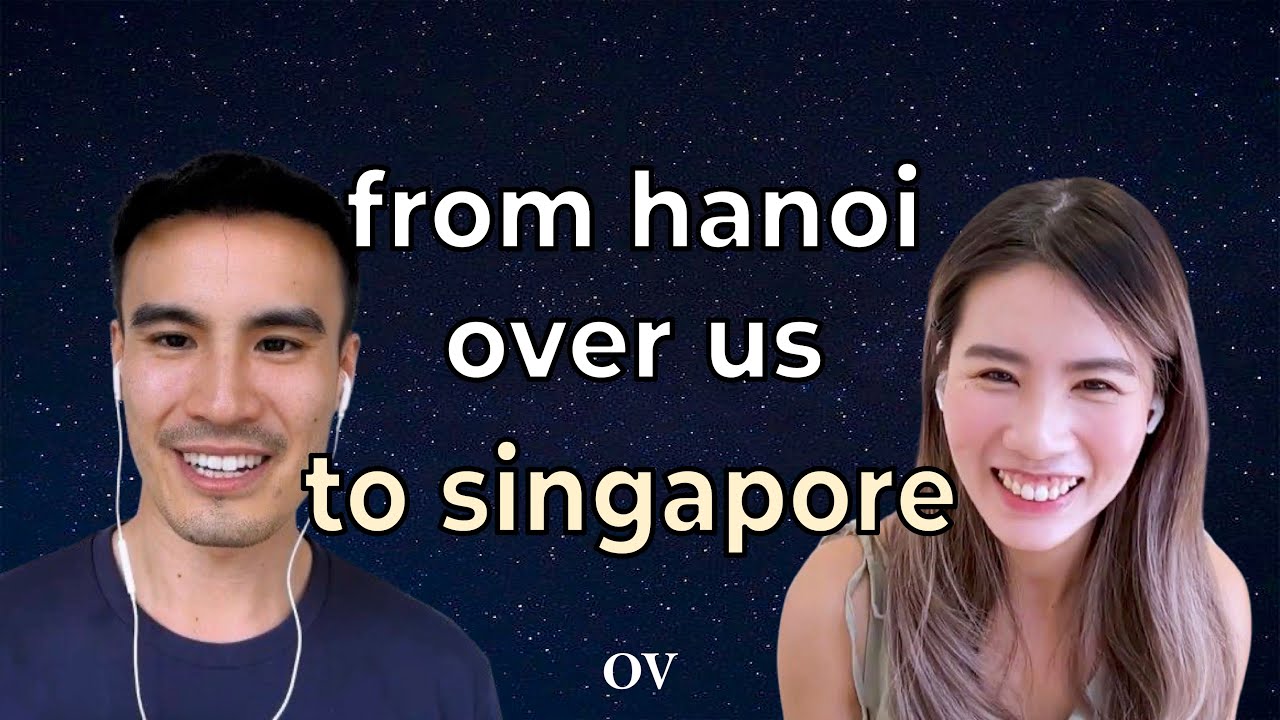
The conversation
Alice Nguyen grew up in Hanoi with her grandparents. Her grandfather, a horoscope master, told her from a young age that she had to go abroad to succeed. She flew to the US alone at 17, landed in Stockton, California, and spent the long flight cold because she did not know the English word for blanket. Her first host family kept her from calling home, so she asked the program for a new one.
After college in a small Pennsylvania town she chose without visiting, she went back to Vietnam. She thought her English and international mindset would count for more there than in the US. She took whichever internship called first, which put her in telesales at a Japanese recruiting firm. She had studied accounting to avoid people, and cold calling taught her to take rejection, uncertainty and pressure.
Three years at Expedia in Ho Chi Minh City followed, then a hospitality startup that she joined at the start of 2020, just before COVID. While deals dried up, she started a YouTube channel and kept posting weekly for two years. When a friend sent her a role at Meta, she applied for fun. The channel showed she understood social media, and she got the offer and moved to Singapore.
In this conversation, Alice shares how she manages her energy rather than her time, why she prioritizes hard, and her main advice for anyone aiming at big tech: prepare two or three years before the interview.
Five takeaways
- 01
Prepare years ahead. Pick the role you want and build its skills two or three years before you apply. Her YouTube channel, started in 2020, is what made her a fit for Meta in 2022.
- 02
Ask for help. When her first host family mistreated her, she went to the program that brought her to the US and found a family that supported her.
- 03
Rejection is a skill. Telesales forced her to hear no many times a day and not take it personally. She calls it one of the most useful things she learned early.
- 04
Play where you have an edge. She went back to Vietnam because her English and time abroad were an advantage there, where in the US she felt she started behind.
- 05
Manage your energy. Passion projects in the morning, work during the day, the gym when her energy drops. Strict time blocks never worked for her.
Timestamps
Each one plays the video from that moment.
- 0:00Who Alice Nguyen is
- 0:51Growing up in Hanoi with her grandfather
- 3:12Arriving in the US at 17
- 5:49What the hard start taught her
- 7:26Choosing a college she had never seen
- 9:36A small college town in Pennsylvania
- 11:52Why she went back to Vietnam
- 14:26Telesales at a Japanese firm
- 16:56Learning to face rejection
- 19:20Does a Vietnamese upbringing hold you back?
- 20:42Expedia in Ho Chi Minh City
- 23:39Why she left Expedia
- 24:24A startup, alone, in COVID
- 26:36Starting a YouTube channel
- 29:11Applying to Meta for fun
- 32:26Getting the offer and moving to Singapore
- 33:59How to break into big tech
- 35:29Lessons from Meta: prioritize
- 37:36Managing energy, not time
- 40:45What's next: wellness and content
- 43:48How to connect
Full transcript
ShowHide
Made automatically from the audio and lightly edited.
Quang Do
0:00Hi Alice, tell us a bit about yourself.
Alice Nguyen
0:02Hi, Quang. What a pleasure to be here today. My name is Alice. I'm currently the account manager for Meta based in Singapore. I have been in Singapore for about two years. Prior to that, I was in Ho Chi Minh City for about six years. I moved to Ho Chi Minh City after my graduation in the US. I was there for about four years, three years of universities in Pennsylvania and one year of high school in California. And before that, I was born and raised in Hanoi. So I have been in many different countries in my life, different places, different roles. And yeah, very excited to be here today and share with you and also all the members on some of the career stories I have in the past about 10 years.
Quang Do
0:51Thank you so much, Alice. I love how you reverse chronologically told your story. So let's start in the very beginning from Hanoi to US and then to Singapore. It seems to be a very interesting journey. Tell us a bit about your early life in Hanoi and your upbringing and how it sort of shaped who you are today and how you then manage life in the US.
Alice Nguyen
1:15Yeah, so, as I shared, I was born and raised in Hanoi in the center of the city. I think Hanoi is a very interesting place because it's a very big city, but then it also has a very traditional aspect to it. And I think that's really helped to shape me to who I am today. And talking about my early life, I want to mention about my grandfather. Because I lived with my grandparents majority of my childhood. My parents were too busy to work and they were building their own factory that really didn't have the time to spend it with me. So I was living with my grandparents and actually my grandfather is the biggest influence for my early childhood and also shaped me to who I am today. So since I was a very young kid, My grandfather always told me that I have to go abroad. He always told me that I have to go abroad in order to be successful. I think because he's a very good thầy tử vi, which is a horoscope master. So he could read my horoscope and he can see that for my life I would be very successful if I move overseas or study overseas.
2:33So he kind of plant that fit into my mind from a very, very young age. And that's why I wanted to study abroad in the US. Yeah, and he passed away about like 13 years ago, about like right before I moved to the US to study. So it's a little bit unfortunate that he wasn't able to be around and see I lived the global citizen life that he always wanted for me. But yeah, I think that's really helpful for me to shape into who I am today.
Quang Do
3:12Lovely. And then when you arrived in the US, how did you navigate life as a Vietnamese who came over?
Alice Nguyen
3:21Wow, it was very, very tough, Because at the beginning, I couldn't speak English quite well. I remember that it was my first time flying and I flew all the way. I was 17. I was 17 back then and it was my first time flying and it was a very long flight. I remember I was like going from Hanoi. To Taipei and then go to San Francisco and then after that, I'm going to a small town in California called Stockton. My English was very bad like back then because I didn't take it very seriously. And I remember I was like on the plane and I was cold but I couldn't ask for a blanket because I don't know what's the word for blanket. So was just like cold for the entire very long flight. I think when I came to the US, it was a big shock for me because I didn't learn a lot about the US culturally before I came. I just thought that the US is a very cool country, it's very far away. I think I can get a very good education there, but I didn't really learn a lot culturally. I arrived to a city called Stockton, not like San Francisco or LA or California that a lot of people imagine.
4:43Kind of a small town and I feel like very big cultural shock back then. When it was like kind of a suburb area, when it was like looking outside, there was no car passing by for about like 10 minutes. And imagine me, like was born and raised in, you know, Hanoi, where, you know, the streets are very busy, like a lot of like motorbike like going around. I was like, my God, I didn't know what I got myself into. I was very homesick for the first two months. And I think also living with a host family back then was also very challenging because as they wanted me to adapt into the US culture, they didn't want me to call my parents because they didn't want me to spend too much time longing for Vietnam and also... Just want me to immerse into this culture. So I think the first two months were very, very difficult. But I after that, got along with everyone just fine and I essentially moved to Bay Area to finish my high school there. So yeah, think it was just the beginning was just very, very difficult.
Quang Do
5:49Okay, thanks for sharing that. So how did you think the difficulty sort of shaped you then later on? What did you learn or take away from that experience?
Alice Nguyen
5:58I think what I took away from that experience, I think that's definitely the first challenge that I encountered in my life because my early childhood is quite, you know, like happy little kid, like doesn't have a lot of problems, doesn't have a lot of things to worry about. I think back then I would just need to think about my goal. What is my goal? Why I want to be here? I think that helped me to navigate through the challenges, of course, with the help of other people as well. Think reaching out for help is definitely the most important thing that I learned back then. Because at that time, my host parents mistreated me a little bit. They didn't really value the education that I wanted to pursue. They hosted me. Mainly for financial reasons. That's a very interesting story to share. Yeah, so that's why I had to reach out to the organization that brought me into the US and try to find a different host parent. And my second host parent is amazing. They're very supportive of me. And even we still keep in touch even until now. And they are also one of the people that built the foundation for my education and also my life in the US as well.
7:17So very thankful for that. But yeah, definitely first, for help always keep the goals in mind. Just got to grind through this.
Quang Do
7:26And then while you were in college or while you were in school there, how did you plan your next steps and how did you go about taking those next steps?
Alice Nguyen
7:36Yeah, when I was in school in California, I really wanted to go to college in the US. I think that was my main goal at the beginning. So as I share with you, my host parent at that time is very helpful. They are in the education space. They are also in the part of school as well. So they were very helpful in helping me to achieve the education that I wanted. That's why I applied to university in Pennsylvania. And I remember back then during the college applications, like a lot of kids, especially in Bay Area, they wanted to get into Stanford, they wanted to get into Berkeley, they wanted to get into UCLA, all the very big names out there. But remember, when I came to the US, I didn't even know the blanket word. So it's very difficult for me blend in with all the kids in the Bay Area who have been prepping for their college application for their entire lives. So it's just okay. I know where I am, so I apply to some of the colleges that I feel like I have the highest chance and get the best out of that opportunities and I applied to a university in Pennsylvania. And you know, like a lot of kids like in the US before they make their decisions, they would go on, you know, college tour to see what is the school like and do they want to spend the next four years there.
9:02I couldn't afford to do that because this was like flying across the country. You know, I didn't have my parents or, you know, my family member with me like then. So I was just making a very blind kind of decisions like, OK, like this is the college that looks or closer to some of the places that I want to go and see. So I just made the decision to go to Pennsylvania. Ask me why I made that decision, I really don't know. I think it was just a leap of faith. I feel like, okay, this is good.
Quang Do
9:36And how was your experience then in Pennsylvania and what was next then?
Alice Nguyen
9:40I think it's definitely very different compared to California. California is also still a very big state and a lot of things are going on over there. But I was living in a very small college town in Pennsylvania. There wasn't a lot of things there. I think there was only one small movie theater, there were two grocery stores, I think a few restaurants. I think there's one pub that the entire school goes there. During the summer, when all the college students came back to their families, the town was like ghost empty. Like it's very empty, very different compared to where I was born. Hanoi, Ho Chi Minh City, Singapore, like it's very, very different. I remember my friend and I, we had to bring our suitcase to go to a farmer market. To get our grocery for the week. There's no cab, no taxi. I think there's only a couple of bus like going to NYC, going to Philadelphia. Yeah, but I think the town there is like, you know, basically we walk everywhere. Sometimes there was, there was one time that we was like carrying our luggage of all the groceries and we just like carrying it back home and you know, some of the people going by, which is like, hey, do you want to get on the car?
11:05We can just give you a ride back to your apartment. So that's very nice. That's very sweet of you. And I was asking around all my friends who have cars that can drive me to grocery stores and drive me to some of the places that I need to go to because I can't drive. Think that's also another mistake of not preparing for the US. Yeah, so I think that's very interesting. But I think that's also a very good place to connect with a lot of people because I think when we live in a very small space and not a lot of distraction, it's very easy to build a connection with the people around it. And actually, I made very good friends with my college. Yeah, my college... What is it called?
Quang Do
11:52Mates and what came after college then.
Alice Nguyen
11:58Yeah, think what came after college is that right after my graduation, I came back to Vietnam. I think this is some of very interesting questions because a lot of people ask me why I didn't want to stay in the US. And even my mom always wanted me to stay in the US and continue my career there. But I think that's right.
Quang Do
12:17And your grandfather wanted it for you too, huh?
Alice Nguyen
12:19That's right. But think back then, was just right after the graduation, I moved back to Vietnam. I didn't even bother to look for a job in America because I think me being a Vietnamese with my English is my second language and also with my college degree is not like coming from top schools or anything. I think my chance of staying in the US and building my career in the US is very slim because I have I thought that I had a whole bunch of disadvantages compared to the local, compared to a lot of very amazing people in the US and also the opportunities in the US is definitely much less compared to the demand of people applying there. But then, then, more than 10 years ago, if I came back to Vietnam, I would have a lot of different advantages. Think back then there wasn't a lot of... International students like, know, people who study abroad. And also the education in Vietnam wasn't as good as right now. So, you know, the level of English that a lot of people acquire back then was, you know, like on average, not as good as right now.
13:37So I thought that when I came back to Vietnam, I would have a lot of advantages, like being an international student with an international mindset, with a fluent English. Then I would rather to be in that place where I have a lot more advantages rather than trying in the US and have so many disadvantages. So I came back to Vietnam and I think also like back then I didn't know what I want to do. I was studying business management and also accounting like in school, which very general. So when I came back to Vietnam, I just applied for different internships. And even the way that I choose my internship is also very funny. Whoever called me first, I'm going to say yes. That's it. I don't have any strategy like, okay, I want to get into consulting. I want to get into real estate. I want to get into marketing. No, whoever called me first. I'll say yes to that.
Quang Do
14:26And then what happened then when you return to Vietnam who called you first.
Alice Nguyen
14:32So the company called me first is Human Resource, a company kind of a headhunter. It's a Japanese company. So it's a very, very interesting culture to be in for a college graduate from the US to enter the Japanese culture. But I think that is the place that I also learned a lot. I think that's when I first exposed to sales. Before that, I was studying accounting. The reason why I was studying accounting is because I didn't want to deal with people. I felt like people are so unpredictable and very difficult to manage. That's why I was like, okay, accounting sounds like something in my forte because numbers can't be wrong. Know, like one plus one equal two, like no question asked, like no argument to that. So I was kind of very afraid of, you know, working with people. But then that's when I was interning in that company and it was in the sales team. They actually have a very big sales team and sales team is like telesales. So the most scary type of sales that a person can do, which is telesales, right? You basically have to do a lot of cold calling. Just pick up your phone and talk to strangers, give pitch and you'll just get the...
15:49Hang up immediately after maybe like five seconds of, hey, my name is Alice. And yeah, I think that's how I started my career. But I think that's taught me a lot. That taught me a lot in terms of how to deal with people, how to work with people. Because essentially, we would need to work with people a lot, like regardless of what field you are in or regardless of what role you are in, you would need to work with your people. So I that's helped me a lot to build the confidence around people and their soft skills to work and sales to people and also to overcome rejections as well because cold calling rejection is the natural part of it. And I'm very thankful for the time that I was there also to learn about the Japanese way of working. Always on time, there's a lot of different nuances to that as well. And also different ethics, work ethics that the Japanese really embraced that I think is very valuable to my career later.
Quang Do
16:56It's very interesting that you sort of came from a more trying to be accounting, more avoiding people into directly sales. And you know, how difficult was that for you and what was your starting point? Were you more on the introvert side or did it feel more natural to you?
Alice Nguyen
17:14It was very, very challenging for me. I think if I had to break down why it was so challenging, then I think the first one is facing a lot of rejections. Think growing up, I didn't face a lot of rejections. I think that's why I said, you know, I had a kind of like very easy childhood. You know, I asked a lot of things and I typically got what I want. So being in sales and getting that many rejections and try not to take it personally, I think that was very, very challenging. But I'm so glad that I got to learn that very early on in my career, because as I stepped outside of the college and entered my career and... I'm sure you will know that we will face a lot of rejections in life. And it's not because they are rejecting us, but it's maybe not the right time, not the right resource, or just we are asking from the wrong people. And so that's why facing that rejection is the part that very challenging, but I'm so glad that I have done that. I think second of all is also the uncertainty of the sales nature. Accounting or for some other work, maybe like whatever we put in there, we're going to get out the result, you know, equally to the effort that we put in.
18:38But for sales, it's very different. You know, like we put in the work, but there's still a lot of different factors that we can't really control in order to get the sales done. You know, being able to face the uncertainty is also something that I learned. And I think also the last part of that is pressure of the sales culture. Think the tele-sales culture is constantly on a daily basis. Have to make like 40 phone calls every single day and also you're chasing after a target in sales. I think that was a lot of pressure as well, but I think overall I'm so glad for that experience and especially like very early on in the career.
Quang Do
19:20Do you think Vietnamese culture or Vietnamese upbringing is, you know, hindering you to develop those skills and sort of makes it even harder for someone to later on develop those sales and communication and, you know, rejection, taking skills?
Alice Nguyen
19:36Yeah, I think being a Vietnamese is definitely one of the things that I feel like it hindered me. I don't think I like being in Vietnamese in particular, but I think being in the traditional environment growing up, like in Hanoi where people really value opinions of other people and also, you know, kind of values the society more than our own individual compared to the US or Western culture. So I think that definitely hinders my potential of being in sales or working with people. I think also because I was very young back then, I was about 20 years old, and I think also because of my childhood, I didn't have deal with lot of difficulties or challenges. That's why those years are kind of like the first time that I encountered those kind of problems.
Quang Do
20:42And then after the role for the Japanese company, what came next for you?
Alice Nguyen
20:59And yeah, I think that was in Hanoi and then I relocated to Ho Chi Minh City to join one of the also like big tech company which is Expedia and I think that's also one of the pivotal moment for me as well to be in Ho Chi Minh City and also to join a US company and it just really unlocked a lot of my strength and my growth as well. First of all, talking about Ho Chi Minh City, I just feel that fit into my characteristics and also my goals a lot better compared to Hanoi. I still love Hanoi by the way, I still call myself a Hanoian. I mean, career wise, just think that Ho Chi Minh City is a much better choice. Things are moving at a very fast pace there. And at Expedia, I was able to meet a lot of amazing people that even now they're still my friends, my best friends, I'm sure for life. Not only just colleagues. Yeah, so I think that's really helpful.
Quang Do
21:51How was your experience then and what came next?
Alice Nguyen
21:55My experience at Expedia is amazing. There's nothing I could complain about. My experience at Expedia. I remember vividly when I decided to quit Expedia. I was booking a meeting with my senior director who actually offered me the role. He was really helping me for three years that I was there. And even he's still my coach and mentor now. And I remember having a meeting with him and I was just like, hey, I just need to share that, you know, resigning from my current position. Then, and after I finished that sentence, my tears was like pouring out. Was like, I was crying like crazy. And he was like, okay, okay, calm down, calm down, calm down. Like, and the first thing that he asked me, which I still really remember vividly because I feel so grateful. It's like, okay, what is the next step? Do you have any next step yet? What do you plan to do after this? And he didn't ask me, why you quit? What's happened? And a whole bunch of things. He didn't care about that. He was really genuinely care about me. And I think that's something that I really value in my experience, which is having a lot of amazing mentors and amazing colleagues who helped me to shape me into who I am today, helped me to develop the right mindset, the learning mindset, asking the right questions.
23:30Yeah, I think just amazing in general to help me to the foundation for personal development and career growth to help me to achieve to who I am today.
Quang Do
23:39And what made you quit?
Alice Nguyen
23:41I think what made me quit is because I feel like my learning curve was like heading toward the end. It has been like three years there. I think like also Expedia in Vietnam, there's only one function, which is the market management, which is basically like account management and the client facing role. There was a lot of different roles in Expedia, but like in Expedia in Vietnam, there was only that function. I think that's why I need to, you know. Leave and get outside of my comfort zone because like my god that was a very comfort zone for me. Was like but I need to make a very difficult decision to step outside of that and grow myself even.
Quang Do
24:24Did you have a next step then?
Alice Nguyen
24:27Yeah, think definitely next step is very different compared to Expedia. Next step is startup, also in the hospitality and tech industry. But I was the only one based in Vietnam to develop the market. And if my role at Expedia was more the sales but like farmer role, then the next role is a lot more the hunter role for sales. Back again, a lot of cold calling. A lot of cold emailing, lot of reaching out to people, even though at that time I felt lot more comfortable with doing that. But then there's also another challenge for me, which is working with just myself, working from home. I also was feeling quite lonely at that time. And then I joined that company beginning of 2020. And you know what happened at beginning of 2020? COVID. And what is the worst industry to be in back Hospitality! Yes, I was there by myself, alone. And there's also a different challenge that I faced because I think four months into the company, there was one day that I woke up and my colleague was just texting me and saying, hey, you know what? I was like, what?
25:42Like yesterday they just fired about 80 people. And I'm like, my God, I didn't know. Like that was happening. And I think when I got into the Slack, there was like the entire list of, you know, 80 people that were kind of like let go like back then. And luckily I wasn't, you know, in that list. And was thinking back about why they kept me even though I was just in the role for about like four months back then. And then I feel like, you know, one of my advantage is I'm the only person who can speak Vietnamese in the company. And they have Vietnamese clients. You know, if there's people, like three Chinese speaking people, right, they can let two other Chinese speaking people go and keep one. Then, you know, that one can still talk to Chinese clients and, you know, partners and things like that. But I'm the only one who can speak Vietnamese. So I think that is my advantage back there.
Quang Do
26:36And then came Meta, right?
Alice Nguyen
26:37Yeah, I think like also how I transitioned into Meta is also back then it was COVID also in the hospitality industry. Everything was very quiet. Definitely I was very lucky to still have my job at that time. But you know, honestly, it wasn't very enjoyable. I got too many rejections in one day. Like this is not the right time. Are cutting costs. Our hotels are not opened, like we are shutting down, we are cutting people. So there's a lot of challenges like working. I remember every single day when I woke up, I feel like, my God, another day, I have to make the calls, but I already know the calls not gonna lead to any result. So I can't live my life like this. I need to find some other things that I'm very passionate about and some of the things that I want to you know, on the side, in order to keep my sanity. Especially I was like alone, like no colleagues around in Ho Chi Minh City. Luckily I was living with my family so that helped. But yeah, that's when I started my YouTube channel. That's when I started to do content about, you know, skincare and you're putting myself out there.
27:54Yeah, I think I remember my first video was very, very bad, but I love doing Every single day when I come to the co-working space, we used to the co-working space there, I just brought my camera with me, also my microphone with me and just knew after work about like five, okay, will pull out my camera and film another videos. I think that helped to keep me going during that time. And it was consistently for about two years, I was pushing out videos every single week, like really. Fine-tune my videos, learn how to edit, how to set up cameras, how to do different things with content creations. And yeah, I love it so much to the point that I grew my YouTube channel to getting more affiliate marketing, also getting more the sponsorship, working with different agencies, working with different brand deals. So it was very amazing to me that really helped to... You know, like, fuel my passions and, you know, bring me a lot of joy in my life like back then. And I think that's also how and also what helped me to got into Meta as well.
29:11Because when I was applying to Meta, to be honest, I was just applying for fun. At that time, I had a hobby of going for job interviews. I don't know, but I had a hobby because I feel like this is a very great way to first of all, to learn about different roles and learn about different company. Think the two of the job interviewing process is a very great opportunity for me to learn about the company as well. Also to learn about myself because you going to the interview, answering many questions on, my motivation, what I want in my life and also, you know, the technique of selling myself. I think like, A lot of people, when they think about, you know, job interviewing, they just feel like, my God, this is something very painful. Actually, it brought me a lot of joy back then. So I was just, you know, applying for different company, even though I didn't really have the intention to, you know, go into that company because I would just enjoy my remote job so much at that time. It gave me the time and flexibility to view my YouTube channel as well. So also when my friend shared with me the job posting for Meta, I was just Like literally I was texting her like, not too interested, but well, give it a try to see what is the interviewing process of a big tech company would be like.
30:28So I just applied to Meta. Of course I gave all my best because you know, being an overachiever myself, like even if I don't have the intention of actually joining them, I just want to give my best try. And I remember they was asking me like, will you be open to relocate to Singapore? And I was Open to relocation, but even though deep down inside I really didn't want to because I just bought a house in Ho Chi Minh City, I think I would settle in Ho Chi Minh City. Didn't really want to relocate at all. But then I think going through that interviewing process, I was able to be inspired by a lot of amazing people. Especially I'm coming from a place where I was just working by myself, just myself being in Vietnam. And imagining myself working alongside a lot of amazing, amazing people at Meta. I was like, wow, this is a very great opportunity for me. I think also one of the things that helped me to get into Meta was also because my experience with video editing and also with building my YouTube channel as well. Because again, if you can tell from my career story, I didn't have any background in marketing or social media whatsoever. I didn't even know how Meta monetized.
31:47I didn't really think about that. Didn't know that. But I think definitely the experience of building the YouTube channel helped to, first of all, proof that I have the passion for social media and content creation. I think also second of all, exposed me to a lot of skill set needed for that space as well. And combining with my skills in account management, business development, Then I got the job offer from Meta as an account manager. And that's why I joined Meta and relocated to Singapore. And yeah, that's why I'm here today.
Quang Do
32:26Tell us a bit about when you received the offer and what you were thinking at that time. How did it feel for you?
Alice Nguyen
32:34I think I already made the decision that I would join if they offered me even before the offer came in. But I think what changed my perspective is throughout the interviewing process. Because the interviewing process, had to have a loop interviewing with different people at Meta. And every single person is so nice, so talented. And I mean, like, I could imagine myself working alongside them. That would be so amazing. And actually, that's true. When I joined Meta, I think all the people are amazing. I love working with them every single day. They inspire me a lot. They challenge me a lot, but for the better. And every single day, I still have some sort of imposter syndrome of like, my god, they're so amazing. And I'm here alongside with them. Like what did I do to deserve this? And I think that's the beauty of it. That's why that changed my mind about from not relocating to Singapore to, okay, yes, I'm definitely going to go to Singapore and join Meta. And remember, I was definitely very happy. I couldn't imagine this, especially when I was just thinking, I'm just applying for fun.
33:52And I think also because I think I couldn't get because I don't have any background in marketing or social media at all.
Quang Do
33:59I think one thing a lot of listeners would be curious about is what would be your advice or tips for people who want to break into Big Tech and interview for a company like Meta?
Alice Nguyen
34:09Yeah, I think one of the advice I would give is prepare for the interview that you want to go into about two, three years ahead of time. A lot of people just think that, you know, I'm just going to apply and when people call for the interview, I'm not going to prepare for that interview. No, I think it doesn't work that way because I think thinking back about my stories, I started my YouTube channel back in 2020 and 2022 is the time that I applied for Meta. I think opportunities will present itself when you are already prepared. It's not like you have to prepare for the opportunities, but you have to think and strategize before that. Let's say if you want to get into Meta, what kind of role that you want to get into Meta? Let's say product management, or account management, what role and what are some of the skills that they require and how you're going to prepare for that. That skill set two, three years ahead of time. Those two, three years is kind of like enough time for you to build up that skill set, right? And I think nowadays, I think employers don't just only value their college degree, but I think it's a lot of self-learning and how you develop yourself, how you build up that skill set to be ready for that position.
Quang Do
35:29Yeah, I love that. And what were some of your personal lessons you've learned since joining Meta?
Alice Nguyen
35:35I think personal lessons, there's a lot of personal lessons that I learned in Meta. I think things are moving so fast at Meta. Very different compared to my previous role at the startup that I shared about previously. I think when I joined Meta, I didn't have time for my YouTube channel anymore. I stopped doing YouTube even though I really wanted to do. But after a while, I'm able Figure out my schedule and plan the time to build my Instagram account instead. Well, I mean because now I'm a Meta employee that would make sense for me to build up my Instagram account rather than building my YouTube channel, right? But I mean, I still love YouTube definitely one day I will come back to YouTube. I think one of the personal lessons, another personal lesson that I learned is ruthlessly prioritized because there's so many things going on constantly at There's so many different exciting projects. I think being able to evaluate what project or what things that you want to work on that's going to bring you the most impact in the long term and do actually prioritize those projects is something very important that I learned not only for Meta, for my job at Meta, but also for my personal you know, as well.
36:59I also have so many hobbies that I want to do. I want to do my YouTube channel. I want to my Instagram account. I'm currently leading the OV in Singapore, like preparing meetups for everyone. I also love playing sports. I love like pickle balls at the moment I'm addicted. I go to gyms every single day. I love painting. I love so many things. How I'm gonna prioritize activities in my daily life as well. So I think that's something I learned a lot at Meta that not only for my professional career, but also for my personal life as well.
Quang Do
37:36And I guess you were forced because a big tech life or big tech career also takes a lot of time and then you still have a lot of interest. I think it's the same for me. So how do you actually go about prioritizing and structuring your day to day?
Alice Nguyen
37:51I think I have a system and my system is kind of like how I manage my energy. I think we like on a daily basis, we have so many different type of activities, right? Some of the activities gonna give us the energy. Some of the activities gonna drain our energy. So I think before that I was about all about like time management, like, okay, like what I'm gonna do in that new block of time. But I think more nowadays I just think know, of like energy draining or energy boosting activities. So let's say in the morning, I created my morning routine to make sure that I have the most energy and work on my passion projects before I come to work. It's not like, you know, my work is not my passion, but I mean, working my Instagram account or working on the OV stuff to create the communities for people to have meaningful connections is something that also sparks a lot of joy for myself as well. So doing all kind of that in the morning is to give me a lot of energy to go about my days. And after that came to the office working nine to about five and then five I just feel like okay my energy is very draining at the moment so I would just hit the gym like get a lot of like exercises and after that I feel like okay I'm good I have more energy now I can go back to do some other stuff either like for Meta or for my personal project as well so that is the framework that working for me at the moment I feel like you know time blocking doesn't work for me.
39:35I mean, of course I do time block for some important stuff, but I wouldn't block my calendar completely full from six in the morning all the way to about like 10 at night. I don't know, it doesn't work for me. Does it work for you?
Quang Do
39:52Yes, but I need to be also intentional on how I block. So there are even blocks for taking breaks. There are even blocks for resting, even blocks for doing nothing, even blocks for spending time with friends. So I live by my calendar, but I try to keep it flexible as well. And I try to make it, you know, the blocks big so that I know in life. A lot of things take more time than we think. Sometimes things take shorter than we think, but I always account for that. And over time, I get more experience in how I built the blocks, but I would sort of like to have some structure in it, but it's rare that I stick to it throughout the day. It's just for mental structure. In the end, it's going to be different anyways.
Alice Nguyen
40:34I think everyone has their own different approach when it comes to life. But I think you just try different stuff, right? After a while, you will figure out what works for you.
Quang Do
40:45Thanks for sharing that, What's next for you? Any upcoming projects or goals that you're excited about?
Alice Nguyen
40:54Wow, as I have many hobbies, I also have many goals. I think I'm still struggling with ruthlessly prioritizing my goals. But I at the moment, I just really want to double down on what I'm focusing on, which is growing my Instagram account, spreading more positive messages to the world, and also a lot of content relating to career development, personal development, wellness in general. I wellness is something that I'm very passionate about because often people think that, you know, as they just guide through their 20s and moving into their 30s, that they will be able to be very successful in life. But being successful in life is not about just your career, right? Because your career is just only one aspect of your life. You have so many things going on as well. Your friends, your family, your mental health, your physical health, and so many things ongoing. And actually, if you are able be very healthy with your mental health, physical health relationship. That will help your career as well. But then a lot of people often overlook those aspects. I think wellness is something that I'm very passionate about. Want to also share more tools and resources for people to embark on their wellness journey to build the foundation for their success and mental well-being.
42:20There's a lot of like self care and self love in general. So there's some things that, you know, I'm focusing on at the moment besides of course, being the account manager at Meta and also, you know, for the OV activities and you know, meetup in Singapore as well.
Quang Do
42:36And then quick plug for your content and insta. What, sort of your focus and what are the topics you cover and are passionate about.
Alice Nguyen
42:45The topics that I'm passionate about are your personal developments and also wellness and your self-care and self-love. And I think it's not about... Think often people think that when they create content it's for the audience to see. But I think creating content creation for me is also for myself as well. It's kind of like a diary for me to record what I have learned. And also how I distilled all the information that I learned on a daily basis. Because information and resources and tools are out there. There's a lot of different wellness, self-care, self-help kind of books and tools and resources, right? But I think I also want to use my social media channels as a way for me to record all of that and also kind of like give my thoughts. Reflections and also my experience into the content that I share in my Instagram as well.
Quang Do
43:48I love that. How can our members or people connect with you or follow your work?
Alice Nguyen
43:54Wow, yeah, how people find me? I'm available on many, many different platforms. So Instagram, if you want to take a look at the content that I share on also my daily life, then it's its.alicehere, that's on Instagram. I'm also available on LinkedIn as well. If people want to connect with me, my handle is alicenguyen2712. And I'm also available on the OV Fellowship. I actually log in, you know, sometimes on a weekly basis to go and connect with people on the Slack channels. Amazing people, my god. When I go into there, to be honest, sometimes I feel like the imposter syndrome as well. I'm reading through all the introduction of all the OV fellows and I'm like, my god, these people are amazing. What did I do to deserve to be here? So that people can also find me that as well. If you happen to be in Singapore, Come to OV Singapore meetup. So I'm the host for OV Singapore meetup. So you can always find me there as well in person. I love in person interaction. So yeah, come find me.
Quang Do
45:01Plus one to that. OV Singapore meetups are one of the best in the world. I would say, and Singapore chapter is one of the best run chapters in the world. Thanks to Alice and yeah, thank you for today. And thank you so much for, thank you so much for sharing and I see you in the Singapore meetups and in Slack. Thank you so much.
Alice Nguyen
45:19You're so kind. All right. Thank you, Quang, for giving me the chance to share my stories with all the listeners.
Quang Do
45:27That's it for today. If you enjoyed this, you will love the OV community. Learn more at overseasvietnamese.com.
There’s more inside OV.
The long version
Write-ups of the conversations, kept in the library of the OV app.
Live sessions
We host members-only sessions with some of our podcast guests.
In person
In Saigon, we invite podcast guests to join OV meetups and dinners.