Vietnam is underrated: building globally from Saigon.
Stephen TurbanCo-founder, Lumiere Education
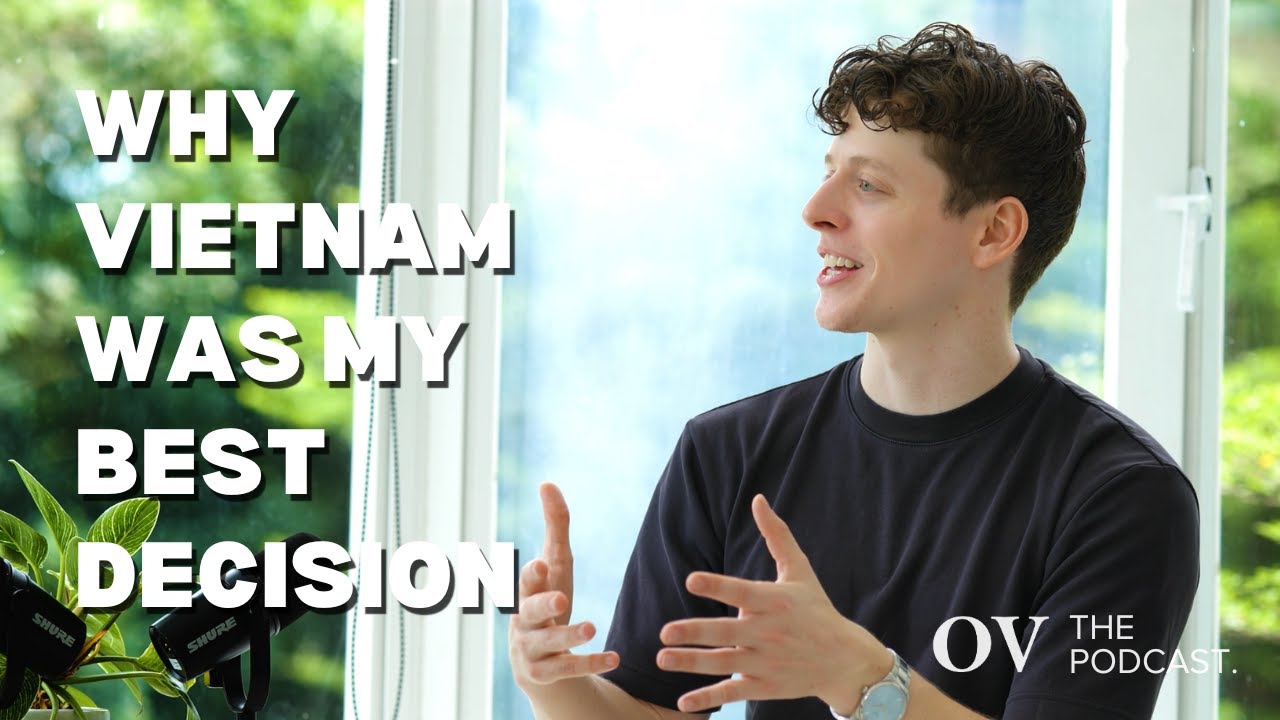
The conversation
Stephen Turban is an American who jokes that he is half an OV. He grew up mostly in Missouri, spent part of his childhood in Hong Kong and Singapore, and did an extra year of high school in Taipei. Before starting at McKinsey he spent a few months in Saigon studying Vietnamese, then kept practicing at a Vietnamese nail salon in Boston. He later quit McKinsey, moved to Saigon and worked at Fulbright University.
He says Vietnam ruined his Harvard Business School PhD. Doing it online from Saigon during COVID, he started Lumiere, a program that pairs high school students with researchers, based on a model he had seen in China. When the school found out, he had to choose. Lumiere grew from 12 students into a company of about 80 people, working remotely from Vietnam, India, China and the Philippines, with low eight-figure revenue and no outside investment.
In this conversation, Stephen explains his side door approach to competitive places, why he was cut from 40 of the 42 companies he interviewed with, and why no one cares as much as you fear, so you should try more things. He shares how he learns by copying proven models and running quick tests, why he puts a price of $3,000 on an hour of his time, and why he spends money on experiences.
He also argues that newcomers should treat Vietnam as a long-term home rather than a stopover, explains how learning Vietnamese and doing stand-up in Vietnamese root him here, and shares his dream of building a company big enough to draw talent to Vietnam.
Five takeaways
- 01
Use the side door. Competing head-on for the same narrow door is hard. Learn how a system judges people and position yourself where few others are.
- 02
No one is watching as closely as you fear. People are busy with their own lives. Lower your bar for action: post, speak up, try the thing.
- 03
Copy, then test. Take a model that works elsewhere, assume you only half understand it, and run a quick experiment in your own context.
- 04
Put a price on your hour. A number makes trade-offs clear: what to delegate, what to pay for, and what deserves your own time.
- 05
Commit to Vietnam. Treating it as a stopover leads to short-term choices. Act as if you are staying: learn the language and build local friendships.
Timestamps
Each one plays the video from that moment.
- 0:00Intro
- 0:42Who Stephen Turban is
- 1:41Growing up between Missouri and Asia
- 3:25Why Vietnam
- 4:21Learning Vietnamese at a nail salon
- 6:34Quitting McKinsey for Saigon
- 7:31How Saigon ended his PhD
- 9:33The side door approach
- 14:23Are prestige paths still worth it
- 16:30How Lumiere started
- 18:34Why he bootstrapped
- 20:23Grinding with no money
- 21:51Make money before you raise
- 23:13The early team
- 24:33How Lumiere runs today
- 25:59Growing without investors
- 27:09Should founders build from Vietnam
- 29:28How to start in Vietnam
- 31:42Vietnam is not a stopover
- 33:53Committing to Vietnam
- 36:40Keeping ties back home
- 39:37What Lumiere taught him
- 41:39How he learns
- 43:40Looking for signals
- 45:49Copy, then test
- 48:05No one cares about you
- 50:28Learning to be cringe
- 53:08The rejections no one sees
- 54:39Opportunities over judgment
- 56:55Working on impatience
- 57:46Pricing his time at $3,000 an hour
- 1:02:38Spending on experiences
- 1:07:04Money as a means
- 1:11:43Costly signals and language learning
- 1:12:52The impact he wants
- 1:14:13Advice to his younger self
- 1:15:56How to connect
Full transcript
ShowHide
Made automatically from the audio and lightly edited.
Stephen Turban
0:00When I was in college, I actually applied. I counted 42 companies. Then I got to the interview round and I got cut from 40 of the 42. So I got rejected from every single company except McKinsey and like some company in China. Your intro was like, "Oh, this guy works in McKinsey" But like no one talks about all the thing like I mean I failed the interview so bad that the interviewer asked me about my family life. Like it was so bad. It was so bad. One mindset I have that I think has served me is that no one gives a [expletive] about you. Yeah. Not in a bad way, but just not in the sense that people are very self-absorbed. And so a lot of life I think we spend in fear that we're going to be judged by other people, but the reality is that no one gives a [expletive] No one cares about you. And so the bar for action should be much lower.
Quang Do
0:39Stephen.
Stephen Turban
0:40Yes. Quang.
Quang Do
0:42Hello. First non Vietnamese that I have on the podcast and I think you are a special case from whom a lot of Vietnamese overseas Vietnamese can actually learn a lot. For those who don't know you. Yeah. How would you introduce yourself?
Stephen Turban
0:58So, I'm Stephen. I probably my biggest identity is I'm a founder. I run an education company called Lumiere. We're this very nerdy company. We work with mainly high school students, pretty global of a company. We're about 80 people, work with a few thousand students each year. Another part of my identity is that I'm based in Saigon. I am like the O in OV. So 50% maybe. And I've been here for about five years. And then I have a side kind of identity we're not going to talk about too much where I do standup comedy in Vietnamese. So I'm one identity I have is just that white dude that spends way too much time trying to flex his Vietnamese. I would say that's a big a big part of my identity here at least. Yeah.
Quang Do
1:41Let's go all the way back. You know where you're from? What was it like growing up?
Stephen Turban
1:48So back to where I'm from originally. I'm an American dude, American white dude. I kind of grew up in this split childhood where most of it was spent in kind of a very random part of the US, Missouri. My dad was a professor at the University of Missouri, but then we spent a decent amount of time also in Asia as a kid. So we lived in Hong Kong and Singapore and then I was an exchange student in Taipei at high school. So that was like in Chinese. I wore a uniform. I like you know took Taiwanese math class in Chinese very I was I failed that year. And yeah and so I spent a decent amount of time in Asia as a kid as well. And then I was at Harvard as an undergrad and I had met a few friends actually who were Vietnamese right when I was Harvard at Harvard. Yeah. Right when I was matriculating in right when I was just coming in and at the end I had I ended up getting this awesome job offer at McKinsey. And so I was super stoked about that. But I had like a four-month break to do whatever I wanted. And I was thinking what I what I want to do that would just be for me and I really like language learning. So I thought oh I want to learn a new language. And then I had these Vietnamese friends. I actually had a few friends introduced me to like V-pop. So I think it was like Sơn Tùng at the time.
3:04This is like 2017 or something. And then and I was like oh Vietnam is interesting. It's growing really quickly. Maybe I'll just go for fun. So I came to Saigon and then I studied Vietnamese for two three months. And then yeah and then I after that I went back to McKinsey. I worked in the US and China but I decided to come back to Vietnam. Vietnam just had this like I just have this really close connection and love of Vietnam and particularly Saigon.
Quang Do
3:25More than other Asian countries you feel.
Stephen Turban
3:28Yeah. Yeah. Way more. Way more. I mean I've you know like I am that white dude in I'm like I'm like on the edge of being like that dangerously webo dude. But like I spent a lot of time in Asia as a kid. For me Vietnam I love I mean I love Taipei. My host family there I really love them and Singapore is amazing. China's really interesting. But I just Vietnam for me is the most exciting place. It's the place I feel the most joy. It's also the place where I feel like there's the most opportunity for someone like me who's not from that place. I mean, obviously I'm, you know, unless there's like some Jewish strain of Vietnamese. So I love Vietnam and Vietnam is like by and people like people ask I think when you're a foreigner, even if you're I think even if you're Việt Kiều, people often ask, well, how long are you planning to be here? What's your plan? And I'm like very longterm in Vietnam kind of a long Vietnam long Vietnam. Yes, exactly.
Quang Do
4:21Walk us through that three four months Vietnam and then all the way to today. What happened in between?
Stephen Turban
4:27Yeah. So what happened? So oh my god so funny. So this these three months I spent learning Vietnamese like super intensely. So I was like doing five hours of class a day and I just I was having a great time. Vietnamese is definitely one of those languages where people are, you know, I think I think actually even if you or foreigner people are very appreciative if you put in effort. I think just people find it they like that you care essentially and so but I had such a great time and then I came back to the US. I was in back in Boston and I just really missed Vietnam. I came to I came to US. I just had this feeling, oh man, I really there's a piece of me that was kind of it's so cheesy to say left in Vietnam, but there just there was just this feeling of like I really have to go back. And so I like I like [expletive] I should keep studying Vietnamese, but I didn't know how. So what ended up happening for the next year was I in close to my house in Boston, there was actually a nail salon called Sunrise Nail Salon, right? And so yeah, Vietnamese. Yeah. So I walked in one day and I was like, I wonder if they're Vietnamese and they and they were they're actually from [unclear]. And so for the next year when I was at McKinsey, I would go to work and then if I came back early enough, I would actually go to the nail salon with my textbook and then either get my nails done or just sit there and talk to the ladies and ask them questions in Vietnamese. And I just had such a good there's such a good time and that's like a and so for me I was really I there's something there's something about Vietnam that was really important to me.
5:50I now know a lot about actually nail salons now. So if you want to talk about that, I know very deep. I'm very deep in the nail salon space. But so after about a year and a half, two years, I thought, man, I just I should go back to Vietnam. I don't know if I'm going to be here long term. I was going to apply to PhD programs, but I thought I should just come back and give it a shot. And so then I came back and ended up working. Yeah, actually I quit McKinsey. I didn't have any plans. I just came to Vietnam and I thought I'm going to apply to PhD programs in about a year. So let me just find a job here. And then I ended up finding a job at a university here called Fulbright University which is just getting started. But the it wasn't really about that job though I love Fulbright. It was much more about just being here in Saigon.
Quang Do
6:34So what was what was that decision-m thinking like you just came no plans you quit?
Stephen Turban
6:39Yeah. Yeah. It sounds it sounds like I think people kind of can I one thing I don't like is when people tell a story of like oh my god I was just like risking it all like you know. I think that's kind of always a lie when people say that. So what I really had planned was that I was like, "Hey, I'm gonna come to Vietnam. I'm going to apply to PhD programs because my dad's a professor. I wanted to go back and do a PhD in like a business school." So I knew, oh, I have a one-year period. So it felt very safe, actually. So I just came back. I quit McKinsey. I came to Vietnam. And then, you know, there were there's so much I mean, you know, there's so much opportunity here. And so people were like, "Oh, cool. You like you're this, you know, McKinsey dude. You probably are reasonably smart." And so, you know, people like, "Hey, you can come work with me if you want." And so I don't think it was that risky to be honest. I was just it was just I had this one year but then after a year I realized like [expletive] I really like this place. I don't know I had to make a decision. Do I want to keep doing my PhD? Yeah. Or do I want to stay?
Quang Do
7:31You ended up then doing PhD at least in part. Yeah. And we will talk about the business that you run. Yeah. Later, but you know just quickly running through that time. What happened then?
Stephen Turban
7:41Yeah. So what happened was I really think Vietnam ruined my PhD like totally ruined it. Like I would be Dr. Turban right now if it wasn't for Saigon. It's like you it crushed me. So what happened I mean it's pretty bad. I just saw people around me. I know you're friends with [unclear], who are starting companies and in Vietnam it's just so entrepreneurial like everyone is doing something like whether it's you know selling [unclear] or if it's you know running a cafe or it's running a big you know video company or doing yeah it could be nothing trying to sell something and you're not but so I just felt like man I'm really interested in this like I think I got exposed to entrepreneurship for the first time and so my dad's professor. So, I thought I should I should do the PhD cuz I've been thinking about it. So, I applied. I got in. I ended up choosing to go back to HBS, which is which I was super excited to go there for the PhD. And then, COVID hit and so I had a choice. Do I want to go back to Boston or should I do I want to stay in Vietnam for like the first part of COVID? So, I decided to stay in Vietnam. And so, I was doing my PhD online. I It was amazing cuz I was like I could be like a cocktail bar, like a group class, video off. People are appreciative like, "Oh, thank you, Stephen, for staying up."
9:00So late. I'm like, they're just blowing it off. And so eventually I eventually my PhD program realized that I had started a company at the same time and I was also not on campus. And so I essentially I got I had this like this hilarious meeting with a administrator who pulled up my company website which had my face on it and she said, "Hey, Stephen, did you start this company?" And then I was like, "Yeah." And then she's like, "Hey, you have to make a choice." That was like the choice point. Yeah. Does that make sense? I mean it just took like a random walk.
Quang Do
9:33If you now like reflect back on that journey Harvard McKinsey HBS now founder Vietnam will get through that you know what's your through line in that journey.
Stephen Turban
9:43I yeah think about this I think the through line is I am someone who hates competing with people. I actually don't like it. I really don't like it. I find it uncomfortable. I actually think I think it's cuz I have a there's some level of fear I have of losing. I don't I don't like I don't like I think I don't like to lose. I like winning. I like winning, but I also don't like the chance of losing. You know that makes sense. I just I'm kind of scared of it. I'm not like some like alpha dude who's like, "Let's go." Like no, I'm like I'm like I'd be like the, you know, if we were like 500 years ago, I'd be like the guy in the corner, you know, like you know, trying to like not get beat up by the guy with swords, right? So I think all of those are about me trying to achieve something that looks like, you know, has some kind of front door elements to it. Meaning it's like, oh, this is like Harvard. Oh, this place is really, you know, well-known. But always trying a strategy that is I think I call it like a side door approach. So, approach that is a little unconventional in the sense that it's hard for people to compare themselves to me. I don't like to be compared because I find again I find it because I usually lose like I kind of don't like I find it uncomfortable. And so like an example with with Harvard for example like when I was undergrad I was like my profile I actually took a year off of high school which is pretty uncommon for American students.
11:04It's not like a gap year like I was like first year, second year, third year took a year off and then came back for a fifth year of high school. So I took five years of high school to go to Taiwan because my grades were so bad in high school. I knew I needed to buffer my grades with an extra year. So, I just told everyone, "Oh, I have to take a year off." And then I and then I spent that year trying to like do really well in tests and then become like this like Chinese speaking kid from Missouri. And so, even like getting to Harvard, I thought was much less about like me being the smartest kid. Definitely not more about like me just being this weird kid who had these like weird attributes. And I think that's true for getting into McKinsey for starting company. Aim for Vietnam. I think Vietnam is like I just feel like Vietnam is a really great example of a place where people like you or like me can have a lot more impact than if we were back in Germany or back in back in the States. And so, there's just there's an opportunity to be a little bit more side door in terms of having some impact and not just for other people, but also building something for yourself that that you want.
Quang Do
12:07Yeah. Elaborate on that life philosophy of yours where getting into competitive places by being deliberately non-competitive or side door thinking like when did you realize that's the way that you want to operate and it works out.
Stephen Turban
12:30I think the I I'm not sure what the origin is. But I do remember so it comes from a place of like actually of just discomfort. Like when I was in seventh, eighth grade, my best friend, this guy Carter, I love this guy to death. He was just better than me at everything. And I remember kind of loving him, but there was a period of time where I felt really jealous of him and I remember hating that experience. And then we went to different high schools and then I realized, oh, this friendship is so much better, but we're not comparing each other like one-to-one. And this is my best friend. Like I love this guy to this day. And so when I when I see a goal, I really don't like the experience of like someone comparing me to someone else one-to-one because then it creates this like then it's just about like who grinded harder. I would much rather the experience of being just a little bit different from everyone else. And it might be that I'm completely not the right fit which is also fine. But usually in systems they're all systems are human and humans have a tendency to categorize people. So if you get categorized in a big bucket, it's actually quite difficult because now you're in this like this bucket here that's been competing a lot. If you're in like just a different bucket, suddenly opportunities tend to tend to flow to you. And so I think to me that was a kind of working backwards of like what is like a what does like Harvard want from a student? They want like this weirdness. They want someone who seems like oh this kid's like doing cool stuff.
13:50He's going to do stuff cool stuff in the world. Even like a McKinsey like McKinsey at the surface looks like okay it's just like this consulting firm but it's still based on humans and there are weak points to the system like what I did was I actually entered in via a data science position and I switched to a business like a generalist position because my sense was like McKinsey once you're inside a system people will probably feel uncomfortable about rejecting your request to switch so it's much easier to get into data scientists than switch that's what I did so I think there's always weak points in systems and so it's really valuable I think to spend time thinking about.
Quang Do
14:23I love I love that actually because it's a unconventional but I think interesting way to think about careers right and Harvard McKinsey I always say these are narrow doors where a lot of people want to go through if you choose the same door it's going to be very tough and you compete basically with crazy ass hardworking smart people right and it's a very narrow door so I think the side door approach is a very good one do you think now 2025 Harvard, McKinsey very competitive places there's still merit in trying to get into those to later perhaps pursue a more unconventional career. Yeah. So are you are you glad you've put in those years?
Stephen Turban
15:04Yeah. Oh 100%. So I really think that so I one thing I think the mistake people take from like the side door strategy is like just be weird. That's actually like not the strategy. It's not about like being like I'm actually not saying be unique. I think that's bad advice. Like it's about in the context of a system recognizing how other people evaluate others and then figure out ways to position yourself more uniquely. So I think you know as like a founder now which is kind of I do again it's kind of do this weird like bootstrapped company. It's kind of global first. There's a lot of weird parts about it. But the fact that I have these very traditional markers of like, hey, at least this guy's reasonable, like at least this guy has done something that's says something about like his background, intelligence, whatever, actually has a lot of value in terms of how I hire people, whether people think I'm reasonable when I talk about something, whether I'm legitimate. So, I think when you're early on, actually, I was just talking to a mentee of mine about this. I think early on you do want to invest in thinking about the signals that you give to the rest of the world because those signals will essentially stick like you like being ex Google I think it says a lot about you and you know like that is I think I think a lot of people underestimate that.
16:21And try to get to the final goal first but again that's I think that's usually not a very strategic way to approach.
Quang Do
16:30Yeah. Your whole business now is actually founded on getting people into competitive institutions. Tell us the founding story of Lumiere.
Stephen Turban
16:41Yeah. So what happened with Lumiere? So this is another so Lumiere just so you have it initially started as a research program for high school students. It still is. Essentially now we've kind of expanded into a project based learning platform for really nerdy ambitious high school students. The origin story is twofold. One is I always really passionate about education. My a lot of my family is educators. My dad was a professor. I just grew up surrounded by that. The second is that I knew I wanted to start something but I was I just wanted to I felt like oh my first business should be a business that I think is going to be in like in the US call it like a single or a double like it's going to be it's going I don't need to be this be a billion dollar company. I just want to be enough that it teaches me like the lessons of entrepreneurship. And so my thing was like maybe there's something I could do. And when I worked at McKinsey, I had observed a similar model of a company in China. Essentially an online research program where high school students pay kind of a program fee and they get paired with a researcher. It was really big in China. But I didn't see it in Vietnam when I was living here. I didn't see in India where I spent some time. I didn't see it in the US. So I thought, oh, maybe there's opportunity just for me to take that idea from China and bring it to Vietnam, bring it to India, bring it to the US. And so that's what we started.
18:00And luckily it was COVID so COVID made these I think kind of what at the time was kind of a weird could feel kind of scammy actually of like online zoom program why am I paying you $1,000 for that and zoom made it like I think COVID made it much more reasonable and so that was the beginning so we started with 12 students very nerdy small group from all over some Vietnam China India US and then now we've grown you know meaningfully since then and so but That's kind of the origin. I saw a model in China. I thought, oh, maybe there's opportunity to bring it to Vietnam.
Quang Do
18:34Tell us about that journey, you know, and then also the business model and why you decided to bootstrap, you know, you write a lot about that. Just give us the full journey of.
Stephen Turban
18:43Yeah. Yeah. Yeah. So, I by the way, I really have to credit this to living in Vietnam. Yeah. I don't know if you feel this. I'm actually curious if what you're feeling is here, but I think that one of the really cool things I wrote about this re recently is like in the US it is cool to raise money. That's cool. Like I raised announce it, you know. Yeah. Like my best friend, my college roommates raised like $60 million. That's cool. Like I'm like [expletive] That's really that's really cool. In Vietnam it's cool to be rich. It's cool to be rich. It's like cool. Like you just know that guy's like, "Oh, that guy's rich." Like that's cool. But it's not about how them raising money. It's just about them having built something that's meaningful and they continue to run it and and in Vietnam people usually run businesses for a lifetime they pass on to the kids. It's a very different model than in the US and so I actually I got really influenced by that and I thought is there a way for me to build a company that doesn't need money from other people that from day one I can be in control of it and I don't need to give away any of that control to other people. That's also something about me. I really want to be able to own my life. I don't want someone else to own my life. And so I'm willing to trade off money for that. But anyways, what that meant is that early on we decided not to raise any money and we just had to use the money we got from students to then invest in ourselves. And luckily I think building out of Vietnam, building out of Asia, you can hire really talented people who are not as expensive as hiring in the US.
20:04And so I think our a lot of our competitors actually raised quite a bit of money and we didn't. And they had to a lot of them had to do like big layoffs which is tough but we didn't have to because we were always very we were always very poor frankly like early on and so we had to be very conscious about who we hired but we did what we invested in.
Quang Do
20:23Resourceful super resourceful yeah so tell us about that you know how probably you need to have this revenue first thinking right otherwise you're not liquid skill so you know talk us through that entrepreneurial philosophy you have on scaling from zero a bootstrapped company.
Stephen Turban
20:41Yeah I think the mindset which you just at least we were talking about this recently like they hold for years is that like at every point you're kind of scared that it's going to fail at least for me that was my experience I was like I was like oh my god [expletive] it's going to fail at any point. I thought it was like a total like I thought it was kind of fake that it was working for a long time. And I think what that meant is that I was just so into making it work. Like I had like taking one more call for me that meant like I did my first year I think we did I did over 1,600 total calls with people externally whether it was students or people like you know families or mentors. I just I was just grinding and I grinded because I couldn't hire anyone because I was you know we felt really poor. We didn't have any resources to do it. But that I think was such a great lesson for me. It taught me all the skills that I needed. And then it ultimately allowed me to be much more flexible now with how we run the company instead of having to you know hit just like you know get to the next stage. I think a lot of people think about companies as being like very stage based. What stage you at? And I actually don't think of it that way. I think it just is like a fun journey that you're on that's living alongside living alongside your life essentially.
Quang Do
21:51Yeah. I guess through that journey you also develop a more stronger opinion on on raising and venture-backed founders and so totally now is your preferred approach would you say you know try to make money first and then everything fundraising related? Yeah. Comes later like what's your take on starting a business in general now?
Stephen Turban
22:10Yeah. I mean I think that unless you are going for a truly tech like technology forward business like that the technology is the core of the business then for and that's mo not most companies a very small subset of companies then for sure you should be trying to make money before you move on you know unless you have such a ridiculous background and you're just kind of lazy and you just want to raise like 10 $20 million just based off because you're just such a legend and you want to skip stage one of like all that not have any money. I can get that. But that's for like third, fourth time founders, not for the first I think first time. Just get some get some people to pay you some money. Yeah. Because then like you know I think you you've experienced this with like just seeing that traction of like people once someone gives you money that's first of all it's a crazy feeling. I don't know you experience like that's crazy when someone like sends you $10, $100,000 whatever it is. But also it's more importantly it's actually a lesson of oh this person actually wants this thing. And so I think you can lie to yourself if you don't push people to pay you really easily.
Quang Do
23:13Yeah. Walk us through the early days, you know, the scrappy days, making the first dollars, hiring in constant fear that this, you know, crumbles.
Stephen Turban
23:21Yeah. Yeah. Yeah. Yeah. I mean, early days it was me, my co-founder, was my college classmate and initially actually was an unpaid high school intern, Isabella. I got to give her a shout out. She there, you're a queen. She was I think she was 17 at the time and she actually named the company. It was me and her. She was like, "Oh, what about Lumiere?" And I was like, "Oh, [expletive] That's a really good name." So she named the company. Very elegant. Very elegant. Yeah. She's actually really good at branding. And yeah, we had no one for it was just me and unpaid interns for the longest time. And then we slowly had to figure out how can we hire people? And so our very first team member actually was hired was lent to me by a friend who ran an education company in Vietnam. He said, "Oh, I have a I have a team member who has a little bit extra capacity. Do you want him part-time?" This really nice guy, Austin. And so he worked with us and that was what got us to the first like five months. And then we started hiring more globally. And I think cool thing about being in Vietnam is you can hire in Vietnam, you can hire in I also hire a lot in India, in the Philippines. The company is pretty global. So I'm based in Vietnam. We have about close to 10 people in Vietnam, but most of our team members outside of Vietnam.
Quang Do
24:33Give us a quick snapshot current. How is it set up? What are the business lines? You know, how do you run it?
Stephen Turban
24:39Yeah. Yeah. So, we're about 80 people full-time. I am of course based in Saigon. We have a strong team. A lot of our founders office team members are based in Saigon, but we also have team members about maybe 40 people in India. We've got a team in China, team in the Philippines as well. All virtual first. And so when I say a team in China, team in the Philippines, I don't mean that there's like a group of people in the Philippines working together, people in Vietnam working together. I actually mean it's just a global team and they're based in those places. So to me actually that creates a really interesting double-edged sword. The strength of it, the real strength of it is that you just hire really good people and you have to hire very global people from day one, people who want to work in a global environment. And then the cost is that you don't have like that in-person dynamic which I think is a mess. Anyway, so that's the team structure and then we have a couple of different verticals that we do. We have a research program, we have a internship program, we have program teaches AI and machine learning. These are all kind of separate brands. We're kind of a house of brands and then we also do M&A in the education space. So we also acquire other educ education companies essentially using our cash flow and then we kind of consolidate them underneath our our brand.
Quang Do
25:52This is like five years then.
Stephen Turban
25:55So this is after comp like slowly compounding.
Quang Do
25:59Yeah. And how is it going like self assessment now? Also comparing with venture-backed peers you know how do you feel the state of the business is?
Stephen Turban
26:07Yeah. Good. Yeah. I think yeah we're so we're we're kind we were in that low eight digit revenue stage. So that's I think for me that's awesome. That seems like it's amazing like really cool to see. And we can also acquire other companies out just using cash. I think that's really awesome. Like to me that's a really cool experience. It's it is different than my friends who have who venture back companies. They've either a lot of them have failed and have gotten jobs or start another company or some of them are like my very best friends raised yeah $60 million. His revenue he's like oh this year I have to go from whatever to $30 million like he has like 5x or something like crazy you know he has like really increase his revenue goals. You know for me I'm like man I would love to make 30% more revenue. That'd be incredible. I'd be so stoked. And so the there the way to grow is just different. But for me, it's really like this past year, we grew a decent amount, but we didn't grow as fast as previous years. And that's fine. Doesn't matter. Like who cares, you know? Only person that matters for us is me and my co-founder. And for us, we're pretty happy.
Quang Do
27:09So I would love to tap into some of those lessons and learnings along the way. Yeah. Yeah, maybe as a first question there, you know, would you recommend other founders to move to Vietnam and build from here?
Stephen Turban
27:20Absolutely. I think there's a lot of opportunity but you have to be clear about where the opportunity lies. Actually, when I came to Vietnam, the first few months, one strategy I use in my life is that I'll if I want to talk to people, I'll try to create a reason to do it. And so I told everyone that I was writing an article for my research, my PhD research about entrepreneurs. It's actually not quite true, but so but I ended up writing an article, but like I was essentially kind of making it up. So I reached out to entrepreneurs for you know foreigners Vietnamese Vietnamese Americans to learn about their entrepreneur experience in Saigon and I just told him I'm writing an article for HBR or something and then they got on a call with me. So, it's great. And one of the things I learned and that I thought a lot about is like if you're a foreigner, you have to be clear about your competitive advantages and also your weaknesses. Yeah, you have a lot of weaknesses. Actually, I think more weaknesses than strengths. More disadvantages. Yeah. Lots of disadvantages. But there are lots of there are big pockets of opportunity. Like for example, where does your identity give you more credibility than someone locally? Like education's one actually, F&B is another, raising investment another. So those are opportunities where your identity actually can help you is a really strong competitive advantage.
28:46But a lot of things it's not that. So like if you want to build like a really tech oriented company and you want to be at the cutting edge like AI, you really should not do it in Saigon. Like that's just not a good that's that you should do that in San Francisco. But if you want to build a globally distributed company or you think that you know you can have a lower cost team and actually it's not about like you don't have to be like winner like the whole market. There's lots of opportunities in Saigon and I wish there were more people who built for the world out of Vietnam. I think that's there's some people who do that. I think in a way you're doing that with OV. I mean the OV community of course is so global. But there there's a lot of opportunity to build for other markets besides Vietnam in Vietnam. But most people are more Vietnam oriented which of course makes also makes sense.
Quang Do
29:28How would you approach this process? Say you're a foreigner or an overseas Vietnamese wanting to build from here starting from basically zero. Yeah. You said you networked a lot, talked to a lot of builders. Is this the first step you would take and then you know how would you approach the whole journey?
Stephen Turban
29:43No, I think yeah, it's a good question. Well, I'm curious how you would what you would say. For me, you I think you do want to be clear about like do I want to build something for Vietnam or do I want to build something for the world?
Quang Do
29:53Say the goal is to be in Vietnam.
Stephen Turban
29:55Could be either. Yeah. Yeah. Oh yeah. That's interesting.
Quang Do
29:58But you want to live here. Like a lot of OVs want to just be here. Yeah. Yeah. Yeah. Whatever makes money so that I can be here. You know, that's good enough. So that's what I hear from a lot of our members. Yeah. Vietnam is the goal as a place to live right now. What should I do here?
Stephen Turban
30:13Yeah, that's a great point. So, first of all, I mean, my strategy was just move here. I think actually that's a really good strategy. It's not I mean I'm a little bit like No, I actually don't think I was going to say I'm risk-seeking. I'm not that risk seeking actually. I just think it's very not risky to move to Vietnam. Like life is great here. Actually, it's relatively inexpensive, especially if you're coming from a place like the US. And you you'll be able to find opportunities here. I think people a lot of people have fear around needing to always have money coming in. I think that's kind of fake. So, like first of all, I'd say like maybe just if you can park those beliefs at the door, that's great. But, of course, not everyone could do that. I think it's reasonable to get a job here just recognizing that you're going to make a lot less money. So, start with a job. I think it's reasonable to start with a job. Like when I first came here, my income went down by like 85%. But it didn't matter cuz Vietnam was travel. I had a great time and then after a year I realized, oh, here's the opportunities I find I find interesting. So I think but I think you can just come find a job really easily actually as an OV as long as you're again willing to say hey I'm just going to be paid what someone here is paid and from there then you can think about hey do I want to build a company I actually think for most if you haven't lived in Vietnam I don't know if you should build a company for Vietnam is actually quite difficult I think you should probably build for the world but yeah both of works of course.
Quang Do
31:42Yeah you touched on that myth of Vietnam you need a lot of money to come here and so on. You know, what are some of the other things you see, misconceptions, myth myths of people who want to come here and the early beliefs they have about Vietnam which turned out to not be true or even in your case, you know, what did you believe about Vietnam which now surprisingly wasn't true.
Stephen Turban
32:05Well, can I say a belief that I think is not helpful? Go ahead. So, one belief I really don't like and I think is really not helpful is to think of coming to Vietnam as a temporary thing. I don't like that belief. All in. Yeah. Be all in. Why? Because it's very it's not an helpful belief. And the reason I say that is because I observe a lot of OVs and foreigners who come to Vietnam and they say, "Okay, I'm here in Vietnam for a couple years, but then I'm I don't know. I don't know what I'm going to do next, but I'm probably going to go do something else." And then they lead to all these very short-term decisions like, "I'm going to build a friend group of just foreigners. I'm actually not going to study Vietnamese because I don't know if I'm going to be here in a year or two. You know, I am going to, just, you know, be partying each weekend, which also fine. I'm totally into that as well. But I'm just going to treat this place as a place to almost use for my experience. Like I think some people come to Vietnam and they not in a bad way, but just like they think of it short term. And so that mindset is like, what experiences can I get, which I totally get that, but I think it's actually not the best way to approach. Was a much better way, I think, to approach Vietnam is what can I let me just think that I'm here for ever. Yeah, that could be totally wrong, but let's just use that assumption. What are the things I would do? And I think that contributes to a much more rich life and actually a much more interesting set of opportunities. Like if you're going to build a company, you actually need to spend at least 5 years on it. So this like one year, two year thinking, I think is just it's not that useful.
33:27I did it also. But I think the thing that I was lucky that I did was I just spent I feel like investing in Vietnamese for me is going to give me a world a much bigger set of access than I would otherwise. So that's a mindset I don't like. I don't like the come to Vietnam to experience. I just think it's not helpful and it ends up people end up being lost and they end up staying 10 years anyways but then they've just been lost for 10 years which is not bad.
Quang Do
33:53I find I find you truly embody that actually because for OVs, for Vietnamese committing to Vietnam is an easier step than for non Vietnamese I feel and we had this where you said a lot of the good things in life they come when you actually decide to commit. Yeah. And I would strongly agree with that. Especially in our age, you know, it's say early 30s. A lot of the things compound over time, whether that's relationships, place of living, business, you know, these things have huge time horizons, right? Totally. So if you just jump around from A to B, it's going to be hard to compete again with people who actually commit to things and go deeper, especially our age, right? There might be a time for jumping around, exploring a lot. Vietnam gives you a little bit of that vibe where, okay, let's explore, let's get distracted, let's have a lot of fun. Yeah. Yeah. Totally. Right. But if you look at the success cases, it's those that actually commit for sure, right? And go all in. So, can you just walk us through your level of conviction and commitment to Vietnam with Vietnam? Like, how did that develop over time? You said it was an initial love for the country. When was it like this is it?
Stephen Turban
35:00You know, to be honest, Vietnam has ruined so many things in my life. It's ruined something that my I ruined my PhD actually ruined a long-term relationship I had. It was just all great and you know it's just totally fine. But you know for me one moment that happened which was really was so clarifying was I was in Vietnam. I just felt this real connection. I came back twice actually. So I left after 3 months worked in McKinsey and I just like I really just got to go back to Vietnam. So I came back I started a PhD and I was dating someone long distance. So I ended up moving to India and lived there for a year about a year and a half and then I could just feel it almost immediately that this is not going to work. I just felt so connected back to Vietnam and so I I made the decision to you know in that part of my life and come back to Vietnam again because I realized oh actually this is where I want to be and so by the second time when I just quit like everything in my life my PhD this relationship etc. I was here. I was like, it was 2022 and I was like, you know, it's a it's time for me to stop being a voyeur in other people's lives and just have one life. And so that's when I really started to just say, what can I do to invest in this place? And for me, my company is so global it I don't have like an office that I go to every day filled with other people who are here. So I had to think about what are ways I can invest in this place.
36:19So for me it was about language doing standup comedy was another thing that roots me here relationships friendships etc. But it was it was by the second time that I had not follow my own advice and be kind of back and forth and wishy-washy I realize actually I just need to invest and yeah such a good decision. Oh my god it's such a good decision.
Quang Do
36:40Yeah. Were there moments of doubts and like hey maybe back to us you know was there a honeymoon phase where you got out of and felt or asking yourself is this actually the right thing to do or did you have this level of conviction and it just increased from.
Stephen Turban
36:57Yeah one thing I would also or one thing that one mindset I have is I've never felt like I lost anything by coming to I never felt like cuz some people I think feel like I really miss something about the US or I really miss something about Germany or wherever you're from. Yeah. For me, I always actually have that connection back to the US. Like I have a really close friend group in New York who I hang out with all the time. My best friend and I we have a call three times a week. He's based in New York. I'm based here. So I've never felt like I lost something. I never feel like I'm missing out. And so for me that's always been useful, I think. So but I'm very intentional about keeping those relationships. That's a part of my life. I think some people move and they're not they're not as intentional about keeping those relationships and so they do feel a big loss like I've lost that identity, that part of myself. So for me, I haven't had moments of real doubt, but I have had moments of trying to figure out how to strengthen those parts of me that I really value, which I'm, you know, I'm obviously American. I care about that. I care about my friends there. So that's something I still want to invest and I don't want to throw that away just because Vietnam is my home is where I'm going to be. So that that's how I thought about that.
Quang Do
38:09No, I find it super helpful actually because so many people think about moving here. It does feel like a big shift for many, right? But I think that's exactly the right approach. It's not a door that closes behind you wherever you go. You know, we are global citizens. We're all internet addicts. So yeah, totally 100%. You're connected to the world anyways. No, it's more that the physical body. Where do you want it to be? Right. For me, it's as an OV very clearly. I have fear of missing out, not being here. Like I'm so invested in this story of Vietnam. And this feels for me like the arena now. Imagining myself in Germany now, it just feels like I'm outside of the arena, right? And I read news of Vietnam, which just makes me feel like an like a spectator. And yeah.
Stephen Turban
38:55Were you feeling that when you lived in Singapore? Was it kind of like you were close?
Quang Do
38:59But this was close enough. So I just had to get on a scoot or Vietnam Airlines and I was here. Plus my work was very Vietnam oriented, right? Yeah. Vietnam focused. So that was a very fulfilling journey for me to get closer to Vietnam, become more Vietnamese over time. Yeah. And now finally, you know, committing fully. And I'm so glad to have other people from overseas and other places to also commit to Vietnam so fiercely and so strongly and so positively I feel this whole episode is actually we're hyping up you know.
Stephen Turban
39:33Yeah this is like yeah we're like so un nuanced like it's awesome.
Quang Do
39:37Just calm maybe on more mindset and perspective and you shared a few of those bits what has building Lumiere taught you about yourself changes in life philosophy perspective.
Stephen Turban
39:51One thing that working on Lumiere taught me and this is a personal thing is about how much one through line in my life is that I'm really I really love learning. I really enjoy I'm very curious.
Quang Do
40:06Are you an autodidact?
Stephen Turban
40:08Yeah, I think I think I am in a way that I mean by I think that sounds really like big. It just means that you like are curious and you like on Wikipedia like that's what an autodidact like oh interesting are like ch please teach me how to run this business. But I really love learning and the really cool thing about being a startup founder is that you just especially if you don't raise money. I think that's also important is you can just do whatever you want. Like you can just learn whatever you want. Like recently, past 2 years, I've been spending a lot of time thinking about M&A, acquiring other companies. And I don't even think that's necessarily a good strategy for us. Like it might be a bad strategy. I don't know. I don't know. But I just really wanted to learn how to do it because I felt like these finance bros are like so rich is my perspective. And they don't look that smart. Like not that they thought they're dumb, but I just think I don't like you're not like 10 times smarter than me, but they have a set of knowledge I don't have. So I thought, man, how can I use my company as a way for me to learn those things? And so that's been really that's that was a big help from Lumiere. Lumiere just taught me that hey like actually learning is really valuable and people who are building companies are actually just good at learning new things like oh should I do like should I do this podcast set up here or should I do it somewhere else or what do I ask that's interesting like you're always just learning and then embedding into your company and that was a big a big unlock that and I don't think we talk about that enough.
41:27I feel like people kind of section off their lives as like learning life like school outside of school as like doing. And I really think those are not good categories.
Quang Do
41:39Yeah. You're just it's just this transition of like you're now you're in a world where the learning is a little bit less structured. You have to learn in new environments. How do you learn now after school? Yeah. What are the sources? What are the ways you retain? What are the s ways you know dive into a topic?
Stephen Turban
41:58So for me now I mean I am so I have a few ways I learn. One is I always hire tutors. So I'm really I spent a lot of money on tutor. I never I never even think about the money I spent because I'm always like this is always worth it. So for example Vietnamese I have class every day still. I've had class for the past eight years. So every day 4 to 5 that's my Vietnamese time and I'm always very focused on that. So that's my Vietnamese section of my life. For running companies. I'm really a big gossiper. I love gossiping. I love gossiping because I think it's find so useful especially people kind of in a similar space or in Vietnam. And so I'm always just curious to ask people what are you doing? How much money you making? Oh, cool. Like what like how do you think about that? Like and I think if you just ask you can learn you can learn so much. And then now, you know, now we're at the company's large enough where, you know, I'm not as much like in the weeds of like operating day-to-day programs, but I spent a lot of time being a stalker. Like I'm always stalking another company, like trying to meet their founder, trying to like sometimes I'm pretending that I'm one of their students so that I can like learn about their sales process. I spend a ton of time, I call that textbook reading, where you treat other people's companies or successes as textbooks for yourself. So if I'm like you could be a textbook for me it's like how do I build an amazing community of like-minded people what like okay so Quang did back back solve like the steps you took you built a cool brand but you actually you were very scrappy you invited people to OV, LinkedIn you hosted in person events but it was also online like I could help learn and try to figure out those things and so I spend most of my time doing that.
43:31Either I hire tutors for things that are clear and structured or I so just try to copy people.
Quang Do
43:40And how does the unstructured part look like? Do you carve out time to reflect to write things down, take walks? You know, what how does that processing.
Stephen Turban
43:53It's actually it's much more about you I try to the way I try to learn is by interacting with the world. So I try to look for truth signals and there's a really great book called The Mom Test which is about essentially it's about like how do you run tests that give you proof? And examples of proof are like if you are let's say let's say I know you're rich and you run like a phở restaurant or something. There's something there's something maybe connected there. And so what is it about the things that you're doing that are leading you to potentially have this outcome? So anyways, what that means is that I'm just spending a lot of time trying to see true signals. Like if you can sell something and people are buying it, that's a really true signal. So if I and if you let's say you pay someone like recently I've been thinking about how much do we pay our mentors who like teach students. Well, one thing I could do is just look at all my competitors and say how much are they paying because that's a revealed action that they're taking. And then the other way I try to learn is just by experimenting. So one thing I do is I just try to launch experiments really quickly. So I'm like recently I've been curious about a few years ago I was interested about internships. So I was like oh what if we do like internship program for high school student. So we just launched it in like 10 days we had some students pay for it. So that's a really way of of getting real learning from the outside world and then I spend time like maybe on our notion page reflecting and trying to condense but most of my time actually in the world gossiping talking trying to see what people are doing and then running quick tests to experiment.
Quang Do
45:19Super fascinating. Yeah. Do I remember you have a background in statistics and that's kind of this thinking of correlating things finding the signal. Yeah. But then also being scrappy enough to collide things with reality. Yeah. Fast and collect totally the data.
Stephen Turban
45:36Yeah. I think that's right. Right. Like you know I think that I mean I'm sure you experienced that, right? Like you have to like you're kind of picking up data but then data just doesn't come to you kind of have to like launch something in the world and usually like the ripples teach you something.
Quang Do
45:49Do you think a lot of your successes is based on this approach because you know how many people do you meet that at least me have so many ideas right they just never launch and they get dopamine from sharing ideas and this is this completely different approach where you try to validate very fast a model and you look at existing things and you seek that first principle of how does it work for them say the phở restaurant right there needs to be a money flow from person A to the to the provider, right? And what is it that makes this happening, right? What's the correlation there, right? So, would you say you have this approach to all kinds of things in life and your success is actually driven by.
Stephen Turban
46:33I think a lot of my Yeah. I mean, whatever success I would have is I think a lot of it is Yeah, exactly. Whatever success I have such [expletive] Yeah. He's like that's so funny. It's like podcast guest. Who's trying to be humble but it's like so not humble. I love that. Anyways, I would say like the thing that's really worked for me is like first of all don't think that you don't be a genius, right? Like other people are really smart. Copy their ideas. So you see a model take that idea then but don't assume you know it because you really don't know it because most if you knew it' be really easy for you to copy. So assume you kind of get it but you kind of don't get it. Now try to take that idea and apply it to your context and launch an experiment and see and if the experiment works then you get it like then you understand it. So like for me when we first started Lumiere I saw this model existed in China. I thought maybe I could start something like that but I didn't realize until I launched it oh these channels are the ways that you get to students. I had all these assumptions in my mind. I thought oh it's going to be through like Google ads or something. Turns out that was like a terrible idea. So I knew a little bit and I copied an idea which [unclear] but then it wasn't until I experimented with it then I got real truth. Oh this actually is what works. This is how they do it. So that I think is like my process usually see a good idea try to learn about it by like you know doing anything scrappy as you can to get like all the insight you can from there take it apply it to your context see if it works if it doesn't work you don't get it if it does work you're starting to get it and then if you make it work consistently that means you've actually learned something you've embedded something into yourself so that that's just my approach.
Quang Do
48:05I love this conversation you know I see a clear almost formula of things where love of learning absorbing information make use of it by finding truth in it. Yeah. Testing those truth and apply to your own context. Yes, totally. And it seems like that formula of how to actually move forward efficiently in life and actually validating ideas. Yeah. In a way to find the signals of truth and the things that work out. Totally. Yeah. Yeah. Yeah. Maybe difficult question, but can you think of another thing you believe in or that has worked for yourself beyond that? Like a principle in my life that worked or mindset you have that you feel others don't have.
Stephen Turban
48:49Yeah. One mindset I have that I think has served me is we were just talking about it is that no one gives a [expletive] about you. Yeah. Let's go. You know, no one gives a [expletive] about you. I mean I like you're my friend. I love you. I don't give a [expletive] You know what I'm saying? Like I and I genuinely care about you. And if let's say like you did something, let's say like I don't know like let's say you did like what's a terrible thing you could do? Let's say I found out that you let's not let's say a friend of mine like was a like a big cocaine dealer in Argentina for 10 years. I don't know. And you know what I would think about that for 20 seconds and then I forget about cuz I don't really care. Whatever. And in general people don't care. One belief I have is that people don't care about you. Not in a bad way, but just not in the sense that people are very self-absorbed. And so, a lot of life, I think, we spend in fear that we're going to be judged by other people. So, I'm not going to I'm going to talk in class. I'm not going to try to speak Vietnamese even though I suck at it. I'm not going to post on LinkedIn, whatever. Because we're scared of people being like, "Oh, that guy sucks." But the reality is that no one gives a [expletive] No one cares about you. And so, the bar for action should be much lower. So, that's something I really Be for being cringe. For being cringe. Yeah. Totally be cringey because actually being cringey doesn't matter like it really very rarely will affect your life.
50:10And if you're cringe it means that you're at least trying something. So I think yeah be cringe would be another way to say it. Being cringe is a is actually a is a value that I have. If I'm not doing cringy stuff I think I'm not pushing the envelope enough. I'm just too safe.
Quang Do
50:28Yeah. How did you become this way? You know I don't think How are you so cringey? How did you I think awkward in your presence you know how did you get that logically many people want to get that you know there's this is almost like a timeless advice people give each other don't care about other people's opinion you know it's kind of biologically in us right yeah for sure with tribes and [unclear] you know if if you were ousted from a group then you would die back then so we always have this fear of being judged what was your secret to get to lean into cringeness and you not care and actually now even embracing it.
Stephen Turban
51:06Well, first of all, I mean like let's be honest like it some element must be that I'm like some like attention seeking [expletive] you know, for sure, right? Like there's definitely some element of that in my life. So like let's just let's just be honest about that. So there's something about my personality that's like probably seeking attention. But let's put that aside. I think that is true and that's not true for everyone. True for we are status seeking humans, right? That's true. That's true. That's true. I think but I think one actually I do think it comes back to statistics for me I have found statistics to be the most powerful way to understand the world and one of the mistakes that humans make in statistics is called it's a called a base rate fallacy and so the idea is like let's say for example you do a test and you get tested positive for a very rare form of cancer it's very possible actually that you don't have that form of cancer. Why? Because it's extremely rare in the population and you're a part of the population. So, what does that mean about like being cringey? When people think about like being cringey, they think about the person observing the thing and being like that guy sucks. But the reality in most of the world is that you never even get observed. If something's really bad, no one even looked at it.
52:23You know, that's like the great thing about like I think like social media, etc. Is that like you like I you know I we fail on LinkedIn all the time. I fail on LinkedIn all the time. I post something it's so awkward and then I'm like oh [expletive].
Quang Do
52:34I still like it when I see it.
Stephen Turban
52:35You still but no one looks at it first of all and if it does really bad no one looks at it so it's like not a big deal and even if they do look at it they don't like it they just forget about in a second and so people tend to focus on the outcomes that they can visualize which is someone seeing it but it's hard to think about the outcomes that like that don't happen which is like that no one that no one saw. And so there's a lot there's a big statistical process here of like. I think we tend to overfocus on the pain and just misunderstand that the pain is actually kind of rare and not that useful. So that's been a helpful framework for me.
Quang Do
53:08Would you would you say now you don't care at all?
Stephen Turban
53:11No I mean I definitely care, right? Like you know nobody cares. You still care like it's like I posted a video recently and so I do stand up comedy, right? And Stand-up comedy is a amazing example where if you fail, you just feel it. And so if I post a video for like through this group segment that I'm part of and it doesn't do well, I mean I feel terrible still. I feel so bad. Yeah. I feel terrible. I suck. But I just have to remind myself actually, hey, it's like no, if it does terrible, no one even saw it, so who cares? So it just keep pushing just keep pushing things out. I think that's just true across so many things. No one sees no one by the way like I think about this with jobs as well. I'm curious your experience like for me like the way you introed me was like hey Steph went to Harvard and he worked in McKinsey. But when I when I was in college I actually applied I counted 42 companies then I got to the interview round and I got cut from 40 of the 42. So I got rejected from every single company except McKinsey and like some company in China. But your intro was like, "Oh, it's got to work to McKinsey." But like no one talks about all the thing like I mean I filmed interviews so bad that the interviewer asked me about my family life. Like it was so bad. It was so bad. It was like really bad. But you can't observe that. And so again people only observe the wins.
54:29They don't observe the losses. So I still care but it I just try to remind myself that like it doesn't matter you know that much.
Quang Do
54:39How I think about this is often we care. This is something we can't turn off, right? But we often care in the aggregate. Yeah. So that's a useful way of thinking about the statistics as well where we care what humans as a aggregate as a group of people think about us. So we ought to behave in a way to maximize our chances of our opportunities our liability and do the right thing. But if you actually pinpoint do we care about this individual person whether they care about us all of a sudden we're like actually we don't care about that person. Like why would they be so important to me on an individual level, right? So that helps to actually, you know, zone out from that care, you know, just act based on the principles you think is the best that you define for yourself, right? Totally. But then you don't care about individuals that actually judge you because you know based on your own morals, you have been acting and have been doing the right thing. Do the right thing. Yeah. Or a moral thing or something that you think is like Yeah.
Stephen Turban
55:38Totally. And I actually love what you're saying about like opportunities versus like judgment. People I think focus on the judgment where like you post something, people are like, "Oh, that sucks." You feel like you don't you don't want that feeling. But the thing that it's hard to observe is the opportunities just because you're public. Things come to you. I know things come to you. Like you know, I've hired now like six, seven people who just came to me via me posting like cringy genuinely cringy stuff on like LinkedIn or Instagram. So many. And it's hard to think of that prior to you starting, but it's really easy to think about you posting something people like being like, "Dude, Quang sucks." Or, "Stephen sucks." Yeah, that's really easy to observe. So, I totally agree with you.
Quang Do
56:17But would you think there's people that there are people that actually think you suck. You're an idiot, right?
Stephen Turban
56:24Someone definitely I mean, for sure. Yeah.
Quang Do
56:27And by the way, people follow Stephen on his writing.
Stephen Turban
56:32Tell me I suck because I love that, dude. For sure, right? Like, how could they not? I mean, dude, there's so many bad things about me, like that I that you could dislike. I just think there's a lot of things you could dislike, which I totally get. It's like, okay, first of all, this white dude in Vietnam clearly taking advantage of the fact that he's a white guy in Vietnam. Like, that's so cringey. You know what I'm saying? It's so cringey. Yeah. So, you can dislike that. I think that's totally.
Quang Do
56:55Are other things that you dislike about yourself or you want to improve currently? But you're actively working on.
Stephen Turban
57:02Yeah, I am like a really impatient person actually. Yesterday I had a team member who told me that they were quitting. So I realized like actually in that kind of situation I'm pretty calm, you know. I Okay, I learned about learn about what their reasons for, tried to understand it. I actually thought like that's a situation I handled pretty well. But like my like on the drive here, my Xanh SM driver like went on the bridge. It like missed a turn. Went on the bridge at 2 minutes. I was pissed, dude. I was pissed. I was like, "No, I'm going to be like 3 minutes late for Quang." So I think that I need to get better at. So, I'm trying to get better. That's stupid. Why do I like That's like such a waste. That's a not useful mindset. So, I'm truly trying to fix that mindset in a lot.
Quang Do
57:46Yeah. But there's the efficiency thinking as well. And I think we talked about pricing the hour and pricing our time. Yeah. Yeah. Talk us through that.
Stephen Turban
57:54Oh my god. This is like the most hated opinion.
Quang Do
57:58This is for entrepreneurs, you.
Stephen Turban
57:59So, dude, this opinion people hate whenever I say it. No.
Quang Do
58:03Let's think it through together.
Stephen Turban
58:04No one likes it. No, you suck. Okay, so here's my belief. Okay, I value my time at $3,000 an hour.
Quang Do
58:11Okay, $3,000 an hour. Okay, how that how why that number?
Stephen Turban
58:16I it's something in the order of like if I built a company and I sold it for like 20 $30 million in like five to 10 years, you can kind of back solve that to be like $3 to $5 million a year or something that you're making. So something like that. I don't know. Like to be honest, I just wanted to choose a big number. I thought let me pick a big number. But $3,000 feels like that's a ton of money, but I think selling a company for $30 million in 5 years or so like that's not incomprehensible, right? I think actually very doable. So, and that can be douchy in itself, but gen like if you if you create a company, you sell it like it's not crazy outcome. So, okay. So, what does that mean? So, I value my time at $3,000 an hour. It's such a douchy dude. I love this thought. I think it's so valuable, but it's so douchy when you say it aloud. Essentially, what that means is like what are the tasks that in your life are going to contribute more than $3,000. For me, most things are not that. Yeah. Now, there are things that are for me way more valuable than making $3,000. Like spending time with my friends or being with my girlfriend or calling my parents. It's not like I'm like I'm like, "Oh, Blink, thanks so much for hanging out with me. Wow, that was like $4,000." So, that's not how I think about it. But I do think about things.
59:32What are things I don't like? Like I don't like responding to emails. I don't like doing my laundry. I really don't like waiting in lines. And so I'm really willing to spend a ton of money to do that. I'm also I really love spending time with my friends. So I'm actually also really willing to invest a lot of money to force them to hang out with me. Like I'll buy them plane tickets or something cuz I'm like I just value it so much, you know? So to me, I'd use that amount of money. And the way you can think, I think one thing you could do is like what is your current income? Get it hourly and then multiply it by three and then use that as like a threshold. That's one way for people to create a threshold for themselves. And I think that's very valuable. And you realize a lot of the things you do is just kind of not a good use of your time, not a good investment. Sure. But it does make you sound like a dick.
Quang Do
1:00:17I think it's the you know the precision of having a quantitative number to it because everyone logically knows time is valuable, time is money. It's even a saying, right? But once you put it at a high number, then people think, "Oh, are you know?"
Stephen Turban
1:00:30Yeah. Yeah. But people I think the issue is people like say that, but then they just totally give total lip service and it's [expletive] Like you need to have a real number because if you don't, how can you make trade-offs? Not everything is like, by the way, there are things that are more valuable than $3,000. So like if I'm trying to and it helps me also think about managing as well where if I'm like I'll give you an example like if there's a specific student case where a student has had a bad experience obviously I care about that. But how much better am I at handling that case than my head of like student experience? Maybe I'm a little bit better. I'm probably a little bit better. Maybe I am because I you know I'm the founder. They'll show that the founder cares. You know, I may be more experienced doing it for a while, but I'm not that much better. So, that's a delta. Obviously, it's better if I did it, but it's not that much better. Usually, it's not worth it cuz it's not a long-term thing that I'm creating. So, that's why I'm I delegate a lot of my work. I do a lot less work than I think a lot of other founders because I think, oh, it's actually not worth my time to do it. So, but that also means I spend time on what I think is higher value, like experiments, launching new things, fixing big system errors, stuff like that.
Quang Do
1:01:40I love that. Yeah. I'm learning a lot actually. I think only if you have a number actually on the hour. Yeah. Only that gives you the clarity. Yeah. Yeah. Totally. As what to delegate, what to do yourself and what to focus on. Yeah. Right. Otherwise, it's this vague notion of okay, I have emails to respond to, I have laundry to do. I could do strategic stuff. I could buy a copy. Like these are different in value of the outcomes for the future. Different ROI basically, right? From a from a investment point of view. Absolutely. And so if you don't put in value to your hour, right, and I should probably do this for myself as well. Yeah, you should. Yeah, absolutely. It just doesn't give you a sense of clarity as to how should I spend my day.
Stephen Turban
1:02:19Totally. So, totally. And by the way, I think you that number could be $100 and the outcomes would be almost identical. 3,000 I just use it cuz I think it's like it sounds like big and it does feel big for me. It forces me to create that decision. But if the answer was 100, most of those things would still be would still be the same decision to be honest. It doesn't change actually that much.
Quang Do
1:02:38Yeah. So if you're comfortable, let's talk a little bit about money and finances. And you actually recommended this book to me, Die with Zero. Die with Zero. Yes, I read it. It's a fast read. I think there's some core tenets, some core things. It's a quick read. I highly recommend. One of the things I took from it is money. Even if it's the same absolute amount, there's a different value depending on which life stage you're in. For sure. And so say 10k in our age. Yeah. Is more worth than at 80, right? Because at 80, what can you do with 10K, right? You're frail, you're fragile, buy a sweater, what can you do, right? You can take a walk anyways only. But now we can have these nice trips. We can treat ourselves and we can make good memories from this, right? And there's this other concept that he mentioned, the author memory dividend, right? Where the earlier you have those experiences, the more you can relinquish and have those memory dividends and think back of that time actually. Right. Absolutely. And so you mentioned you like to actually overspend on things that are important to you and actually be very mindful of things that you know cost your time. Yeah. Right. And know how do you think about spending money in Vietnam? How do you think about managing money? How do you think about saving up money, making money, getting rich, net worth?
1:03:55So, what's your philosophies there?
Stephen Turban
1:04:01Yeah. So, okay. So, for me, by the way, I totally agree with that and I really believe the book and I wish I had I wish I'd spent way more money when I was 20. I think I was dumb because dude, when I was in college, $1,000 would be insane. That would go that'd be crazy. I could do anything regularly. I mean, that's an insane amount of money. And now $1,000 is also awesome, but like it really doesn't change my life that much. And so if I could, I would just like I would be like, "Dude, go into debt." Like, "Go wild." And of course, that's knowing me because, you know, I have the capacity to make money and you should know yourself and you know, I guess saving money is not is good for most people, but it really did change it. One of the great things about this book actually that taught me was it gave me some good examples of he the author threw this crazy 45th birthday party. And he was like, "Oh, should I do a big 50th?" And he's like, "You know what? People might die in the next five years. I should just do it for 40th. He like spent I think a crazy amount of money. He hired like his like all-time favorite singer to come to this island. Was incredible. Exactly. He rented an island. He rented an island. And actually I when I read I was 29 and I thought, "Oh man, like I should do something crazy for my 30th birthday." And so I did this thing where I actually threw two birthday parties in hidden locations and I sent clues to my friends. I buy like 20 people for each and they had to uncover the clues to reveal the location and once they reveal the location it gave them a plane ticket to fly to that place.
1:05:28So I had in these two one was in Thailand, one was in it ended up being in Puerto Rico and they on the day of would figure out where it was. They get on the flight and they fly there and it was all paid for them. No costs for them and just for me experience and I think that was one of the best investments in my life. It was like the most money I've ever spent on a party but it was just incredible. So much fun. And I really wish I could find more ways to spend money to spend money like that because yeah, but I've also always had a belief that I will make money. Not like always be rich, but just that I'll never be money scarce. That that was never something I was super afraid of. Even though when I was making like when I was, you know, making very little money when I was working for a nonprofit in Vietnam, I never felt worried about money. And I think that's one nice thing actually Vietnam unlocks for a lot of people because if you make, you know, $50,000 a year in Vietnam, you're only in the 1% like you're in like the maybe 0.5%. You're like crushing it, you know, and making $50,000 or $5 million actually not that different in Vietnam. And and it's just super for me is very freeing. But I don't live in Vietnam because it's cheap to me.
1:06:46Me that's one thing that's I'm very clear about like cost of living I think is a totally reasonable reason to come to a place but I don't think it's a very meaningful one so I don't recommend moving to a place cuz it's cheaper I'd recommend moving to a place cuz you like living in that place.
Quang Do
1:07:04Yeah how do you think about savings and getting rich I feel like we on the first my first million but what do you think about that actually the derivative of that. Well, do you deliberately save?
Stephen Turban
1:07:22Yeah, I mean I do save. For me, money is about unlocking new experiences. So now, so Lumiere makes money. We save that money. We don't really dividend it out to us. We have this like chunk of money that's just kind of growing. And the reason why we do that is because I'm really interested in using that money to do things like buying other companies. Not because I think that's a good investment, but because I think that's a really good learning experience. I want to experience that. I want to know what that's like. So, I treat money just as a way for me to unlock new things. And then because I run a company that makes money, I don't feel any lack pressure or lack of money, but I'm not like I'm not giving myself money from the company. So, then I go buy houses in like District 2 or something. To me, that's actually not that interesting. So I really think about money is like how can I use it to keep building Lumiere and because I like the I like the experience of building something. The money is to me money is interesting as a scorecard, interesting as a as a freedom giver, but I've never felt that motivated by making a ton of money. I just don't think it's that cool. Yeah. I don't think it's lame, but I just don't think it's that cool.
Quang Do
1:08:39Was this always the case or did you become less money focused as you became more successful?
Stephen Turban
1:08:44Well, actually I became more money focused as I got more successful as successful. But what happened was that I realized that money was the mechanism to have influence and I really like having influence but I don't care that much about money. Does it make sense? Like maybe I'm like just saying I want money in like a but what I for example when I was working at Fulbright University I looked at the professors there who are really smart did their PhDs very talented I looked at the administrators and I looked at the board members the board members are very smart but they're board members primarily because for most of them because the institution believes that they have the capacity to give money to the institution that's usually the nature of the boards for nonprofit boards they have both a controlling kind of the fiduciary responsibility but also frankly it's because they are wealthy and they can give money to the institution and they had a lot more influence than the other two groups because they had the capacity to give money and I felt like man I much would much rather be these guys than be the professor because that's the person who's actually able to make things happen and it's 5% of their time they had more influence than the person who was 100% committed to it and it was 5% of their time it was just because they had made a lot of money they had figured out that game and so For me, that was that was helpful to see, oh, if you have resources, you can you can do interesting stuff and influence the world around you more easily. So, in that way, as I as I've gotten more money, I actually care more about making money, but it it's more about it's not the money is kind of just I just see it as like, oh, I see how it can you can achieve your mission more and more, the things that you want to do in the world.
Quang Do
1:10:23Yep. More and more. Yeah. And I guess the capitalist view of money is just it's the market value you create, right? It's the value you actually create. So it's just a signal, right? You don't aim for the money itself as an end. It's basically the means to let you know what you're doing has value and there's, you know, on the other side people who are actually paying for it, which means you are helpful. I think that's a useful way of seeing money. Yeah. And I'm actually now moving into this state of mind much more than initially where you want to get to your first you know you know income through the business and have that early validation but now it's much more you know how big can I make this in the sense that how valuable yeah totally can it become totally as a way for me to know this is valuable for people right absolutely I enjoy really much talking to you Stephen I think we are very similar in a lot of things or you also phrased a lot of things in a new way for me to tap into what I actually maybe have beliefs as well, right? I love this formula again, you know, love for learning, find signal and find the truth through your own reflection, adopting this to your own context, thinking of money as a means, right? Spending on things that are important to you and be very mercilessly cutting on the things that don't matter to you.
1:11:43Before we wrap up, do you think there's something else quirky, unique, mindset, belief that you hold that you think other people don't know about you or don't believe as much?
Stephen Turban
1:11:58Yeah. I mean, my final one is I just really believe in the signaling power of language learning. Like this is just like such a deep belief in me. But I love language learning and I actually think learning Vietnamese especially if you're OV and also al also if you're a foreigner I think has a lot of value in signaling to other people, hey I care about this place and it's something that I'm interested in. So I think it doesn't have to be language learning but I think I really value what are the what are costly signals like what is a signal that costs you a lot to achieve whether it's investing in a language or it's investing in like being really good at some form of art or whatever it is like something that's costly to signal hey like my appreciation or caring for something and so that's something I think people underinvest in like the Vietnam context is like yeah learning learning the language learning about this amazing.
Quang Do
1:12:52Yeah, it's a huge cost. It's a huge effort because it's a multi-year journey and you're still in it, right? Yeah. Yeah. Totally. So, it couldn't get realer in terms of the signaling. Totally. Totally not. It's so real. So real. Cool. Looking forward, you know, 10 10 20 years. Yes. What kind of impact, you know, do you want to have achieved maybe through Lumiere or life in general or by just being you, Stephen Turban?
Stephen Turban
1:13:18I'm not sure. But I do have one one dream I have is and this is probably after Lumiere and I don't have any time to or plan to stop doing Lumiere but there's at something in my life I want to build this sounds a little bit might sound a little bit it's fine arrogant but I want to build a company that's so big and successful in Vietnam that it attracts talent to Vietnam. Like that's something that I don't think Vietnam has enough of. There aren't enough incredible companies here that are so powerful, so good, they become a magnet back to this place cuz I just love this place so much. And so I want to have I think I've taken way more from this place than I've given back. I just feel there's a debt. So that's you know, if I can leave something that would be something I'd like to leave, but I've got a few decades to work on that. So we'll check back on that.
Quang Do
1:14:13Okay. We keep in touch on that. Final question. If you could talk to your younger self, 18-year-old Stephen. Yeah. What would you tell him?
Stephen Turban
1:14:23No. What I say? I don't know. I think my 18-year-old self, this was before everything kind of pre college.
Quang Do
1:14:31Yeah. And would that Stephen be proud of today, Stephen?
Stephen Turban
1:14:35Yeah. I think there would be a good a good a good connection point. I would just say to that early self like the things where you are grinding and no one is seeing it. Those are things that really do matter. And there's going to be a lot of people that tell you enjoy yourself. Enjoy this moment you have. And I think usually that's kind of short-sighted advice. And so I would just say, hey, I see you grinding there. I really appreciate it. And you're going to get the benefits when you're, you know, enjoy when you're rich, not now. Exactly. Exactly. But also spend your money. Go into debt. Go into debt. So I probably like keep grinding. Go into debt. Those would be my two. That might too. Yeah. So I just say, hey, like I think the grind's important. I do think in college you get told at least in the US context of like, hey, like enjoy yourself, find yourself. I think that's bad advice. Like I do think you want to be focused.
Quang Do
1:15:32And so is the better advice to keep giving your all.
Stephen Turban
1:15:35Keep giving your all. Yeah. Yeah. Exactly. Exactly. Keep caring. And enjoy later. And feel free to go into debt to enjoy experiences, but continue to grind on things.
Quang Do
1:15:46So yeah, work hard, play hard.
Stephen Turban
1:15:48Yeah, I think that's a good way to put it. Absolutely. Just live fully. Work hard, spend hard. I think this is the new opinion, but yes, exactly.
Quang Do
1:15:56Cool. Stephen, how can people connect with you and follow your work?
Stephen Turban
1:15:59And maybe LinkedIn's probably best, LinkedIn or Instagram. Stephen Turban for both. Yeah, I think there's And if anyone's looking for a job, I'm like always hiring, always looking for OVs in, you know, we've gotten got a couple people to move to Vietnam for Lumiere. So, if you anyone wants work in education or.
Quang Do
1:16:21Yeah, looking for a job, he's my guy, my man. Thank you so much.
Stephen Turban
1:16:27Appreciate it.
There’s more inside OV.
The long version
Write-ups of the conversations, kept in the library of the OV app.
Live sessions
We host members-only sessions with some of our podcast guests.
In person
In Saigon, we invite podcast guests to join OV meetups and dinners.