From medical doctor to tech entrepreneur.
Kevin HuynhCo-founder and CEO, PiKNiK
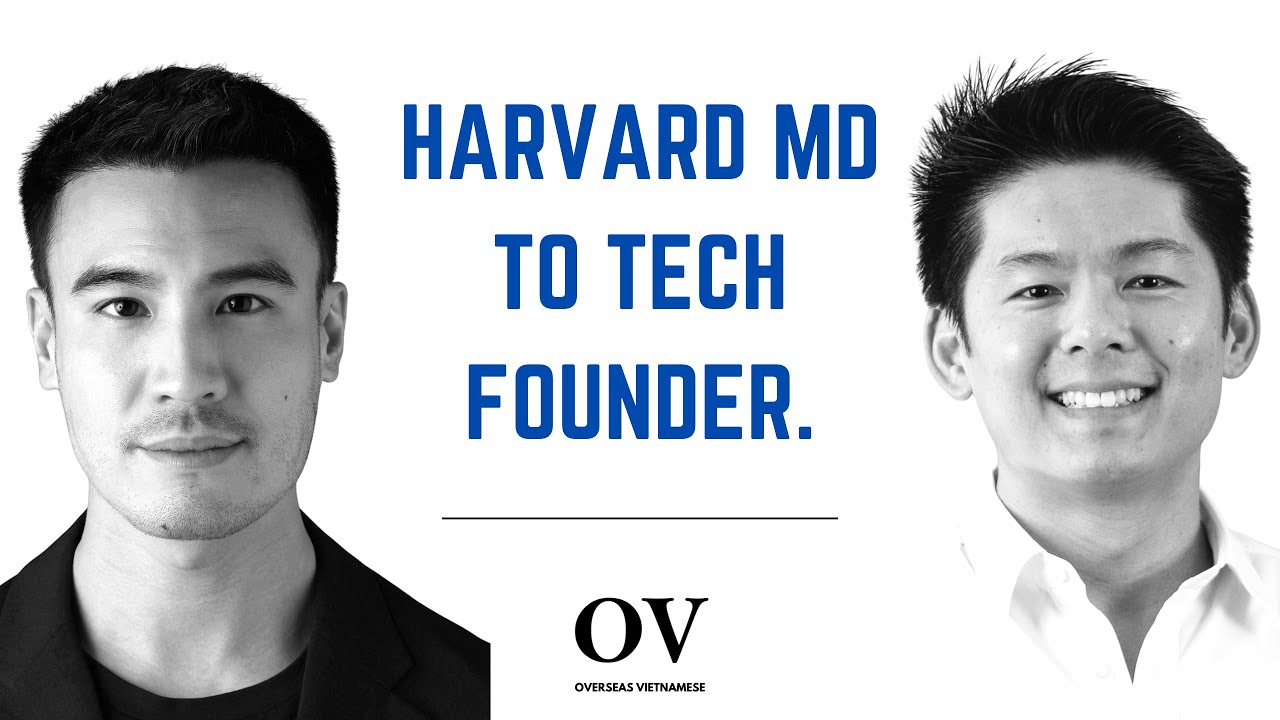
The conversation
Kevin Huynh was born and raised in San Diego in a Vietnamese refugee family. At home the family spoke Vietnamese, with the neighbors Spanish and at school English, so a single grocery trip could take three languages. He studied biology at Harvard, worked in management consulting at a British firm, and then ran his own investment firm with backing from a former client.
When his grandmother, who raised him, fell ill, she asked him to keep his childhood promise to become a doctor. He went to medical school in San Diego and started a general surgery residency. Coding was his hobby after shifts, and an open source storage project caught the eye of the USC Shoah Foundation, which needed affordable storage that could prove its data had not been changed. That opened the door to his first customer and to venture capital. He hired 54 people while still in training, then left medicine to run PiKNiK, a cloud computing company that uses blockchain to offer storage and computing to small and medium businesses in the US and Europe.
In this conversation, Kevin explains why he sees risk as smaller for his generation than for the parents who left Vietnam, how he found product market fit by serving one customer very well, and why conviction grows with practice. He compares the adrenaline of emergency surgery with running a startup, and talks about reconnecting with Vietnam: learning to read Vietnamese, understanding his grandmother's stories, and thinking about building a team in the country.
Five takeaways
- 01
Listen for the signal. Each major turn in his career came from an opportunity he noticed and chose to take, from a hobby project to a first customer.
- 02
Your risk is smaller than your parents' was. Families who left Vietnam took far bigger risks, which gives the next generation room to try and to fail.
- 03
Serve your first customer very well. Spend more on them than they spend on you, and they bring you the next customers and investors.
- 04
Treat conviction like a muscle. Start with a side project and keep practicing. His first pitch was rough; by the 50th he did not have to think.
- 05
Expect failure and keep going. Plans on paper never match the field. Remember that you have always gotten through failure before.
Timestamps
Each one plays the video from that moment.
- 0:00Intro
- 0:58Who Kevin is
- 2:02From Harvard to medicine to venture capital
- 4:36What PiKNiK does
- 6:33Competing with the big clouds
- 7:36Growing up in San Diego with three languages
- 9:38The Vietnamese American experience
- 12:32Why medicine, and why he left
- 15:59From surgical residency to a first customer
- 20:55Advice on making a career jump
- 23:38Raising capital while still in training
- 26:50Consulting, investing and a promise to his grandmother
- 31:26Finding product market fit
- 35:00Conviction is a muscle
- 38:17Expect to fail
- 40:31Surgeon or entrepreneur
- 43:14What is next for PiKNiK
- 44:16Reconnecting with Vietnam
- 49:44Building in Vietnam
- 52:46How to connect
Full transcript
ShowHide
Made automatically from the audio and lightly edited.
Quang Do
0:00You are listening to the OV Podcast, powered by the global Overseas Vietnamese community. My name is Quang. Today's guest is Kevin Huynh. Kevin is the co-founder and CEO of PiKNiK. PiKNiK is building next-gen cloud computing solutions built on Web3 and blockchain protocols, but we'll hear from him in a bit. Today we also dive into his entrepreneurial journey from being a medical doctor to now running his own business, and we also explore his journey of coming back to Vietnam, being Overseas Vietnamese, and more. Kevin, welcome to Saigon. Welcome to the OV Podcast. I'm seeing you for the second time. You are visiting us in Saigon, and I'm very excited to not only have you within the OV meetups, but also have you on the show. How about you walk us a little bit through your life journey, from growing up wherever you grew up to now being an entrepreneur, and highlight some of the major milestones along the way, so that people know who you are?
Kevin Huynh
0:58Well, thank you for having me here. I'm super happy to be in Vietnam. I was born and raised in San Diego, California, so not too far away, about 13,000 kilometers, but the world is getting small. Born into a Vietnamese refugee family that came from South Vietnam. The family has been in California for about 40 years plus or minus, depending on who you ask. And I've had such a privilege being raised in really 2 different cultures at once. First 20 years of my life were, frankly, going into the home, very Eastern mindset, using the Vietnamese language. Step outside of the home, raised in a Western culture that's really a melting pot of many different ethnicities and cultural backgrounds. And along the way I've had the privilege of Western education, but always coming back home to visit the immigrant family. And now that I'm older, having the opportunity to visit the motherland and really putting in the effort to learn Vietnamese now, life is becoming more interesting every single day.
Quang Do
2:01Wonderful. And tell us a bit about your career from school until who you are and what you do today.
Kevin Huynh
2:08Wow, life has been a journey. Incredible. Such a privilege to be alive. So I came from a family that unfortunately didn't have much education in Vietnam, given it was the war era. I came to the United States, and going through public education, I was so lucky to go to a great university. I went to Harvard for undergraduate. There I met some of the most wealthy and influential families in Western society. I also met a number of very powerful Vietnamese families from Hanoi.
Quang Do
2:37At Harvard?
Kevin Huynh
2:38At Harvard. International students. It's a very international school.
Quang Do
2:42Did you connect?
Kevin Huynh
2:43We kept in contact. Absolutely. It was so interesting to see within a medium-sized university, there were so few Vietnamese heritage people. And to meet someone who was from Vietnam, that was even more special. There were 3 students in my class from Vietnam.
Quang Do
3:00What did you study personally?
Kevin Huynh
3:02I studied biology with the intention of becoming a physician in the United States. After Harvard, I had the chance of coming home to visit and be closer to my grandmother who raised me. Unfortunately, she was getting sick and passing young, so I went to medical school near her. It's a different system than in Vietnam, where you choose medicine after you finish your undergraduate degree. So I went to a university in San Diego to become a physician, and from there, that's when I realized how fun life actually is, because you take every experience and whatever lessons you want, and apply it to any field that you set your mind to. Today I actually work in the IT sector. More specifically, I work in the cloud space infrastructure as a service, but it's been a long journey to get there. Studying biology to starting business school to going into management consulting, running my own venture capital firm. Fortunate enough to have incredible limited partners support me, even though I was a young 20-year-old general partner. And from there realizing, hey, it's fun to back other founders. I think I wanna be a founder. I also get to hear great ideas, and I have my own. So that's really, I think, where the fun begins in my journey, and I think it's true for a lot of entrepreneurs as well. You go through a lot of school and meet incredible people, and then that's when you say, "I'm gonna jump headfirst or feet first, whichever direction, and just take the risk," and you start building your own companies.
Quang Do
4:36I love that, and I would love to dig deeper into each of the parts. I think there's a lot to unpack. But maybe quickly, for context, could you explain just in simple terms what your business is about?
Kevin Huynh
4:47So I'm the co-founder and CEO of a venture-backed company in the United States called PiKNiK. PiKNiK is focused specifically on the capital expenditure-heavy side of cloud computing. So we have facilities around the United States and the European Union. Our focus is providing computing resources and storage services to small-medium business and startup firms. We're really trying to change the way that companies use cloud computing. A lot of tech companies and traditional businesses that are cloud first now use large companies like Amazon Web Services, Google Cloud Platform, Microsoft Azure, some of the biggest. Here in Vietnam, it's a market with many fractured domestic players, but Viettel being one of the major leaders domestically. The space is ripe for innovation because it's a huge market. PiKNiK has taken this approach of the intersection of blockchain, which we can get into at some point, and the services that we are all used to, all software developers, all DevOps engineers are used to, and being able to apply it in a way that not only decreases cost, but builds intrinsic... in a trustless format for the computation that is done, no matter what the background may be. You may be in Vietnam and go to Emart, which is an international grocery chain, and you're using their app. But you're really touching the cloud in every single way in modern society. Whether you're in the West or the East, everyone touches the cloud, and we all take it for granted because it's a commodity, which actually, in my opinion, is an opportunity for risk, an opportunity to build something new. So that's what PiKNiK's doing.
Quang Do
6:33And you mentioned the big names, AWS, Azure, Google Cloud. Do you compete directly?
Kevin Huynh
6:40In many ways. It depends on who you ask. I would like to say that I don't, because it's hard to raise venture capital for, and capture the attention of new stakeholders, if you say you're trying to fight trillion-cap companies. But the truth is even with companies that large leading the way in any tech segment, frankly, there's always a customer base or customer niche that's not being properly served. They could be served better. It's like saying if a product from a major trillion-dollar company is a square, a customer's looking for a circle. You can force-fit it, but it's not a perfect fit. Customer might over-purchase or purchase the wrong resources. They're not spending what they need, and at the end of the day, most businesses are gonna care about where they're spending their money and how they're spending it, and how efficiently. And every time there is that opportunity, a new business can be born.
Quang Do
7:36No, thank you for sharing. I would love to find out how you arrived at your insight to then decide to launch a startup, but let's jump in time a little bit. Let's go a bit back. You grew up in San Diego, you said, right? How was that like to grow up in San Diego as a Vietnamese there? Did you grow up with many other Vietnamese? Were you a bit more by yourself? How was that like for you going through school and growing up there in the US?
Kevin Huynh
8:02Absolutely. There's a modestly sized Vietnamese community, Vietnamese American community, in San Diego. However, it's probably very small compared to other Vietnamese overseas communities. My neighbors growing up only spoke Spanish. San Diego being against the border with Mexico, it was natural that our neighbors would be Mexican immigrants. So the family in our household, we spoke Vietnamese. My grandmother is from Vietnam, my parents as well. But as soon as we left the household, my mother and my sister and I could speak Spanish 'cause that's what the neighbors did. We'd get picked up by a yellow school bus every single morning, wake up at 5:00 AM, go to school, and of course in the classroom everyone spoke English. So it was always a really well-mixed community. We all spoke different languages, and everyone on a baseline had 2 or 3 languages in the family. So I'd go grocery shopping with my mother in a Vietnamese immigrant's small grocery store, and we'd speak Vietnamese at the cash register. We'd go next door to pick up produce that was imported from Mexico, and my mother and I would speak Spanish. And then when we left and went to an American-based chain, we'd speak English. So one grocery trip would have 3 languages. Being raised in that environment really made the world feel small. And I think that was a really beautiful thing. The moment you realize how small the world is, though there may be 7, soon 8 billion people on Earth, you can fly anywhere, and if you can just speak more than one language, you open so many doors.
Quang Do
9:38And now at your age, at our age now, learning more about Vietnamese culture, the ways we do things, reflecting back, how much Vietnamese-ness you think your parents gave you, and then how much of a Vietnamese upbringing you had, at least in the scope of home and speaking Vietnamese with the people that spoke Vietnamese to you?
Kevin Huynh
10:01The Vietnamese experience is very unique, especially because in the United States it is a very small minority. The US federal government does publish its census every number of years. It takes a thorough census, polling as many people manually, every 10 years. And the data for the last several decades since the first few Vietnamese refugees arrived in the United States, the numbers keep growing. But it's still a small minority. There are larger Asian minority groups. So being a minority in the United States has led to some interesting encounters with other Americans. Certainly on the pessimistic or negative side of the experience people will speak different languages to us that are not Vietnamese. They'll say "Ni hao," "Konnichiwa," whatever. And sometimes they say it with a different intent. But if you can see past the melting pot of the United States, being a minority also empowers a lot of hardworking families and their children to pursue things that perhaps other children not raised in a Vietnamese family have. They might have higher risk tolerances. It's so interesting to say that because I think a lot of Vietnamese parents are conservative. I think the Vietnamese community relative to Western culture is conservative. But interestingly, a lot of our generation in the West, in the United States that I've seen, pursue startups, take big risks, do jobs that maybe the parents didn't want us to do. I think my family always encouraged me to go be a doctor, a lawyer. Sure, I got the degree. I think that made them happy. But when they realized how happy I was to go after venture, do something that they'd never heard of, go to schools that they never dreamt of or thought about, it provided this sense of, "Hey, our parents took a big risk, made the world smaller." Hey, Vietnam's a great country, but at the time they thought it was necessary to leave. That's a much bigger risk than what any Overseas Vietnamese person would do today. We're not putting our lives on the line. It's not war right now, and hopefully never will be again. But the opportunity from that household allows us to try different things. And I think someone will succeed, and many people will succeed, and the minority will also be a model minority.
Quang Do
12:32So going a bit deeper there, you became a doctor. You went to Harvard. You now are an entrepreneur. Looking back at your life, how did those decisions come about? Was it your parents' doing and influence of you going into medicine?
Kevin Huynh
12:52That's a great question. First thing that comes to mind, it would not be the Vietnameseness that we have. I think the motivation always comes from one's personality. Life is bringing opportunity to us. It's the noise. It's the signal amongst the noise that we're willing to focus on. And do you wanna grasp it, or do you let it slip by? And there's a new opportunity every single day. Every single major pivot in my career thus far, or education, has always been from listening for that signal. The Vietnamese part of our shared identity, I think it applies to the part where, hey, though it might not be the lowest-risk choice, after the parents took such a risk to make the world smaller, go to a different country, the Vietnamese identity has always proven itself to be: well, work hard. Identify the opportunity, take it. Don't be scared. Take the risk. And frankly, after our parents' and grandparents' generation, there's not much more that you can risk than frankly going to another country or risking your life to be a refugee somewhere. That support, knowing that that's part of our identity, that there's not much... There's nothing to lose. That always has been the motivation to keep going when the direction does change. Major pivots in my career have come from opportunities I also never planned or expected. It's interesting that as I was going, training in the hospital, I would take a break from thinking about patients and the cases by just doing a hobby. A hobby was playing with a computer, coding, learning on my own. And it's funny that I would plug in a server using taxpayer dollars and free internet at the hospital to power the first applications that I was writing. Of course, the hospital's IT team and security team would find out and say, "Hey, I think you might not be doing hospital business here, so perhaps you should take this venture elsewhere." And when that happens, if you listen to that opportunity and you grab life by the horns, go raise some venture capital, see who wants to believe in you, that's when you really start to try different things. The hospital's always gonna be there. The education will always be there. I think that's true for a lot of us, no matter where you are in the world. But trying to do new things, pushing the frontier, that's the fun part. I think that's true for you too, and I think a lot of us would love to hear about your story.
Quang Do
15:26One day I will share more. I guess there are some formats out there. When did you realize that you don't want to continue in the hospital?
Kevin Huynh
15:36There are so many entrepreneurs amongst us. I was still in the hospital and working on an unproven idea that massively large data sets could be stored on this thing that at the time people only associated with cryptocurrencies. People thought of blockchain, they thought of Bitcoin, they thought of crypto, and they only thought of financial risk.
Quang Do
15:59Just quickly for context, did you graduate, start working as a doctor?
Kevin Huynh
16:04I actually got my medical degree. I was pursuing a general surgery residency, thinking I'd be a surgeon. The operating room was a place that I liked a lot, but I did not love it. I liked it a lot. But once you reach your late 20s, you start thinking about family, thinking about dating, and I just figured I'm not sure if I wanted to become an attending physician and do this forever. The hours were rigorous, and it never slows down. Raised in a Vietnamese family, the Vietnameseness comes up. My father says, "Hey, you noticed how everyone in our Vietnamese community in San Diego, everyone is very family-focused. Are you sure this is something you wanna do? You're gonna be gone in the hospital a lot." And that's when I started to think more about other career choices.
Quang Do
16:47Walk us through that. And then that moment you realize, "Okay, I'm destined for something else." How was it like?
Kevin Huynh
16:56Certainly enjoying the pursuit of surgery, absolutely. But everyone has their hobbies. And for me, I learned how to code Hello World much earlier than I was able to say that in English. My parents invested in a computer when I was young. Despite not having many resources in my household, they knew that the computer was something that the future generations would have. There was no internet, but certainly you could get into MS-DOS, you could tinker, get into the shell and write some code and tinker and play, and it stuck with me. So I'd come home from the hospital, and the thing that I wanted to do was just play with code. Another language, right? My family speaks multiple languages, so here's yet another language I could teach myself. The cool thing about being in this internet-connected society is when you do cool things in the open source world, it's posted on the internet. People find your work, and people start to follow it and pursue it, and before you know it, someone else who's a venture-backed entrepreneur is looking for a solution that you might be building. Or there is an incredible institution out there that you never dreamt of serving or supporting or servicing, and they're looking for something that you're building. I was still in the hospital when Steven Spielberg's Shoah Foundation, from the University of Southern California... which is an interesting parallel, right? We're speaking about how the Vietnamese background influenced my career pivots. Well, in this case, here's another incredible minority community in the United States, the Jewish community, with a few fantastic business leaders. In this case, I'm speaking of someone who is a leader in Hollywood, some of the world's biggest movies, built a foundation that collected the Jewish and specifically the Holocaust history. In 1994, following the success of the movie Schindler's List, built this incredible collection of Jewish history. They're in search of affordable, immutable data storage. There's not that many people doing that. You could go to Google or Amazon, and it costs you way too much money to be able to secure that data. You store it, but you have to pay more to prove that the data hasn't been touched. Well, the thing that I was building just as a hobby coming home from the hospital was an open source method of securing that data. So before you know it, the CTO of a major university is in a meeting with you and says, "Hey, you're doing this medicine thing. I wanna hear more about how you're gonna really support me when I need you at 4:00 a.m. And I'm worried my data is lost. Because I have big bosses and donors to my university, and they're all big and famous, and you're a little startup, and you're telling me that you're a doctor by day, and you're not focused on this. I'd like to hear you say you're venture-backed, you got staff, and you'll support me 24/7." And that's what I meant by personality first and foremost. Can you listen to the signal amongst the noise? And the second thing is, well, having family that would say, "Take the risk." At first they said, "No. It's a good, stable career. When you're done with training, you only got a few years. You've gone to school for 20-something years. You only have a few more. When you're an attending physician, the income is good in the United States. It's a very stable, secure career. You're laid off from a hospital, you get a new job like that. There's never a shortage of demand." Telling your parents that you're gonna follow an unproven product market fit, oh, boy. There were tears coming from my mother's eyes. But once those tears were shed, then she realized, "Follow what you love. Take the risk." She had taken so many risks to raise me, and I told her, "Hey, I think my risks are smaller than yours." So I did. Jumped ship. It's hard to balance. You can't go from the operating room to staff that are talking about technology, and then catering to your stakeholders, your customers. You can't be doing sales and thinking about it when you're in the operating room, training to become your own attending-level physician. Can't do that. So at some point you gotta call it quits somewhere. Take the risk.
Quang Do
20:55How did you strategize that initial thought of, "Oh, I might want to do something else," and then actually making the jump? And you mentioned the signal to noise thing. What would be your advice to someone who's maybe right now in a job, in a role that they feel they want to jump from and go elsewhere?
Kevin Huynh
21:16With as much humility as possible to anyone who's listening, I certainly would like to say this comment. If you're able to listen to this message right now, think back and remember how privileged your life has been that you can sit here and think about what you're doing and what you want to do. A lot of us in this world are actually still not that privileged, still hungry, still thirsty, and don't get to think that hard about, what do I want to do here, instead others in this world, still billions of us are thinking about what I have to do. So many ways that things can fail, but that's part of the resilience of being human, and that's part of the Vietnamese identity as well. Through hundreds, thousands of years of change of history, different ethnic groups mixing and now making up what is Vietnam, and then the broader global Vietnamese overseas community. Always resilient. We still always go back to... You always come back to the same few identity items that just generation after generation keep. So you can't really fail. If you fail, you can take another risk, and you're probably gonna rebound from that. So if you wanna take a chance at that signal that's starting to become clear every day, if your heart is yearning for taking some new change in your life, it can be anything, right? From a romantic partner, to educational milestone, to even industry choice. If you fail, you just try again. If you remember that you have made it this far, you've gotten through so many trials and tribulations, you are very likely, you're almost guaranteed to succeed at some point. It's just a matter of how much do you want. Utility from a philosophical standpoint, or if you're driven by capital pressures, how much money you want, how much wealth you wanna build. But you're still gonna succeed. You'll still find a way. And if you're listening to this message, you're gonna be one of those people. You have the privilege and the opportunity to go after what you want, not what you need to do. And from that alone, I think is enough comfort, solace, and self-reassurance to just keep taking a risk. It's okay to bet the farm. The saying: take all the capital you have, all the energy, the few sleep hours you have, to invest that in something and say, "Hey, if it doesn't work out, there is another investment vehicle that you can pursue."
Quang Do
23:36I love that. Very well said. What was next for you then, Kevin, after the hospital?
Kevin Huynh
23:41At that time we were raising... It was interesting. I was trying to accept the fact. I also don't wanna come off as someone who has always been without that anxiety. I certainly had to think twice. Putting in 20-something years, going through public education, private university, extraordinarily expensive graduate school. Super scary. It's interesting to think my parents are lucky to have saved up money. I'm gonna borrow more money than the value of their home to go pursue a physician's degree, a medical degree in the United States. I have all this debt. So I was thinking twice, certainly thought about it, but it was just that moment that you realize, "I'll get through this. Even if the startup fails, I'll find a way to make up the time. I'll find a way to pay back the debt that I have incurred over education in the country that I'm living in." And you'll find a way through it. For me, I had that first customer opportunity, someone who was trying to help validate what we were building, a new type of storage in the cloud, and with that you get the attention of potential investors, but they still expect you to tell a story even if you're not certain. And I realized every step along the way, it's not very different than being in the operating room. Sometimes the artery's gonna bleed, and sometimes even the master physician across from you as you're training to become your own physician, even he, she, they're also thinking through this situation. And it's also a problem they've never encountered. There's always this risk and unknown, this uncertainty in life, and that's part of the beauty and the anxiety of it. And for me, I decided: I haven't left the training program. I am going to raise the capital at the same time. And by the time you have the capital, you gotta hire employees. At the time, we had 54 employees at the point that we were raising that round, in an office in San Diego. And I had recruited people from great tech firms around the US, I had a few people in Europe, and I flew everyone, moved everyone to San Diego to be in this office. And some of them had kids, some of them had grandkids, and I thought to myself, "Okay, you're gonna have to give up the hospital because now all these people also depend on you."
Quang Do
25:52So you raised and had a team this size while still there?
Kevin Huynh
25:57Still going to the training. But it's not sustainable. I think a lot of us work really hard, especially when we come from families that taught us to work hard, take big risks. My family always, they always wanted me to protect my mental health, make sure I took care of my physical being, slept well enough, had enough rice, right? Always. But I think having all the support from them meant also pushing myself really far. But we have our limits. I think when it got to the point where I'm only sleeping 2 or 3 hours a night, I know that that's not sleep anymore, and it's not appropriate for me to come into consulting a patient with bags under my eyes and telling them that they need more sleep to heal and recover. But I know full well I'm not following my own advice, in a pre-op patient, post-op patient. So time to follow your own advice.
Quang Do
26:50And then how did that go? I think I looked at your LinkedIn and you had a few stations here and there. How did it progress from there?
Kevin Huynh
26:58So I had experienced a number of different industries. I wanted to try everything before getting into the hospital, before medical school. Right after Harvard, I had the chance to work in management consulting. Incredible British firm that I worked for with branches all around the world. Every continent with humans had an office. I got to work with some incredible business leaders at major international corporations. I thought to myself, I knew I'd become a physician, but I wanted to see as much of the world as quickly as possible, as many industries, knowing that I could connect with people in the hospital. My patients are gonna come from different backgrounds, and if I could open my eyes and see as much as possible, that would be great. Being raised in San Diego in an immigrant community, I learned a lot about my own Vietnamese culture. I learned a lot about Mexican American culture. But that was pretty much it. Going to school I learned about what it meant to be American. But I knew my patients were gonna come from around the world, right? The hospital is a unique place. It's a cross-section of society, and the more that you can understand and build rapport with your patient, the more they're gonna trust you, and the more they trust you, the more they stick to the healthcare plan, the more likely they're gonna succeed in their healing journey. So I just thought to myself, learn as much as possible, go to school, meet friends. If I have a Vietnamese friend from college, well, probably good because the more I learn about the Vietnamese experience from a Vietnamese friend from Hanoi, it also meant that I was gonna be able to connect with my patient when I meet someone in the San Diego hospital who's from Vietnam. The same thing is true. If I go out there and work in a space like management consulting and I'm a generalist, over the 2-year contract, I get to see 17 different sectors. I'm more likely to connect and understand what my patients are going through, what their jobs are about, what their jobs' leaders and bosses are worried about, and that actually turned out to be true. I did do some private equity. I did work for some private equity clients while I was at a management consulting firm. And from there, on the customer side, the client noticed I had a knack for investing. The way that I analyzed a lot of their targets made them interested in giving me the capital instead. And so when I left my first job out of college, the opportunity was to form my first, really, I guess, startup, but not as a tech operator. In this case, they wanted me to raise a pool of capital from limited partners, they being one of them, a former customer, giving me just a few million dollars to say, "Hey, we saw what you did in one role. Can you take the same skills and pick out the, frankly, the signal amongst the noise in the market?" It was a very simple SEC-registered investment firm with the ability to place bets in public equities and private stakes, and it was great. I didn't lose a dollar. I'm not sure if I made everyone a... But it was a great opportunity to see yet even more before I went into medicine. I was building up this firm, raising up its second fund. Just in that process, with very few other folks as part of the general... When my grandma gave me a phone call and said, "Hey, please come home. I am passing soon," which was a surprise to me. So I flew from San Francisco where I had my office, my investment firm office, and my grandmother said to me, "I don't know what venture capital is. I don't know what private equity is." In Vietnam, when I was raised in Ngoc Ham, I only knew a few things, which was how to raise my kids, who then birthed you, and take care of your neighbors." Very Confucian background. She was a Buddhist woman as well. And she said, "Whatever it is, you had promised me as a child you were gonna support people in a direct way. Please go to medical school. That's what you said you were gonna do when you were a child. That's not what you're doing today." It was what she had basically put on me on her deathbed. And I took the challenge. Promised her that. What I've learned in business is double-check your contracts. I promised my grandmother I'd be a doctor. I never promised her I would practice for my whole life. So I'm sure wherever she is today, she'd be proud. I got the MD, but I'm gonna find ways to help people through other means, through capital mechanisms, building companies, building wealth for individuals, and taking that wealth to hopefully provide for others, even if it's not in the operating room or the clinic.
Quang Do
31:26When you launched your startup, asking very broadly, how did it go? How was the traction? How did you find product market fit? How did it feel to you in the beginning?
Kevin Huynh
31:35Well, I'm gonna focus on the current startup since that's a service-oriented business, whereas the past startup was really a startup investment firm. 2 very different business models. At PiKNiK today, where I am happy and lucky to be its CEO, at the beginning, it's just: take the risk. I'm always gonna go back to that word. Risk is not a scary thing. It felt scary being raised in a Vietnamese household where it was always about minimizing risks, and going through a lot of education was to pick a more surefire career path. When you build a startup, don't ask too many questions. You're gonna have the analysis paralysis. If you think you're onto a cool idea, as soon as you have that idea, test the waters with the first potential customer. I was so lucky, and I think even if I didn't have the chance to have a first customer that had a lot of connections, I think I still would've done it. I still would've started the business, still tried to raise capital, hire the first employees, even if the first customer was a small mom-and-pop business with a technical need. They were just looking for more affordable storage. Your margin is my opportunity in a capital market, in every free market, and until a market is perfectly liquid and has 0 friction, there will always be a risk, which means always an opportunity to build some product. And if you think about it, how many organizations and institutions use the cloud? There's so many. In the United States, you just look at the numbers, right? We spend about $30 billion every single year. That's the market for infrastructure as a service. And because of this new AI boom, the CAGR is in the high 20s, and it's not gonna slow down until the 2030s. You're looking at a multi-$100 billion market in a matter of years. You look at Europe also, the entirety of the European Union, it's also roughly... It's slightly bigger than the US. It's about a $32 billion market today. CAGR is in the low 20s. Compound annual growth rate's in the low 20s. Also a massive market in the coming 5 to 10 years. You look at Vietnam. Yes, it has a small GDP, and relative to certain countries, it has a small GDP per capita. Even in Vietnam, you have a $3.5 billion market for infrastructure as a service, also growing in the high teens. And you just look at that and you realize, hey, you're gonna have a customer in there who has a need, because even if there are 3, 4, 5 multi-trillion-dollar companies competing, you can't serve every single customer. Whoever's not being helped right now, that's your opportunity. And that's exactly what I did. I found the first team, first customer, and from there you ask them, "Hey, do you have any friends or business decision-makers, IT decision-makers, that are struggling with the same problem?" And if you've done a good job serving your first customer and you don't think about automating that first customer, you just think about serving them really well, and you spend more money on them than they spend on you, that really shows a genuine partnership, and they're going to introduce you to new customers and to new investors, and it just keeps going from there. And before you know it, you don't have the time to think and worry about the analysis paralysis, because you can't keep up. I think that's how you get through the product market fit. I know there are different models of 0 to 1. I think there are many models, but for me, it's just close your eyes, don't be scared to fail, just listen to the signal. There's a lot of signals every day.
Quang Do
35:00I would love to tap into this. I see you have very strong, robust knowledge, deep knowledge, deep insights about what you're doing. Of course, you have to, right? And you've also talked about taking the risk and just for aspiring entrepreneurs, how do you make that jump and take that risk with conviction? Like, how do you build up that conviction, and where's the point where you have enough to make the jump?
Kevin Huynh
35:29No, it's a great question. I immediately think to there's so many aspects to being human. The human... The act of being alive, everything we do requires practice. Conviction is like a muscle, in my opinion. I think it's hard for me to go on a run in the morning. I think running is very difficult, but for those who run all the time, it's become a habit. I think a lot of folks who run every single day at 5:00 AM, at the break of dawn, will tell you it's still hard to wake up and run, but they still do it. I think conviction in one's idea of oneself, to take a risk in a career change, education, or to build your own company, to be so scared that you're gonna be your own boss and be responsible for others. Same thing. Just try it. Start, make it a hobby. Just make it a one-person gig. Be part of the creative economy. Be part of a gig economy. Just get a taste of being your own boss, even if you have a full-time career somewhere else. I don't have children today, but at least my parents do remind me, if you're scared to find a partner and have kids, well, try babysitting someone for once. Take care of your nephew or niece and have them overnight. Have them for a week. Just try. Start small, and like a muscle, you're going to get better and better at it. I may not look the part, but I love going to the gym. And I'm certainly hopeful that over the coming years I'll be able to show the result. Same is true. Very hard to lift that first 5 kilogram weight. Very heavy. But before you know it, you're squatting 100 kilograms. Before you know it, you're squatting 150 kilograms. I think that's true with conviction about what you wanna do. So scared to jump into building a company. I was very nervous to raise capital from institutional folks. That first pitch was very difficult, stumbling over my own words. No matter how much I tried, no matter how much my founding team practiced me, I would forget my words. Exactly what market are you doing? I'm sorry, what is your product? And sometimes you meet people on the other side of the table who actually know that you are anxious, and they will press on it to see how resilient you are in the face of the unknown. But by the 50th pitch, you don't have to think. So I think that's the answer. It's just practice. It's like everything in our lives. It's like going on that run. Just go that first time. It's so hard that first time. And then as you keep doing it, after a few weeks of building the habit, you'll do it. And then taking that risk to build a company is the same. The conviction, start small. And before you know it, you'll have employees and you have no choice, and you'll be excited. You'll be used to it, and you wanna hire more, and you wanna find more customers, and you wanna build something lasting. It's like the avalanche. It's just the little start. That first little snowball, and it'll just keep going.
Quang Do
38:17What were some of the bumps you had? Going a bit more tactical in your journey, what would you advise other first-time founders, if you would look back on your own journey and the mistakes you've made?
Kevin Huynh
38:29Well, perhaps I'll be biased, and I'm coming more from the slant of the technical space, the tech sector. If you're in tech, you're probably on LinkedIn and social media. Let's not get wrapped up in what's going on in social media. You only hear about the positive wins, people's raises, people's customer wins, people selling their businesses. You're not really hearing that many people talk about their difficulties. People don't like to air out their laundry or air out their failures. You're gonna meet a lot of them. I don't know how many nights I've had where I've been lying awake thinking, "What did I do wrong today? Why is this employee not aligned with what we wanna do? We've gone too far in the strategy of building partnerships. You're spending too much money. Your investors are upset." There's always something wrong. There's a lot of failure along the way. But if you can just accept the fact, like I said earlier, the thing that's kept me going is remembering you're gonna make it through that failure. Just believe in it, because you've gotten this far. Don't be scared of that failure. But be ready for it. It's gonna come. And if you think it's a smooth journey, you wanna wait until you think you've perfected and ironed out every crease of your business plan, that you have every perfect go-to-market idea, every recruiting strategy. The honest truth is, that's on paper. That's theory. It is never the same in the real world. I don't know why. Homework when you're in middle school, 2 times 2 is real easy on a test, but in the real world, the first time you have a boss, the first job out of university, when your boss is looking over your shoulder and asking you what the answer to something is, the question may be even easier. You just stumble. Theory and practice are different, and I think that's the advice I'll remind people. You're gonna fail. Remember that you're gonna fail, and remember more importantly, you have always gotten through your failures, and you will when you build a startup. You're always gonna get through the failures. Even if the startup fails, if you wanna be an entrepreneur, if you fail the startup, you will succeed at some point. Just keep going.
Quang Do
40:31I'm curious about this. Surgeon versus entrepreneur. Which one do you feel is more emotionally a rollercoaster? Because you feel that both are, but based on your experience, which is more fluctuating, more volatile, the downs feel low?
Kevin Huynh
40:49Again, biased, certainly. And I'll put it forthrightly. Now, to anyone who's listening who's been practicing as a surgeon for decades, my experience is nothing... It's not nearly as colorful as yours. I didn't get to the point where I'm boarded in the United States and I was an attending physician. Nope, didn't get that far. But from the experiences I did have with my patients, I think that it doesn't matter where you are, whether it's the operating room, in the clinic, or in the startup office, a lot of shared skills. Doesn't matter what you're doing, it's the human condition that makes a success or a failure. It helps you get through a failure. Very different spaces. In the former setting, in the medical setting, especially when it's high stakes, it's not a cosmetic surgery, which is not what I was pursuing. I loved emergency surgery. Unfortunately, in the United States, we have a lot of gunshot wounds, and in those moments, it's generally pretty dire. The adrenaline rush in that moment, and learning what you're good at, listening to the signal amongst the noise. Being an entrepreneur is quite a bit of a rush, and I'm sure you understand that as well. When you're building that product, that business model, and then you put it into the wild, it's a lot of adrenaline that you're feeling, and it's hard to sleep sometimes. But if you can handle the adrenaline, you enjoy the adrenaline, the entrepreneurship path is no different. You get a lot of that hit, the hit of the excitement, the unknown. I think that's much like medicine in the acute setting, in the emergency setting. I would say in my experience also, again, very limited, maybe it's more direct, so you're fighting for the patient, and the healthcare team is working hard to save a life. It's not always the case, but an operating room, when you're in that training environment, it certainly is. Acute critical care, yes, absolutely. But you're still really worried about the wellbeing of all the stakeholders of a business. The stakeholders are not just the investors. As a reminder, it's the customers. Their livelihoods, their employees' livelihoods are dependent on their product. And you as their vendor, they're depending on production and quality environment 24/7. And your own employees, we never know what their personal circumstances are. They may be living paycheck to paycheck. You may be paying them well, but they have their own debts and worries. And if the company is not succeeding, they're also not gonna succeed. So in some indirect way, it's the livelihood of all of your stakeholders. That piece is analogous. It is almost the same as medicine.
Quang Do
43:14Thank you for sharing. What is next for PiKNiK and you? Future outlook.
Kevin Huynh
43:24We've had venture capital for a little while backing us, and at this point, it's a matter of... At this point, we really wanna scale. So it's been a few years of heads-down engineering. Now it's trying to automate as much as possible to be able to reach the market, reach more of the market. Over the coming year or 2 years, I think it's a go-to-market exercise. I think I've already put enough thought into that go-to-market strategy. Now let's actually put it in the wild. I'm sure we'll tear it up. That Google Doc is going to be shredded by the team, and that's part of the fun. So that's exactly it. If we are privileged and blessed to find a scalable business, there is genuine product market fit, then certainly raise more capital, go faster. The world's a big place. I would like to build something lasting, and I think the team really wants to see that scale.
Quang Do
44:16Great. We're gonna wrap up in a bit. I want to spend just 5 minutes, actually, to talk about being Vietnamese, and ask very broadly: what has been your journey of connecting, reconnecting with your Vietnamese roots? I think you had a bit of this similarity to me, that it came a bit later in life, and we're getting closer and more in touch with Vietnam and our roots as we get older, and it's very common for Việt Kiều and Overseas Vietnamese. How has that been for you?
Kevin Huynh
44:46It's probably been the most rewarding part of my life thus far. On paper, I think I've been blessed with doing some mainstream things that I think my friends and family are proud of. I'd say I am proud of certain things I've done in my career and education as well, but the reward there has always led to needing to reach the next milestone, and it just keeps getting higher. The bar keeps being raised. But my Vietnamese identity is not like that. Being Vietnamese American, Việt Kiều, it's not trying to raise the bar in any way. I'm not trying to be a better Vietnamese person than the fellow Vietnamese American or Vietnamese European. That's not the case. There's so little I know about our culture, even though I was raised in a household that only spoke Vietnamese. I can barely read the language. I can speak it like a kindergartner. But the reward has been traveling back to the motherland, being here in Vietnam, and getting to just drink coffee with a local. So welcoming. They wanna know what it's like to live my... To them, they think it's exotic. To me, I think their life is exotic. They think it's interesting how I dress and how I think about the world. They think English is an interesting language and Spanish is an interesting language. I think Vietnamese is a beautiful, poetic language. The reward is infinite. I wanna come home, and I wanna... And when I say home, my family background's home. I wasn't born here, but I think of this country as my home. I certainly wanna call it home. And I wanna be able to support the aspiring young entrepreneurs here. I also wanna hire brilliant technologists here and business leaders here. I wanna work with people around the world. Why is it that my startup, my company only has facilities and staff in the United States and the European Union? I'm proud to be Vietnamese. I should have Vietnamese teammates and co-founders here in Vietnam. So it's this infinite reward that just never stops. Being here for just a very short period of time, I finally have slowed down certain aspects of my life to think less about me and think about the future. My Vietnamese immigrant parents wanna see me have a family. I haven't thought about that. Venture capital during raises, they're like, "Do you have family and kids? How do you split your time? How do we know that you're a good steward of our capital?" And my answer was always, "The company is my baby. The staff are my children. The staff, the product is all I care about," and that's what they wanna hear. And after a few years, then they start to worry and they say, "Is your life balanced? Do you have infinite value from something to keep you going with every failure that you encounter?" And the moment I start bringing up family, that's when I connect with my investors. They may not be Vietnamese, but they certainly know I am. I don't look like I'm a white American or a Black American or a Latino American, so they know that I wanna reconnect with my roots as a way to keep up my motivation. I'm traveling with my Vietnamese immigrant parents in Vietnam, and I meet a Vietnamese woman. Never dated a Vietnamese woman, and that's been also an incredibly rewarding part of my life. Now she's a stalwart in my life in such a short period of time to help me learn my roots even faster as a catalyst, as momentum. The stories that my grandmother told me even before she died and had me change careers, right? From the investment space into medicine. Even her stories make more sense being in Vietnam, because now I'm only a few dozen kilometers away from where she was raised in a village. She told me about the leaves that were, that made up the roof of her home. I was raised in a stucco home, right? Very different. And suddenly I realize how beautiful my heritage is, and I knew so little about this treasure, and that gives me more momentum, makes me wanna work even harder. How interesting that I wanna make more time to learn about being Vietnamese means I work even harder and see more results at work because of the infinite reward that it is searching for one's identity. I hope that even barely scratches the surface, 'cause I'm having such a hard time expressing what it's meant to learn the mother language, be able to read it so much better in only a few months. I can travel the country and actually just read it on my own and to be able to connect with the people here, the 100 million people here. The opportunity is endless.
Quang Do
49:13I'm so happy to hear that. Let me tell you this, and you can tell this to your investors. Having a Vietnamese partner, wife, will be your superpower. That has been the case for me.
Kevin Huynh
49:23Super supportive?
Quang Do
49:24You will be very supported by that partner and just overall hearing you reconnecting with Vietnam and our culture, it relates to me a lot because I'm on the same journey. We're same age. I think we have similarities with entrepreneurship, coming back to Vietnam. In terms of your plan, what is the plan for you of coming back? How much is your business related to Vietnam currently and in the future potentially?
Kevin Huynh
49:54Oh, it's been so exciting to meet people, even within a brilliant organization that you founded. Like you mentioned, you're the founder of OV, Overseas Vietnamese. I have met already several dozen people, whether in person or just messaging them on an online forum, Slack. Though I don't have direct capital roots here today, I don't have investors here today, and I haven't invested in assets here, I'm certainly seeing the opportunity. I'm learning the markets. I see that the product potentially could have product market fit with many fast-growing tech companies here in this country. I don't have a solid plan. I haven't executed on something, but it is definitely brewing. It's definitely a Google Doc where there's teammates of mine. Doesn't matter where their heritage is from. I think a lot of folks on my team... I have an English teammate who, just last night, had a meeting, right? Different time zones. He's just so excited. He doesn't know anything about Vietnamese culture, but he's so excited to see me excited. He's like, "You gotta do this. You gotta learn more." I'd love to build this in a different region, and I'd love to see this, and then to start to meet the early leaders in Vietnam in the space I am in, be able to validate what we're doing. I think it's an inevitability that we start to plant roots here and build directly with talent in Vietnam.
Quang Do
51:08In terms of personal preference, do you want to live here?
Kevin Huynh
51:11Absolutely. I am a child of a global society, as you are. All of us with access to the internet makes us a citizen of every nation, the nation of being human, right? Vietnam itself, the nation state of Vietnam, has also passed so many laws in just a matter of a mere quarter, a few quarters, that are making it easier and easier for overseas folks, regardless of background, but even more so for those that identify with the culture or have heritage roots, to do business here or to seek their identity, to have citizenship or residency. It's changing so quickly as Vietnam tries to itself become a high-income, high-earning society. The CAGR, or the interest growth across many key industries in Vietnam, they are supported thanks to changes in tax laws in Vietnam. Provincial restructuring is also making government bureaucracy lighter, lightweight, enabling businesses to go faster with cleaner laws, cleaner rules that enable people to build conviction in the governance administration side of a business. As my team and I start to understand Vietnam, and as Vietnam changes itself, we have more conviction in investing in the founders', the CEOs' roots, right? It's all this spiral, and it's just listening to the signal amongst the noise, and the signal's getting stronger. That's not just tech, though. I wanna make sure that any listener coming from a different space gets the opportunity to also go on Google, go on ChatGPT, ask the questions, and realize that the opportunity is boundless. It's endless here. Opportunities abound.
Quang Do
52:46Wonderful. Kevin, I would love to see you moving here, connect with our Overseas Vietnamese community, connect with our entrepreneurs. The Việt Kiều community in Saigon, it's very fun. It's a great life here. For the listeners, how can people connect with you and follow your journey?
Kevin Huynh
53:03Well, thank you for even listening to this point. I would love to connect with all of you. I'm certainly on the social media platforms. It's impossible to not be if you're part of modern society building a startup. That's how you find your leads and then your investors sometimes. But please, do find me on LinkedIn or Twitter. Find my name, Kevin Huynh, H-U-Y-N-H. And just connect with or add me as a friend on one of those social media platforms and reach out.
Quang Do
53:31I'll find you in OV.
Kevin Huynh
53:33Absolutely. Find me in Overseas Vietnamese, OV.
Quang Do
53:36Fantastic. Thank you so much.
Kevin Huynh
53:38Thank you so much.
There’s more inside OV.
The long version
Write-ups of the conversations, kept in the library of the OV app.
Live sessions
We host members-only sessions with some of our podcast guests.
In person
In Saigon, we invite podcast guests to join OV meetups and dinners.