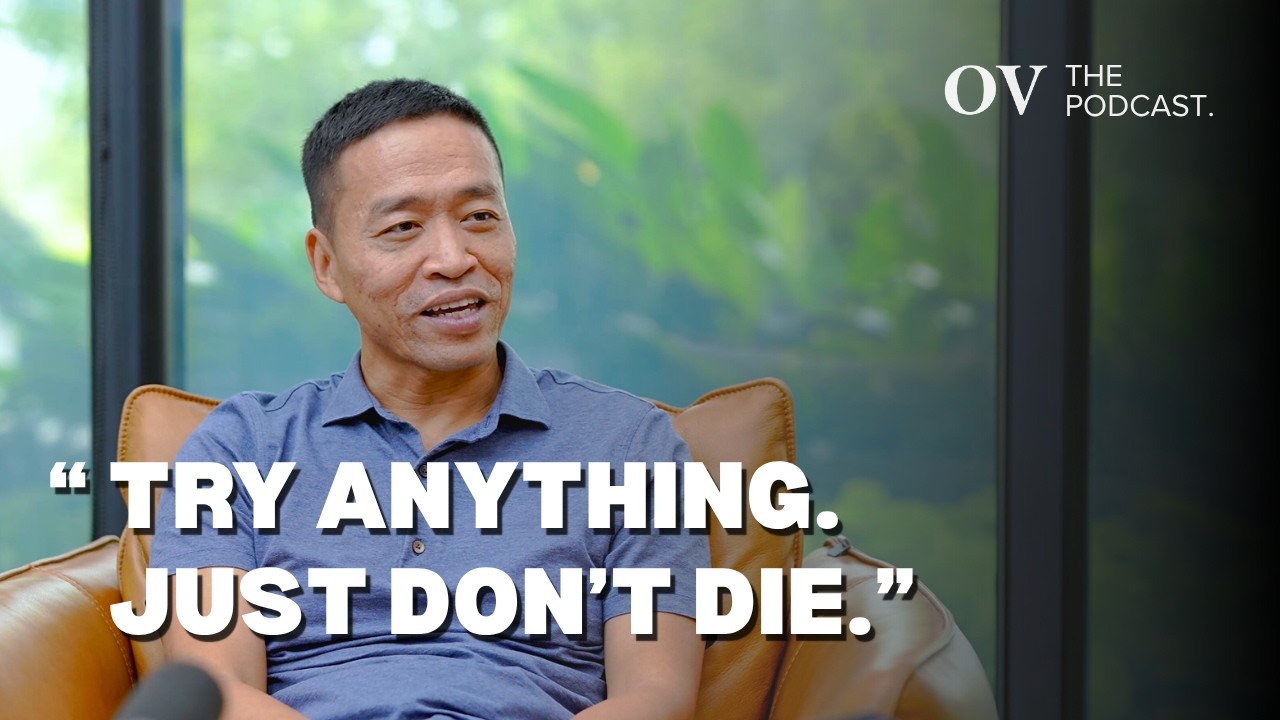
The conversation
Minh Le almost stayed in Australia. He arrived in Melbourne in 1997 on a scholarship to study finance, and in his final year he interned at a securities firm. At a morning meeting he looked at the tired faces around him and saw himself in 20 years. The next day, he decided to go home.
Back in Ho Chi Minh City he worked in finance, played for Vietnam at the World Cyber Games in 2003 and opened a game café with friends. In 2004, at 27, he founded VinaGame. Its first game, Võ Lâm Truyền Kỳ, became a hit, and the company, now VNG, went on to build Zalo, ZaloPay and an AI cloud business.
In this conversation, Minh credits luck for much of that, then explains what earns the rest: the question he asks every founder (“why do you deserve to do this?”), the more than 500 products VNG has tried, his motto “try anything, just don't die”, and why he sees love as a verb. He also walks through VNG's AI bets, from a Vietnamese language model it scaled back to a $40 million GPU cloud it kept building.
For Overseas Vietnamese thinking about a move to Vietnam, his advice is short: trust your heart over the analysis, and answer the question by taking action, however small.
Five takeaways
- 01
Write down what you want from life. He thinks most people never answer this deeply, beyond what family and society expect. The answer changes as you change, so he comes back to it from time to time.
- 02
Ask why you deserve it. His test for founders, for his team and for himself. Talent helps, but the right comes from years of learning and doing the work. Having founded VNG is not, in his view, a reason to stay its chairman.
- 03
Let the mission decide what you skip. From 2007, VNG's mission was to make the internet change Vietnamese life. It kept the company out of property and other side businesses, and Zalo was measured on users, not money, for nearly ten years.
- 04
Try anything, just don't die. VNG has tried more than 500 products, including a 100-person search engine team it shut down in the financial crisis. A failed product, a closed business or a breakup is rarely the end, so the willingness to act matters most.
- 05
Answer big questions by acting. There is no best choice to calculate about moving to Vietnam. Spend more time there, make friends, try working there for a few years, and keep asking who you are and what you want.
Timestamps
Each one plays the video from that moment.
- 0:00Preview: the morning he chose Vietnam
- 0:30Gamer, optimist, builder: who Minh Le is
- 4:23Knowing what you want in life
- 9:27From Saigon to Melbourne on a scholarship
- 15:00The morning he decided to go home
- 16:24Hotmail, and a plan to start a company
- 20:41World Cyber Games, a finance job and a game café
- 25:10VinaGame and its first hit, Võ Lâm Truyền Kỳ
- 28:43Luck: timing, place and people
- 33:24The question he asks founders: why do you deserve this?
- 35:36Learning and changing as a leader
- 37:16Playing to win or playing to enjoy
- 41:41Earning the right to make big bets
- 45:55“Try anything, just don't die”
- 48:50Love is a verb
- 53:08VNG's AI bets: a Vietnamese language model and a GPU cloud
- 59:19Building technology that does good
- 1:02:52VNG's missions, from the internet to the world
- 1:09:12Where Vietnam is heading, and following your heart
- 1:14:19Advice for Overseas Vietnamese thinking of moving home
Full transcript
ShowHide
Made automatically from the audio and lightly edited.
Minh Le
0:00I look around the room and I saw kind of like middle-age, mostly white middle-aged people looking a little bit tired and not very excited about life. And it's something, like, a thought occurred to me. I said, like, "If, if I stay here, that would be me in 20 years." I s- kind of like I can see the vision of my future. That would be me in 20 years. And the next day, I decided to go back to Vietnam.
Quang Do
0:30Anh, people in Vietnam, they know you. You know, you, you're well known. I would say one of the legends in Vietnam in the entrepreneurial space. But for people who don't know you, just passing it onto you, how would you introduce yourself?
Minh Le
0:43I would think that I would say to the people who don't know me that I'm a lucky, normal Vietnamese guys who grew up in Vietnam, had a chance to, go overseas to study, and came back here. At heart, I'm a gamer, so that's why when I and my friends founded VNG 22 years ago, it's a gaming company. And then I became a technology guy, and now VNG is the, I would say the leading technology company in Vietnam with so many business and product that we do. So we proudly serve, we would say everybody in Vietnam on a, even on a daily basis. So we have Zalo, obviously, the most famous one. We have a gaming business. We have fintech business. We are building our, like, you know, AI and cloud business, and we have a lot of experiment, going on. You know, that kind of like a short story. If you ask me, I'm kind of like, I can say that I'm a gamer, a optimist, a builder, and a, a people person.
Quang Do
1:45I think there's so much to unpack but very quickly, are you still a gamer or are you too busy now?
Minh Le
1:51It's funny enough because, you know, I used to play a lot of game. I think that, you know I mean, the funny story when I reflect into the journey that we have and I said to my, you know, colleagues and my friends that we are kind of like the PC generation of Vietnam because I still remember the first experience I had playing games on a PC, Prince of Persia. I think that for most of people listening to your podcast, most of them don't know.
Quang Do
2:25I don't know.
Minh Le
2:27But that's one of the very early famous kind of like game, and it blew out my mind of like, you know, our collective mind, our generation at that time. And obviously, we play a lot of PC game. We grew up kind of like, you know, carrying our PC around for the, LAN party to play Warcraft II. And when I get to Australia for my undergrad study, I think that we spend a lot more hours in the computer lab playing games than actually study itself. So that's why when we founded VNG, the first slogan of the company is actually, "By games, by gamers, for gamers." So we really, you know, the fundamental thing that we wanted to do at the time is we believe gaming is the this amazing thing, and we want everybody in Vietnam playing it. But now, I think that the game that I play on a daily basis, funnily enough, is, the mini crossword in Times, in New York Time. You know, that's is something that I want to keep as a streak. So that's, I just play this morning, you know? So I want to keep a streak. I think that I got into 4 years already, of playing the mini on New York Time. Occasionally, I Now, I still play some game.
3:43Play mostly is the kind of like the VNG the games that our, game business publish, and some of the games that, we develop, but just like, you know, play testing it. But I lost the enthusiasm to really kind of like, you know, waiting for a game title to come out and say, "Oh, this is something that I have to," right? Because, you know, that was, you know, I don't know, maybe a like a ten, a ten years ago thing. But now I'm just like, okay, I'm gonna play, but I don't have that excitement anymore. Maybe I, I'm getting old.
Quang Do
4:17You now play bigger games, the game of business and the game of life.
Minh Le
4:22I don't know.
Quang Do
4:23So I think there's a lot to unpack, and I, you know, I see a man who runs a very multifaceted business across social, gaming AI infrastructure now. Fintech even. And, we just said off camera you, you're very into sports. You started that journey a little bit later in life, but very intensely now. And so I think there's a lot to unpack. Maybe less talking about VNG, but more about you as a person. I think that would be very interesting to say. And off camera, I already asked you what is top of mind for you these days as someone who is in so many areas of life. So many industries, so many interests. So how would you know, say it on camera, what is top of mind for you these days? Just to set the context of this, and then we go a bit deeper.
Minh Le
5:07I think, I think, I think, you know, there's a multilayer to it, right? I think that number one for me, when I talk to you about the 3 thing on my mind is more or less kind of like linked to work because that's the context I'm thinking you're asking me. But now I think that, like, everybody Not everybody, but I think, you know, for people who curious about life, we only ask the questions fundamentally of like, you know, who we, who we are, what we here for, what is the purpose, what is the journey?
Quang Do
5:37Very philosophical.
Minh Le
5:38I mean, in a way, right? And I think that kind of like, you know, for me, that's the fundamental of life. And, one of the, m- I would say most frequent advice I given when asked is to kind of like, you know, try to think about what we want in life. I mean, it sound very simple, but I think, you know, my normal kind of like, you know, experience that is when you actually ask someone that, and then ask that person to really write it down- that become not an simple and easy exercise anymore And I think that when people have to s- really think deeply about what they want in life, and not something superficially, not something that kind of like you were told by people around you, by the society, but ask that question deeply. And that I s- often advise, right? That is how you really start to truly go to your own journey. And then, and number, like, you know, especially for young people, and even for my children now, they approaching adulthood. And als- so I mean, but number 2 is that tho- those answer can change over time because you changing.
6:59We are changing as people. Obviously with experience, with the knowledge, with the journey that we go. And then also as we mature, as we hopefully gain some wisdom in life, then we can answer that question deeper. All right? So I think occasionally we need to really think about that and review that and kind of like, you know. So n- number one for me that I kind of like that how, you know, I often reflect and kind of like think about that. And on top of those kind of fundamental question, then you kind of start to build different block of your life, right? Like, you know, what kind of, like you say, interests, what, or like what kind of, you know, relationship, what kind of things that we pay attention to, s- invest our time. I mean, like, and then work is one part of it. And then, like on work, and there's a number of thing that you want to do. And then also the interesting part is how to see the connection of all the different part together. Like, you know, for example, you can kind of like, you know, feel that VNG is a very healthy company because sport is a big part of my life. I mean, s- like living healthy and living well is one of my fundamental values.
8:15So we want to build a, you know, a healthy environment for everybody. We encourage sport. We have so many clubs and actually, you know, we just talk about me and my good friend, Bang Trinh, who brought me in, like, you know, Ironman in Vietnam and, you know, we think that in the past, I mean, 10 plus year, Vietnam changing itself from a country where sport is not really like, a everybody language. Now it become quite c- like common. You can ki- at least you can see, you know, in cities. And so we estimate maybe there's about one million people, running, and now we want, you know, 10 million people running in the next 10 years. So coming back to my point, like, you know, so we have a fundamental, we have different blocks and how to, you know, link the block together. It's like people, ideas, and generally kind of like at the same time, enjoy life and enjoy what you do. So, you know, that if you ask me, then I'm gonna give a maybe, not generic, but kind of like, you know, high level kind of answers. And then we can go through any of the specifics.
Quang Do
9:27No, I think it's a, it's a great frame. You know, what do you want in life? And I think this is a great way to actually talk through your life. Because like you said, it changes throughout time. And I think, so what a gamer wants out of life is different than what a Ironman wants out of life than what's a CEO or chairman wants to get out of their company and their life, right? And so often, at least for me, I see when you're younger, you, you're very driven by accomplishments status, and that sometimes changes over time, right? Once you achieve to a certain level. And I see this with, many other guests. So maybe we use that to go quickly through your life and, see how that has changed for you. You know, from the gamer boy to the exch- or the overseas student, and then that decision coming back. You know, what was it always that drove you during that time, and how has it changed until today, and what motivates you today?
Minh Le
10:20I mean, you know, so of course, we're talking to the overseas Vietnamese and majority of you was, were born outside of Vietnam.
Quang Do
10:28We have both, actually.
Minh Le
10:29Majority, I would I mean, that's my assumption. And then also a lot of people like me, right? So we grew up here in Vietnam and- got a chance to go overseas to study. So, you know, I think that my story, I was quite lucky because my, my brother, who was 9 year older than me grew up k- like, you know, were born during the war time, and grew up, in a much more difficult time compared to myself. And then he, he went to Russia to study. Yeah, that kind of like, you know, that's still the time, right? And then in the-
Quang Do
11:03Where was, where was your hometown, if I may ask?
Minh Le
11:05I was born in Hanoi, but I grew up here in Ho Chi Minh City. So I, my family moved here when I was 5 years old. So I consider myself, like, a southerner more than a northerner. But my brother coming back, so my brother and his generation kind of like study in Russia. And then bec- you know, because of the collapse of the Soviet bloc, I mean, there's a, there's a period of time when most of the kind of like typical Vietnamese like me or my brother, who like grew up kind of poorly, Right but try to study hard- and dream of going overseas to study, right? There's a period about 5 years between the end of the communist and the opening up of Vietnam where people didn't really have any chance to go anywhere, right? That I would say is about between the year 1990 and the year 90- 1990 and 1995. And then, and I came of age in 1995, and then that when the so-called r- Vietnam opened up to the rest of the world, and I got a scholarship from the Australian government to, to go to Australia, Melbourne specifically, to study finance. And that's what kind of like, you know, I could say I'm the, I was the first generation, among the first generation to get a chance to go to kind of like, you know, so-called, Western country.
12:31And then obviously now it's become increasingly normal, not just with scholarship, but because of economic development then people can go and study by different means, right? But you know, so reflection is my brother's generation got to go to Russia. I mean, that's not necessarily a bad thing by and of itself, but then it shaped a very different worldview and life experience. And then there's a middle kind of like 5 years generation that not got a chance to go anywhere. And then my generation and obviously a lot of people similar to your generation now kind of like got the chance to go and see kind of like the rest of the world. And that was, for me is, I think it's a very formative, right? I mean, like, you know, we got I still remember many of the great story. I mean, like, you know, when I went to, I landed in Australia in April to, 1997, and that was the first time I really see kind of like, you know, a world very different from Vietnam. That was the first time that I went overseas, in my life, was 20. At the time. Before that, just here in Vietnam. And I only spent 4 years in Australia. A lot of those 4 years playing video games- like we speak about. And I tried to study, I tried to study hard as well because that's kind of like the culture of the kind of like the Vietnamese generation or even I think that now Vietnamese, like, you know, most of the Vietnamese, they try to study hard, right?
13:57That's ingrained in our culture. I think any young people gonna start to ask question what we want to do with our lives during those university years. And I only start to ask that question a lot in the final year, actually. The first 3 year went by t- too fast and you know, you're just adjusting to a new life, playing video games, and kind of like, you know, exploring Australia a little bit. And then on the final year, I asked myself a question, and I didn't really have a clear answers. And it's funny, because of my relatively good grade, then I got to, work internship, in a, in a security company in Melbourne 6 months before I graduate. And so that was a path, that, you know, I could choose to try to convert that into a full-time job and kind of like, you know, stay in Australia, which, a lot of my friends in, my generation, choose to do so, either stay in Australia, continue study, go to the US, and go to different countries. And I, and this is my kind of like, you know, one of the story I often told, and I gotta said it with me here, is that, with your audience here, is that one morning I went to work, and then like, you know, as a intern analyst, so I often have to write about company and do research, then, so we present to the, kind of like senior brokers, in the firm before the market opens.
15:31So I used to remember that. It was a meeting around 8:30 in the morning, which is kind of like early in the Western kind of like time frame.
Quang Do
15:37In Australia.
Minh Le
15:38In Australia, right. And I look around the room and I saw kind of like middle-aged, mostly white middle-aged people looking a little bit tired and not very excited about life. And, and it's something, like, a thought occurred to me. I said, like, "If, if I stay here, that would be me in 20 years." I s- kind of like I can see the vision of my future. That would be me in 20 years. And the next day, I decided to go back to Vietnam. I decided to go back, and a week later, I came back just in time for the- for the, for the Lu- for the Tet. And then starting, to find job. And then on the way back, I say, okay. You know, I didn't really know I gonna do, but one thing I kind of like know, right? I mean, I mean, like, you know, like many of us, reading all the stories, and then one of the story kind of like stick to me was the story of Hotmail, you know? Because-
Quang Do
16:39Hotmail?
Minh Le
16:40Hotmail.
Quang Do
16:41The Gma- the email provider.
Minh Le
16:42The email providers that's equivalent to Gmail, but then that was thir- 30 years ago now. And the reason I remember that story was that because when I first landed in Australia in 1997 a friend of mine who picked me up in the airport kind of asking, "Hey, you ha- you have a Hotmail account yet?" I say, "What is, what the hell is Hotmail?" I mean, I have no idea what it is. And he said, "Oh, that kind of like a free email that everybody can have." And of the, even the concept of free email was very strange in, for me, right? '90, '97, Vietnam didn't have internet yet. We had like local, like a, like a loc- some local, internet service, that you have to dial up and you just play yourself within like a small community. It's kind of s- a very small version of AOL in the US in the very early days. And you can have your, your email, you can register for your email address but only the people within that network can send, and you have to pay money kind of like, you know, every month for that email address, right? So the concept of Hotmail as a kind of like, free email was, I had no idea what it is. So one of the first thing that my friend helped me is to register for a free Hotmail account, in a, in the day when I landed in Australia.
17:58I remember that. And then the second thing, he took me to eat McDonald, what McDonald is. So, and then a year later in 1998, Hotmail's, the companies got acquired by Microsoft for 200 million US dollars. And that was kind of like a story that you can remember. So on the way back to Vietnam, and I say, okay, you know what? Okay, I come back, I have no idea what I'm gonna do, but I know that Hotmail story was one of my, the thing that I remember and I try to s- you know, start a company someday. That's one of the goal when I come back here to Vietnam.
Quang Do
18:35So what was it there? Was it the acquisition where you felt how big the tech and digital world is? Or what was the inspiring element?
Minh Le
18:44I mean, it's a combination of thing. I think that, like I say, right, you know, our generation, my generation was the generation that grew up when the internet come of age. I mean, 1997, even that, the time when internet is very new, even in Western country, right? And you read about Hotmail, you read about Amazon, and you know, like, you know, at the time it's like a lot of crazy startup, ideas, stories, and success. The young generation, the young people feel that they can kind of like do anything and change the world. In a way, I think that the world is a lot exci- like, you know, the technology world in particular, is a lot more naive and optimistic compared to today, you know, in certain way because that is very new. And then, you know, then we have story of Netscape and so many stories. Of course, you know, you got inspired by all that story. I mean, but I didn't really have like a very clear idea yet, right? I just know, okay, number one, I know that my heart is not in Australia. And and later on, kind of like, you know, I also know that I'm the adventurous type. I want to, to, do adventures in life, but then on that fly back to Vietnam, then one thing I know that I'm gonna start a company one day.
20:08Not necessarily a gaming company or a technology company. I have no idea. One of the major kind of like decision, and then later, I mean, I got a TED Talk about- about kind of like intuition and decision, and I reflect a lot of the big decision that I have in life is kind of like that decision. It's the moment you feel something in your heart, and against all the rational kind of, like, analysis that you, like, you know, a finance guy or a tech guy can do, you decided just, okay, you just follow your feeling. And then I came back to Vietnam, work, worked for a few years, and during that time rekindle I mean, continued, not rekindle. Continued my gaming passion. I went to World Cyber Game in 2003 as a, kind of like a Vietnamese team members, right? So played in the so-called, like, very early e-sport, kind of like, you know It's called World Cyber Game. Back then it's kind of like Olympic of s- of video games. And I got to, like, you know, I say, "Oh" I still remember, I say, "This is the best time of my life." I'm the guy who grew up 10 years playing video game. I got to go and freakin' play in the biggest gaming competition in the whole world.
21:25It's so fun, the whole week in Korea.
Quang Do
21:27So was this, was this your job as well at the same time?
Minh Le
21:29No I work in a f- in- Finance, right? I, you know, I work in finance.
Quang Do
21:33Just quickly to bring that together, like, why did you decide for finance at all if you're so passionate about gaming? Wouldn't be-
Minh Le
21:39No because I went to Australia to study finance. So came back, and naturally I choose a finance job.
Quang Do
21:45And how did you choose to study finance?
Minh Le
21:49It feels- I mean, I think it's kind of like I got, so I got a scholarship to do computer science and finance. And then, like, I remember asking one of my teachers, like, "Which, which one should I choose?" I mean, because at that time, I think that in 1996 when I got a scholarship the idea of both finance and computer science is too early and n- not very Like, quite new in Vietnam, right? Because if you remember, like, Vietnam just opened up, like, a few years before that. And then, and then I was kind of Obviously, I spent a lot of time with the computer. I learned how to even, like, program, simple program on Pascal at that time. In I still remember installing, Windows 95 when it came out. I mean, obviously bootleg, not the real w- build in Vietnam. It's And a lot of experience. But then my teacher kind of, like, said to me that, you know, "Go to finance because, with you you're good at both math and kind of like the social skill." So the impression at the time was, like, the guy who, choose, computer science is more like a geeky side. But I, you know, I'm a, I'm a very social person. I love to read. I love to make friends.
23:05And, that's my teacher advice. And I say, "Okay, it sound like it," so I just choose. I have no idea what finance at that time, right? In Vietnam, we have no f- no idea. So coming back, I mean, like, you know, you know, I work in finance in Vietnam, and I got a chance to went to, the World Cyber Game. And after the World Cyber Game, then I say, "Okay," you know, I said to a few, a friend that went to the event to- together in Korea, "Let's, let's, like, kind of, like, set up our own PC game room so that we can play game." "To have fun," right? You know? So I, together we built like, you know, a PC game kind of cafe. Like, you know, a internet cafe to these, to mostly to play games.
Quang Do
23:49Was this here, Ho Chi Minh?
Minh Le
23:50In here, in Ho Chi Minh City. And we kind of became a little bit famous because obviously we have the best gamers in Ho Chi Minh City- to come and play with us. And that lead Then one, I mean, one thing can another, that led to the foundation of VinaGame, which is the original name of VNG in 2004. The rest is history.
Quang Do
24:11How did you then transition from gamer to entrepreneur? You What's that shift in your, in your mind?
Minh Le
24:16I think, I think, I think it's, I think it's I like, number one, I did have a goal to set up a business one day when I came back to Vietnam. And then second thing, I think that in a way, when you work in finance and the business of the language of business become natural to you, right? You know, you have to, kind of like, you know, learn about, strategy, business operation. Because all that lead to numbers, lead to analysis, lead to valuation, lead to M&A deal and so on and so forth. So those Even I work in finance shortly, only for 3 years, but I also learned a lot. So those kind of like, you know, the passion for game, and the acquisition of the business skill cultivate into the foundation of VinaGame or VNG in 2004 when I was 27.
Quang Do
25:10Tell us about the journey from c- cafe to VNG to today.
Minh Le
25:17I think, I think it's, And I mean, number one, number one is we were extremely lucky. I mean, you know, the first game that I, we ever launch in Vietnam become a blockbusters. Like, many of you who didn't know that game was called Võ Lâm Truyền Kỳ. And, the reason I choose that game because I grew up reading, like, you know, kiếm hiệp, like the Jin Yong novels. So it's like basically martial art, kung fu, the kind of like, you know, hero, heroes and stuff. It's kind of like the equivalent of Lord of the Ring and of all these fantasy kind of like Western novels but in a, in a, in a Eastern settings, right? I'm not sure whether you read any of them, but, for me, I grew up kind of like, you know, with that kind of Not junk food, but, like- you know, kind of like, you know, entertainment for the mind, because we didn't really have any other entertainment form. So that's why I choose a similar theme game for when we launch, and w- and that turned out to be a very lucky bet because not just me, but generation of Vietnamese love that kind of like, you know, fantasy, Eastern fantasy, right?
26:35So it's become a blockbusters when it came out. And then obviously, I think that we, also the second lucky part we have is we, we set up in a period where Vietnam has been rapid growth, both from the economic perspective and from a technology adoption perspective, right? Back in 2004, when we first started, Vietnam maybe have like, you know, 2 million people on the internet, mostly to PC, kind of like, and i- a lot of them to internet cafe. And then, you know, that number grow rapidly. And now, like, you know, 80 90 million people, most of the Vietnamese are on the internet through mobile phone. So we lived through that whole period, and we also lived through a lot of the technology kind of like change, right? The PC and then the internet and then mobile, and then like, you know, gaming, online gaming, mobile gaming. You have e-commerce, you have social network, you have like, you know, mobile kind of like, you know, all the mobile company. So we lived through all of that and I think that, you know, as a, both as a gaming gu- as a gaming spirit, we and then as a entrepreneur, we try to- do the thing that we think we can and we failed many in many projects.
27:53But you know what end up successing over the years is what VNG is today. You know, we still preserve our original gaming business. We have Zalo, we have our fintech business, ZaloPay, and now we're building the new things. And I think, you know, it's gonna be very hard to sum up, but for me, again, it's the same kind of like philosophy, right? Understanding what we, who we are, what w- what we want, what we want, like, and then just do things. And then, you know, and keep the perseverance and keep the spirit, and then, you know, continue the journey. And luckily, our journey, you know, we, of course, we have ups and down. We have moments that we think we're gonna die, but we still, we're still around today, 20 years later.
Quang Do
28:43I love that. And I think we get more and more of your core philosophies, slowly out of you and I think that's very interesting. You mentioned the term lucky a few times, where you got lucky. But you know, as the saying goes, luck favors the prepared. So looking back on that gaming journey, you know, what do you think you have done, your team have done to get lucky, right? If you say, if you think there's random luck and there's luck that you can drive and act on, right? So what did you push on, and how did you make this succeed with luck?
Minh Le
29:18I think, I think, I think one of the thing that I keep, you know, press stressing the word luck because I, number one, I truly feel it. It's not every day like you start up, you have absolutely no idea what you're doing, and then you just decide that, okay, here's the one thing that you're gonna do, and then it turn out to be a massive success. I think w- luck have to be like 80% of it. 90% maybe. But like you say, right? So, there's a saying, lu- luck kind of like, you know, reward the prepared mi- minds. And what does that really mean? And I often using a concept in Eastern philosophy called "Thiên thời, địa lợi, nhân hòa." Right? So basically, it translate to a timing. "thiên thời" mean like sky, but then it's really timing. "địa lợi" mean the ground, but, it basically mean the environment. And then " nhân hòa" mean the people, like who you are and who you, who you have, you're with. So like I say, we are in a period where there's a rapid change in Vietnam, adoption of internet, adoption of technology, economic growth. So that's Thiên Thời. Like, the timing.
30:34And then the the context is that, at that time, there's many sectors of many of, areas of the internet, and we are lucky to choose Or not to choose because of, like, you know, we're lucky to be in one sector that both favor the local one. Let's say at that time, if I want to do a search engine, I'm gonna be dead, kind of like out of the gate, right? There's no way, you know, I'd be able to really build something that remotely be able to compete with Google. And later, a few years later, we tried to build a social network, and in, we grow rapidly in the first, few years, but then after Facebook become dominant, and then it's very hard to compete with Facebook. So again, the context is important. And game lo- game is still very much a l- kind of like a local business in certain way. I mean, people can play all these US triple A game, but those are a very small number of people because they don't know the language. They That not really work on the culturing, the, on a culture perspective. And then also you need a lot of local distribution, local marketing, local operation. So we are very lucky to kind of like be in the gaming part, right?
31:49And then the people part is, you know, among a few, a lot of company at that time doing gaming, then I think that we are a combination of people who really love game. I mean, obviously we grow up playing games. And we know a little bit about business as well, like finance, and then I also like, you know, have partner who kind of actually American, entrepreneur who has been in startup as one of the early founder of VNG. So it's a combination of people that make us kind of like, you know So we have all that, but even people who have all of that still fail. It's not like, it's not guaranteed, right? So like I say, the this decision to make a bet on Võ Lâm Truyền Kỳ was one of a very lucky decision. I mean, you know. So I think, again, kind of like I think that in life, I think that how we, That's also a thing that our mindset, because it also gonna work, against your favor anyway, right? You have all that, and then something happen, and then you are in a very bad situation. I mean, you know, personally or family or, or even professionally. Then how you deal with that, right? You know. So it's very easy to say like, you know, "I'm a, you know, I'm talented and I have everything figured out."
33:05But then when you faced with crisis, when you faced with challenges, when you faced with kind of like difficulties, and how you're gonna, you know, having mindset to really, make yourself out that situation and continue your journey. So, I think, I think now, you know So that kind of like the story and then the philosophy, and now there's a kind of a question I al- also often use when, kind of not giving advice, but when I challenge my team and challenge some people who come to me and ask me what I think about, you know, their startup, their product, their business. And one of the question I'm asking is, "Tell me, how how are you deserve to do the thing you want to do? And what's that, what does that mean?" I think what does that mean is that we're looking at kind of like, you know, obviously, a lot of successful people. Now World Cup is happening, right? You know, we enjoy the game. Obviously, you know, all the World Cup star, they're talented. But we know they put in a lot of hard work, right? You know, in a early age. And obviously everybody think, know about the 10,000 kind of like hours, concept.
34:22So in a way, that's one of the way to say that how you deserve to do the thing that you do. So if you're not really kind of like, you know, I No need to be obsessed, but you don't really know the thing that you do deeply. You don't really love it. You don't really spend a, at least a few years kind of like, you know, doing it or studying about it or really acquiring capabilities, and you say, "Okay, you know, this is a new shiny thing and I gonna do it." Yes, you may be very lucky to I mean, maybe sometime you are very lucky, but most of the time, on average, you're not gonna be lucky and you're not gonna deserve to do so I think those are the question I'm, I'ma often challenge people. Like, why you deserve to do the thing that you want to do? And even answer that question is an interesting exercise by and of itself, right? You know, in a way, kind of like, you know and I apply it to myself. Why I deserve to be, the CEO of VNG, or now the chairman of VNG? And I have to ask that question, you know, once in a while, right? And to really deeply think about that. And, and if the answer is, "I deserve to be the chairman of VNG because I found it," then that is not a good answer. You know.
Quang Do
35:36You know, that toughness and that high bar on yourself was this always how you are? Or did this come over time?
Minh Le
35:43I don't think that people are gonna think I'm a, I'm a tough person. I'm actually, you know, people who work with me for a long time think that I'm a very easy person, by and obviously, you know? But I think, you know, but like I say, I mean, you know, we grow, we change. We are shaped by our experience, of the journey, of the thing that we went through. Then same to me. I'm I kind of like, you know- obviously change a lot over time. And I think the What, I mean, at least one thing about, kind of like, you know, how do, how 1, one thing about the core part of me is I love to learn. And I think everybody easy to say this. Everybody say that, but actually, again, if we truly be honest to ourself and say, "Okay," you know, between saying that I love to learn and truly doing it, like facing the reality when no one judge you don't need to impress anyone. And then how you actually, you know, answer that questions. And, it's not easy. It's actually, It's So, that kind of like, you know, coming back to you asking a question of like how, whe- like whether I'm still, like I was like that 20 years ago.
37:05No. I'm, I continue to evolve and change and learn and kind of like shed the Who I want to be and what kind of person I want to become.
Quang Do
37:16I'm asking you this question because I'm interested in And I read this, about this recently, you know, gamers can get very absorbed in the game to the extent that they try their best they can to succeed. But then in the other parts of life, you're not, might not be so driven. And so the games are designed and engineered for you to get very hooked on it, right? And so that's in- interesting about the human mind where things we don't want to do, we often have to push ourselves to do it. Where something like a game can really pull us into doing it. And so I'm just curious, like, were you this competitive just in the gaming domain, or do you consider yourself someone always very competitive?
Minh Le
38:01I'm actually not a very competitive person. You know, I think if choosing between like, you know, playing to win- and playing to enjoy, I mean, I would be more on the enjoyment part. You know, and obviously everybody love to win, but then, you know, for me it's kind of like, you know, I no longer enjoy, then I choose, okay, why should I do it? Like, it's the same question I'm asking, like, you know, why I have to go to work every day? And then, you know, it's not about winning, but to whether I truly enjoyed it. So to answer your question, number one, I'm not a very competitive gamer. I was I'm playing pretty well, but I never ranked top at of my game. And I think in certain way, I think that if you watch people play sport or play game, then different people gonna play differently, and they, they're kind of like, you know, their personality and their, kind of reflect when they do that. I mean, obviously there's some hyper-competitive person, they want to win. That person like, you know, the, there's person who like me who wanna enjoy, enjoy in different aspect of Enjoy the, like, the progress of capability, enjoy the social aspect of gaming, or enjoy just the kind of like immersion, or the creativity or the imagination of the game.
39:24I mean, different people enjoy it differently. When also kind of like, you know, being asked about, game that have designed mechanism to kind of like hook people and make people addicted, and that's true. But at the same time, there's certain people who be able to not just play the game, but see the meta of the game and rise above all of that kind of like, you know, design and kind of like, you know, basically kind of you observe the game from above. It's like, you know, one of the philosophy that I, like, you know, one of the mindset I have as well. Like, whatever you do, you try to understand it deeply, by both doing it and then, and then kind of like learning about it. And then you look at it not as attached to the, you know, the object or the thing that you look itself, like many thing, right? And then you can really have clarity and you really enjoyed it. So like for me, when I play a game, I th- I remember like, you know, some of the most flow state like experience I had is actually I feel I'm not playing Like most of the time I use this analogy, the game playing you for most of the time. But then when you truly play the game, then is actually feel very satisfying.
40:43Very good. And then is, again, it's applied to different aspect of gaming as well. I mean, of life as well, not just game, right? You know, work being obviously a big part of it. A lot of the time we do thing, not because of a deliberate thought, but because of a lot of the so-called design mechanism within the environment. Like, okay, you want to get a higher salary, you want to get promoted, you want to get recognized. In a way it's human psychology, but got designed within the system in certain way, right? But then a- after you really see through all of that and you deeply understand like why you want to play the, play the work game, then you can make a decision by yourself. And I think that would be a lot, a lot more enjoyable and a lot more fun. And, and that's what I'm trying to accomplish, both in playing any games, and in also playing the life game, of itself.
Quang Do
41:35Game of life and game of business. This is great. I think we learned a lot from you personally a lot of your thinking. Just applying this to the business part a little bit. You run a few business verticals and you've made bets over the time span of your career here, and you said you have to, you should be earning that right or that position to make those bets and to launch products. You know, you've done Zalo. You've done.
Minh Le
42:03Gaming first and Zalo from there.
Quang Do
42:04Gaming first. And then the pivots you had were Zalo Social, Fintech, ZaloPay, and then now you do GreenNode into AI infrastructure. How did you earn the rights to make those bets and, you know, how scary were those bets for you?
Minh Le
42:23I think, I think, I think the earning part, I mean, so obviously number one is to really having, keep having that excitement on new things. And not just for myself, but then for the people around me, right? For organization. And convince people, "Hey, you know, we should to do, we should do this thing." You know, I think one of the thing that, very different about VNG, compared to most of the Vietnamese business, I'm not, I'm not saying that we are the only one, was that we are very, Western-like in a way that, the fundamental belief is people should do the thing that they really want to do, not because they're told to do. So, the, I got a reputation of, you know, very good convincer, like people, be able to convince people because I never [unclear], "I'm the boss. I'm the CEO. I'm the chairman, and you do what I told you to do." I always kind of like trying to excite people, give people the emotion and give people the why. And then, and after that, after that they do it, and then, you know. So coming back, I think that is number one.
43:39The earning the right is to, you know, in a way you are, you know, I'm in a leadership position then I need to, you know, continue my study, continue my learning and say, "Okay, this is the, what we believe the work gonna move to. Let's do this. And let's And get, basically gather people to climb new mountains" That kind of like one of the analogy that we often use in VNG. And the second part, I think earn the right in a way that is, I mean, obviously starting something is not the most difficult part. The most difficult part actually going through all the challenge of doing it. And then I think that, as leaders, we, I, we need to be able to have the courage to face all that challenge. And together with all the people, the colleagues and your, you know, your partners, solve the challenge, overcome those challenge, right? You know, sometime we solve it, sometime we couldn't solve it, and we accept failure. But it's okay. We can always start a new climbing, a new journey. So I think the, the emotional courage also, that's the second part that, I have, I kind of like earn the role. And then I think the third part is, I mean, it's different depend on person, like, you know, your skill set and what you do.
45:00So, but I think that, apart, like, you know, after the so-called the convincing and then the resilient, I think that would The third part that help me earn is again, I have the learning mindset. I keep learning new thing. I keep kind of like, and share that learning with people, help people to learn. And people see that, hey, you know, I'm generally can add value to the conversation, not just from a position perspective, but as an intellectual perspective. And that kind of why, you know, that's why I hope, you know, people still want to work with me. But again, put in disclaimer, all of this is my own biased perception. Maybe people think very differently. So if you want to ask that question, you shouldn't ask me. You should ask people who work with me.
Quang Do
45:55So we're touching on company culture and of course, a- as a leader, you, your thinking goes a lot into how the company is run. And I think I've seen many c- offices in Vietnam, and I think VNG is truly unique also as a company, and, you know, you have a gym. People seem to be very flat in hierarchy, across the organization. And I think I read a quote somewhere online where you said, "Try anything, just don't die." And this goes back to this making bets mindset, being lucky sometimes but also making use of being prepared to get lucky. And I think you said, 80% is luck. I have this framework, or I read about this, where people say, life is more like poker than chess. Chess you have very deterministic moves. But life is not like that because you have limited amount of information, you have to make bets. But in poker, actually, it's 40% luck and 60% skill, which is why there's, tournaments and everything, and people who are skilled actually win even though there's a big luck element, right? But over a long time, if you make many bets if you make beka- be- better bets you are, you are ending up better. Quick detour there, but, you know, this quote of, "Try anything, just don't die," really implies to make bets, right?
47:13And I think that's such a fundamental element of business where you can't control for many factors. You can just do the best you can, learn the most you can and make the best moves given your information. But do you think at this scale of VNG, this principle still applies, on an employee level, right? That.
Minh Le
47:33I think, I think, you know, the context of what I'm saying that is I think, And we, over VNG 22 years, I think that none of us could remember how many products we have done. I would say, you know, maybe not 1,000 yet, but more than 500 stuff. You know? We tr- we've done so many thing, right? We I think that, like, you know, we E-commerce, we done it, we fail. We invest, we fail. I think that, back in 2008 even, you know, originally said that we didn't do, a search engine, when we start VNG, but then our, one of my co-founders want to do a search engine. And we actually kind of, like, put a team of 100 people back in 2007 to build a competing search engine with Google. And when financial crisis happened, we shut that project down. So I think, number one, we try so many thing. And I think, I think my philos- that's partly my philosophy, right? In life, the most important thing is the willingness to try and to take action.
48:50In many of the thing that you undertake. Business is one thing. I mean, even in, you know, relationship for example.
Quang Do
49:01Even love.
Minh Le
49:01I mean, I mean love, right? You know? I One of the I remember, like, you know, I read many of books, philosophy books and, you know, in early in my 20s, and one of the thing that I remember the most, that have a impactful in my relationship life is, love is not a noun, it's a verb. So, you know, most people think love, to using the word love to describe their feeling, which is a noun. But love is actually an action, right? When say, "I love you", mean, okay, you know, what does that mean? And that kind of, like, informed the way I kind of, like, approach a relationship as well, right? You know, whenever, I said even, like, you know, to my kids, right? Feelings are one thing, but then at the end of the day, you're only looking at the things that you can do for other people or other people do for you. So that You know, and then, you know, through life, through many thing. And if you kind of, like, you know, take that, philosophy, right? And say, you know, okay, you can The most important thing is not just to sit here and talk.
50:16I mean, which is still important, but not the most important thing. The most important thing is after listen to this talk, then what people gonna do. You know, it's not necessarily to i- i- you know, to inspire people to do major big thing, but at least to change a few small thing about you know, how you conduct your normal life, your everyday life. And I think that should be, that is my, at least it's my, like, hope, like life, one of my life principle is to, you know, take act- take action. Look for change. You know? Learn, but then w- that learning can only, like know- knowledge can be only useful when you take action, right? So that's the thing that really, you know, underlying a lot what VNG is doing and what I'm doing. And then that's why I'm, I you know, that quote I have in context is the, "Try many thing as long as you don't die." I mean, the And that's actually, there's a longer quote on that because I'm often joke and say like, you know, "Run fast, and don't get into accident." So that's the first princi- like, you know, phrase. And even when you ac- get to accident, it's okay if you don't die. You know, you know.
51:32Because obviously, And die also can mean, many c- thing in different contexts, right? You know. So today we have a conve- we have a podcast and obviously this is the first time that I wear short in a podcast because I got a tendon in- inflammation, so I just went to see a doctor before this and then, you know, but this is for me is not die. This is like a problem, that I need to solve so that I can c- go back to my sport, kind of like, you know, l- I love for sport and doing like, you know, triathlon and doing, different things. For business, even when a business go, bankrupt, it's not necessarily mean you die because you can always start a new business, right? When you break up with someone it's not, it doesn't mean y- your relationship die or your love die, b- because you can always love a new person, right? Maybe even like, you know, to take that into a very meta level, even when you die your ideas, the thing that you start the people that you influence still be around and continue in a way something that you have done. So you know, speaking from that perspective then, you know, it's very hard to die.
52:50Don't worry.
Quang Do
52:51This was very well said. And I think very beautiful around the love thing. We're very similar here. Even in my wedding vow with my wife, I said love is a verb. You know? You can't rely on feelings. There are good days, bad days. But what you can control is what you do. And so whatever you can take the next step in front of you to make things better you take it. On making bets again, and I think we had this point over and over again because I think it's such a foundational part of doing business and living life. Today, bets that you are trying to make with VNG, you mentioned AI, you're going deep there. You said in the past you've made 500 bets probably. Many times almost died perhaps. And I guess this won't change until the end of your tenure. But today, what are the bets that you're doing? What is the things that you hope will work out, and what are the things that you are driving the company towards?
Minh Le
53:51So I think, I think number one, and even when we talk about AI, right? I mean, so number one is a very broad word. So I have to, we have to really figure out specifically in VNG position, in our context, what should we do? Why? I mean, the why. Why? Why should we do? And how we can kind of like, you know, w- how we can making bet at the same time of, kind of like, progressing to, toward the direction that we choose. I mean, I take for example with AI, I think that when 2022 with all the excitement of ChatGPT and, you know, Ki- like Khai, our co-founder, said believe that we should try to see whether we can build a LLM from a, like with a Vietnamese specific language in mind, and we start that project. I think that Khai and his team built s- still to today the best kind of like, you know, Vietnamese LLM model, from scratch. But I think after one and a half year of doing that and we have like a review and we believe that, we would not be able to really continue to scale, that effort and compete on a global perspective because this is like a global kind of like, arena now from a LLM perspective.
55:10So we dialed down that investment. So in a way we, is we're not completely fold the bet, but it's no longer a major bet that we make. So we put in a few, like a few million US dollars into that bet, and then now it's become like, okay, that's something that we, the capacity that we have, but not gonna be a major direction that we do. Another bet we made around like the same time is, you know, actually we were like, become one of the very early, neocloud, kind of like, providing GPU as a service. So we launched, we launched that in 2024, 2 years ago. Because we start that business in 2023, like very early, right? And, the reason when Like, that was a 40 million US dollar bet, right? And I said to my team-
Quang Do
55:58Major bet.
Minh Le
55:59Yeah, I said to my team that, let's do it because we need to be the man in the arena, again, taking actions. And, you know, instead of talking about like, oh, you know, all this, then let's build this infrastructure and see, what it is. So that turned out to be a moderately successful bet, and now we're building up on that kind of like, you know, direction because we believe that, sovereignty infrastructure for AI is important. Is unlike, the previous wave of technology. Now I think that from a, from a fundamental, infrastructures, then, each country will have at least to have some national level of infrastructures. For data perspective, for access to technology perspective, obviously, you know, everybody know about the story of Fable 5, you know. The US government turned off that access for a couple of weeks. And you know what happened is, again, this is a story I just shared recently with some of my friend. You know, the day of, the day, the day that Fable 5 came out, I wake up 6:00 a.m. in the morning, and that was the day that I skip my workout because I want to spend as much time as possible playing with it.
57:17You know. And I was so excited. I'm like, "Oh my God." Because I see clearly the difference, between, you know, the previous generation, Opus and Fable 5. And fast-forward-- no fast No not fast-forward, like rewind backward, a couple of months before that, that's actually in early January of this year. Then when I was have time, then I play around with OpenClaw, also kind of like one month after it come out, and it blew my mind. And after that, I wrote an email to the rest of the engineers saying like: "Guys, you know, this is really happening." I mean, like- you know, we have to really detect it. Like, you know, we have to really do it. So I was so excited about Fable 5, and then on Friday it got turned off. I was so pissed off. I'm like, "Oh my God, I hate this." But coming-- I mean, like, you know, that is a small story, but if you think from a fundamental perspective, I think that, everybody know that AI kind of like become increasingly important, right? And what if it got turned off? Then, you know, it's like, you know, before let's say if the internet turn off, then we-- you still have the local internet to kind of like, you know, rely on a little bit. But yeah, I mean, we didn't know what it doesn't mean.
58:34Like, you know, we look at some country about it, what-- when they try to turn off the internet, and the result are not pretty. But the impact on turning off AI is even more. So we believe now infrastructure is one of the major area. And we believe that we have some capability and opportunity, so that's one direction that we build. We are not gonna invest in LLM. But like kind of like, you know, we look at the stack and we say like: You know, we're gonna build the infrastructure, and we're gonna build the application. And then the LLM is the part where we hope we can partner with people who can provide us with the LLM, right? So that's the general kind of like strategy that we have as a business. But then for me, I'm thinking deeper from a fundamental perspective. Like what is And at the end of the day, right? I think, and this is also my belief, I think when we start out doing games is that because we love gaming, we believe more people should play games. And j- you know, I think, I think, I think when-- and this is should be the, you know, the tenet of business and of life, is if the purpose is to solely make money, I think it's a wrong purpose.
59:50And I know that saying this is very cliché. It's like most people are not gonna believe it. Most people are gonna say, "Only the successful rich guy gonna say that." It's the kind of stuff because they not have to worry about money. So I mean, but I fundamentally believe in it because I think that you need to be, again, come-- like making money is the top of the layer, the layer. The bottom of the layer should be who you are, what do you want to do with life. So I think obviously we observe a lot of the debate about AI and stuff, right? And then different people have different ideas and, you know, fighting and kind of like But I think fundamentally I think that the, people who build AI want to use it for a better world. But maybe some of the time that like, you know, you not really be mindful of the consequence. Like for example, I think, you know, I mean, I can put it on podcast, I don't like Facebook at all because I think that like the company start out with a genuine feel-good philosophy, but over the years for various reason and purpose, I don't think that Facebook is the net positive for the world and for the user at the moment.
1:01:15But then, you know, it seemed that is the companies continue to push the be good, but then the action are very different. And that is the lesson that I have to remind myself every day, right? Because again, in any position you can easily forget that. The thing that I'm learning and I'm doing, and I'm thinking, and I'm experimenting and I'm working, is to figure out like how to continue to build technology for good, to truly to be good. And I think at the end of the day, it's like, you know, I think I hope you and your team walk around VNG campus and for us, I think that the, this is some, this is some, a product that we are proud of. Not just because it's look beautiful, not just because it have like, you know, the gym, so on and so forth. Like, you know, not the features, but the fundamental part is we want to build something that we feel proud of. We feel we can say, "Hey, you know, this is, this is truly unique and this is truly adding values to people." I think that many people come here and they got inspired, right? And that's what we want to all of our product, all the stuff that we do to be.
1:02:31So, you know, that's why I'm kind of like, you know, I'm tr- I'm learning every day and then also pushing, our various team every day to do, to do that. Like, you know, balancing the need of business with the fundamental question of who we are and what we want to build.
Quang Do
1:02:52Y- you said before the podcast you hope to be in this business and game for 25, 30 y- more years, and I hope this for you certainly. But when you get there, you know, and looking back on VNG and what you accomplished, what do you hope the impact has been with VNG, and what do you hope people will know VNG and you for?
Minh Le
1:03:13Oh, okay. I think, you know, we have a few, let's, I mean, like, and let, let's just come back to a very simple but important part of any business, is what is your mission is. Again, who you are, what you want to do. In the early part of VNG, I think that we didn't really think that much about our mission, right? Just that time, "Oh, we are gamers. We want to play game. We want everybody to play games. Let's do a game." And then a few years later, we kind of like, you know, have some breathing time so we know that we can survive, we know that we have relatively good business, then we are ask what we want to do next. I remember that back in 2007, that's when like Khai, my, the father of Zalo, is also co-founder Like even though he joined later, but because of his impact to VNG, then we consider him a co-founder. He, we have a small group meeting and we try to say, "Okay, like what we want to do." And we decide that, hey, you know, the internet growing rapidly, we should do more than game. And that's why we start to do like music, we start to do news, we start to do social network and so be it, like, you know, like all the 50 product before. And so Zalo actually the culti- like the culmination of 50 different non-game product that like we do before that.
1:04:37But the reason we do it because, it's very simple. We believe that internet gonna become like pervasive, right? Everybody gonna be internet in Vietnam. A- and we choose our mission back in that time is make the internet change Vietnamese life. That's our mission. And one of the thing because of that mission, that's the only thing that we do. That's the only thing that we stick to. We only do technology and int- like online i- internet product. We didn't do kind of like, any non-internet thing, like most of other Vietnamese companies, right? You know? Some people, many people in history, like many people ask me, "Why you didn't invest in real estate? Why you didn't do this? Why you didn't do that?" Say, "Our mission is make internet change Vietnamese life." We stick to that mission. And that's why Zalo was born because, you know, one of the way we debate is like how to truly live to the mission. And the way w- to make the internet change Vietnamese life, you need to build product that have many users as possible, right? You know, you change life and you need to measure by the number of users. So for the first 10 years of the, like I think for the first nearly 10 years, the KPI of Zalo is always gonna be number of user, never money, right? And that's lead to some grumbling with the different part of VNG because, "Hey, they need to make money too."
1:05:56But, you know, So fast-forward to around 2019 when we like, you know, having multiple business lie and we ask ourself, "Okay-" We kind of make the internet change Vietnamese life already. What we gonna do next? And, you know, so there's a lot of talk and, and then one day I wake up and I kind of, ask myself why I wanna go to work today. And then I trying to think deeply for an answer, and then the answer also very simple. I wanna go to work because, number one, I still feel excited about, you know, the products that we do, the new thing that we do. And second is I love the people I work with. And then this come a realization for me that, hey, you know, I'm the, I'm the boss. Let's p- let's choose my reason to go to work, become the company mission. So that become build technologies and grow people. That's kind of like the second mission that VNG have after the make internet change Vietnamese life. And then, and then a few years later we add the phrase, "From Vietnam to the world."
1:07:14And that also have a story behind it as well. But, that's, that story was that, like, you know, I look at all these, at a time, 2000, about 2020, Vietnam doesn't really have any global company, right? And then the typical kind of like view was that you need to be in Singapore to really build a regional business. Like look at how many regional business in Singapore, right? And then I said to myself and the team, "There's no We're not gonna be able to really relocate to Singapore, aren't we? So let's try to build a global business from Vietnam. Let's have that dream. Let's see." So that's why we put in the second phrase, "From Vietnam to the world", in that. We still w- in a very early stage of that, but I think that, you know, at least it never hurt living the dream. So now I think if, you know, to answer your question, like if I hope people remember VNG and, I mean, not me necessarily, but know VNG for and remember VNG for is we truly live to our mission, right? Build technologies, to We continue to build great products, for our customers.
1:08:36And now we be able to really im- provide environment to, for people to grow, right? You know, to become a better version of themself, to learn, to, you know. I think one of the thing, the thing that I'm proud of most is many people continue to this day say that working in VNG is one of the best working experience they have in their life. I mean, many, not all, but that's that's still make me very proud. And that kind of like So that's 3 phrase, right? Build technology, grow people from Vietnam to the world. That the 3 thing that I hope people are gonna know VNG for.
Quang Do
1:09:12Beautiful. Well, I would love to get your thinking quickly on macro level. I'm not, I know you're not an economist you're a man in the arena, but you're probably in the business circles. You have, you, you're a deep thinker. You know, where is Vietnam on the global stage, especially within your industry? And, you know, how will the next years look like? I know very broad question. You know, what is your thought on Vietnam in the next years overall?
Minh Le
1:09:36So I think, I think that, like, I mean, I'm sure this is gonna be interesting part for your, the a- the audience of the podcast. Again, I'm not an economist. I often not talking about things that I don't know deeply. So I want to answer the question in a slightly different way. Sometime people gonna ask the question of, "Hey, you know, whether this thing is a good thing for me to do?" So in a way, kind of like some people listen to this podcast gonna say, "Okay, whether Vietnam is a good country for me to go back to?" And, and then you have to, okay, what is the econ- the opportunity? How is the economy doing? What are the trend? What are the challenge? You can do all that kind of like, you know, analysis and debate and, or even can You can do like a, like, you know, comparison and say, okay, you know, whether life in the US or life in Australia or life in Germany, compared to opportunity. I mean, you can do all that judgment, right? But I mean, for that, I think I will come back and say, at the end of the day, it's all about your heart. And it-- I think the p- the decision that we make, a lot of the time, it's not rational, right?
1:10:58It's like you meet a Vietnamese girl and you feel in lo- or you fall- you fell in love, and you decide, you know what? I, you know, come here. And over time, people feel in love with, the things around you. And I think number one, for me, that's the most important thing. Whatever decision you make, don't worry so much about the logical analysis. Really deeply ex- explore your heart. And a lot of the time, you don't have the answers, then try. You don't know until you try, right? So for people who still asking the question of whether you shou- should move back to Vietnam or not, try. And this never hurt to kind of like go back here for a few years and kind of like, you know, working for a corporate, working for a small, a medium-sized business, or even do something your own, or like you doing your podcast. And then you But then always trying to ask that question yourself, what is this? Who are you? What it is that you love? What it is that you want to do with your life? So for me, that's number one thing. Number 2 thing being is the world, in a way, is shaped by people belief.
1:12:18When asking whether the Vietname- Vietnam is a good place, I mean, like economy and so on and so forth, it's, it's the question being answered by, you know, 100 million people are working every day, right? Obviously, there's a lot of forces outside of Vietnam, like, you know, geopolitic, the global economy, trends, and technology and so on and so forth. But at the end of the day, it's the people who build things, the people who make life. So rather asking the question of, "Hey, you know, whether those things are good for me to do?" Ask the question, "How can I be How can I make those things become better?" Whatever it is, a company, a city, a country, or even the whole world. I mean, there's people who believe they can change the world, right? You know, in whatever they do. And I think if we have that mindset, life gonna be a lot more meaningful in that way. Of course, you know, we may fail. Well, we can fail. We will fail, but it doesn't matter. And I think, I think that, as long as we do thing with the belief in the heart and we try to make life better, I think, I think most of the time we can enjoy the life.
1:13:40And that how I want to answer that question about Vietnam as a country. And you know, you can read all you can about You know, so for me, that's how I approach it. You know, I can choose to live and work anywhere in the world, but I love the country. I love the people around me. I love, you know, what we've done here, and I choose to make it better despite all the difficulties or the so-called risks or whatever that we face, because that's the price we have to pay for our choice, right?
Quang Do
1:14:12And you should embrace them, right? That's the tagline. Embracing challenges.
Minh Le
1:14:14That's the tagline. Embracing challenges. That's how we can live life to the fullest, right?
Quang Do
1:14:19A final question addressing overseas Vietnamese stuff, right? You're not a Viet Kieu. You spent time overseas, and you already said, you know, follow your heart if it's Vietnam. But from an entrepreneurial point of view, if Viet Kieu, young generation, late 20s, early 30s, they've spent a few years overseas building their careers, and now they want to move back and build a company in Vietnam. From your own learnings, what would you advise them to go about this? And, you know, probably many will fail.
Minh Le
1:14:50As long as you don't die and it's gonna be okay.
Quang Do
1:14:53But any message you would have for, you know, people now, 2026, considering moving home and specifically building a business here, and being very blind to this dream, you know? And actually, this reflects a big segment of the community. People dream of this Vietnam dream, but they're so far away or are so detached from the country that all they have is, "I want to build something." And I think this mirrors what your sentiment was back in the days in your early 20s, right? No clue what to do. I know I'm passionate about gaming. I know I want to build something. And from there, you iterate forward, right? So what would be your advice for the dreamers and the ones who dream about that Vietnam life and future?
Minh Le
1:15:33So my kids, living and study abroad for the last 5 years. And I asked them, "Who are you? I mean, are you consider yourself Vietnamese?" And they said to me that they're not sure. They're 18 and 16. And obviously I'm, you know, I don't know where they're gonna choose to live and work in the futures. Again, you know, remember that I'm not I'm typically not forcing people to do things that they don't want. I encourage people to figure out what they want in life. So even, like, kind of like, you know, if I said to my kids right now, I said to them that I hope that someday you come here, because I'm always gonna be here. I think to really, let's say, you as a I mean, like, imagine it, like, you know, imagine a scenario, like, you were the someone who asking that question of, like, should I move back to Vietnam? What is the advice gonna be? My answer gonna be consistently the same.
1:16:49Do 2 thing at once. Take action so that you can figure out who you are, what you want. And then the most important thing is, as long as you ta- you start the first step in any journey, enjoy it, right? You know. I don't think that we never be able to make the best optimal decision in life. I mean, even you can optimize for one dimension with, let's say, income, it's not necessarily gonna be a good life in other sense. So I think we don't know. I think, I mean, I don't know what would be the optimal decision for, I mean, th- thousands of people who asking this question. But one thing I know is that it's all, it's all kind of like, you know, again, the mindset of, like, embrace life and truly enjoy what you do, including the failure. And as long as you are a person who have that enthusiasm, who have that can-do attitude, willing to learn, and fun and generally a good person, you're gonna figure life out, right?
1:18:17With all the luck and the unlucky you can have in life. So, you know, I'm not gonna say that, hey, you know, for people who are asking the question, come to Vietnam. I don't know. Maybe that's not the best course of action. I mean, the, I mean, no, take that back. I say there's no best course, but maybe that is not the right thing for you to do at this moment. I don't know. But it's good that you having that question in your mind. This mean that you are searching. You are not just accepting the status quo. I mean, like, it's similar to the, you know, one of my favorite, Matrix the movie, right? Neo asking the question, right? And then come to realize that real life is actually not as good as the computer generated life. But hey, you know, but you can choose. You stay the red pill, you stay the blue pill. But it's good that you keep asking that question. And so my only so-called advice is answer that question by taking action, however small. All right? Do new thing. If you, come back to Vietnam maybe more often than you can, right? Make friends.
1:19:32Try out. And, or even explore the thing in the different part of the world or where you are.
Quang Do
1:19:39Maybe work for VNG one year or so.
Minh Le
1:19:42We are, we're open, right? You know, I think that we are open.
Quang Do
1:19:45Anh Minh, I think perfect final words. Thank you so much. We've learned so much from your thinking, and I think very consistent in how you think. Focus on the fundamentals, I think I love that so much. And, you know, I hope to engage you more with the overseas Vietnamese community and get VNG to the world, but also the world more to Vietnam.
Minh Le
1:20:08Hopefully so. Hopefully so.
Quang Do
1:20:09All right.
Minh Le
1:20:10Thank you.
Quang Do
1:20:10Thank you so much.
There’s more inside OV.
The long version
Write-ups of the conversations, kept in the library of the OV app.
Live sessions
We host members-only sessions with some of our podcast guests.
In person
In Saigon, we invite podcast guests to join OV meetups and dinners.